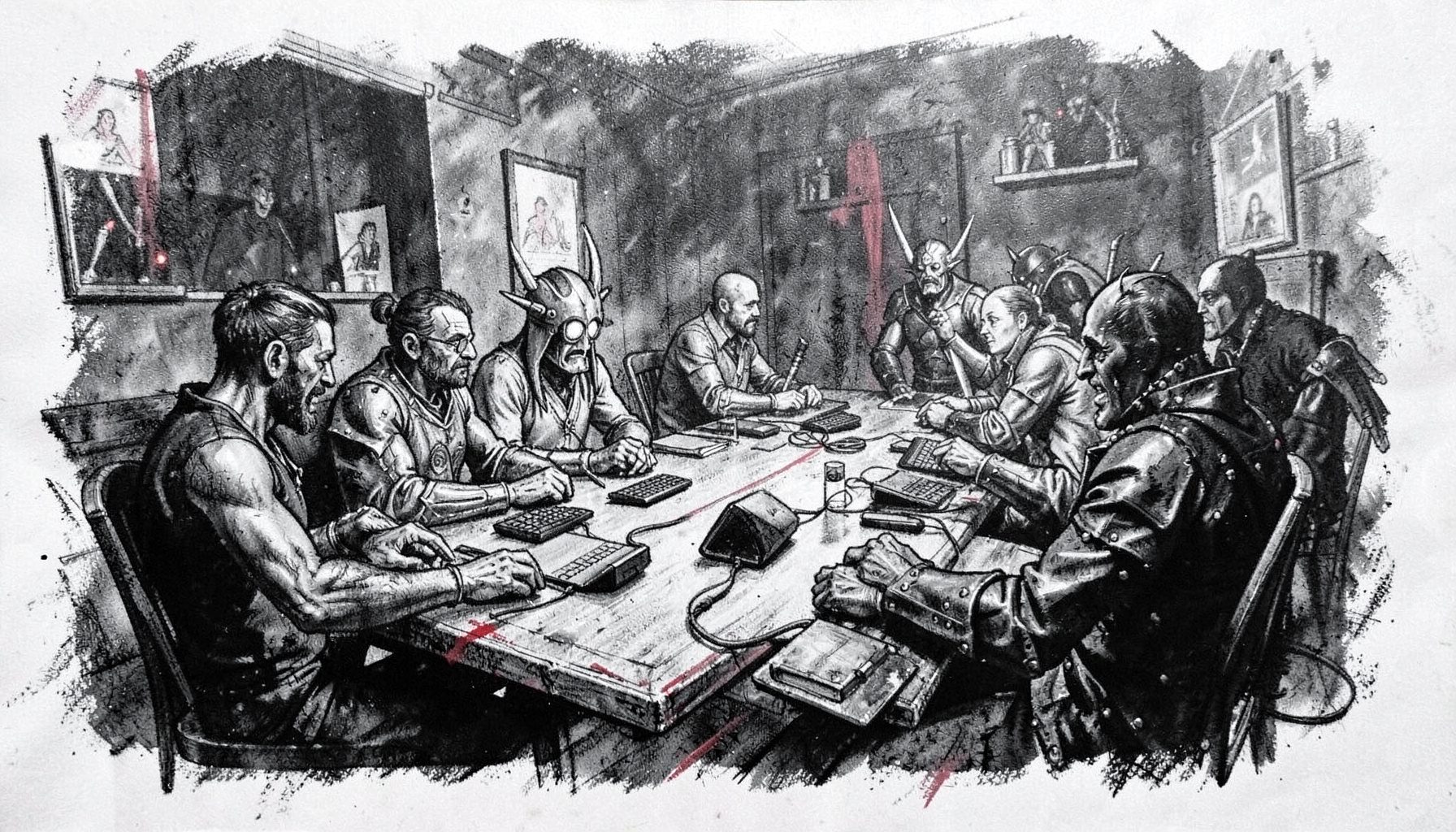
How hotels became living playgrounds for tabletop games
The evolution of tabletop gaming spaces in hotels has shifted the event from a room filled with folding tables into a temporary neighbourhood for shared stories. A hotel can now host quiet strategy sessions beside live-action role-playing, maker workshops, panel discussions and puzzle rooms while guests move between them. The important change is spatial: play needs streets, corners, thresholds and places to pause, not merely a rectangle of seating.
This shift reflects what High Level Games Convention demonstrated at Atlantic City’s Showboat Hotel in 2018, where designers, artists, publishers, players and vendors mixed across an exhibitor hall, programme rooms and immersive activities. For Australian organisers, the lesson extends beyond decoration. Hotels offer travel, food and protected time in one booking, yet successful gatherings still depend on local culture, accessible design and clear agreements about how strangers become collaborators.
From function rooms to immersive play
Hotels once treated function rooms as flexible shells for presentations: rows of chairs, pale walls, a lectern and a screen. That layout signals a one-way relationship between speaker and audience. It works poorly for role-playing groups, where concealed information, shifting alliances and constant rearrangement of furniture are central to the experience.
Flexible furniture alone does not create immersion. Guest circulation, lighting, acoustics and signage determine whether participants feel like they have entered a game world or an unusually themed conference. Hotels can divide large floors into quiet strategy rooms, louder encounter spaces and transition zones, giving each activity a distinct identity while keeping the programme coherent.
The evolution is therefore less about hiding a hotel and more about using its infrastructure. Doors become scenario boundaries, lounges become debriefing areas and foyer corridors connect encounters. Australian hotels must also protect fire routes, room access and normal service, so fantasy and operational safety need careful choreography.
Designing stories into the physical space
Scenario writing turns a hired room into a believable environment with objectives, clues and consequences. A practical scenario design guide shows how a compelling convention scenario can be assembled in under a week by defining the central conflict, assigning roles and testing the flow with players before public play begins.
A puzzle sequence becomes part of play when clues reward cooperation and interpretation rather than operating as an unrelated attraction. Clear briefing rules and observable progress keep puzzles from overwhelming the shared story. The same principle applies to LARP: spaces should support the fiction while clear safety agreements protect the people inside it.
Australian organisers should adapt these techniques without ignoring consent, accessibility and sensory needs. Live-action play needs agreed boundaries and stop phrases, while tabletop sessions benefit from readable rulebooks, seating choices and quiet alternatives. Hotels can label high-stimulus areas and provide low-sensory space, allowing guests of different ages and experience levels to participate without being pushed into the loudest activity.
Hotels as inclusive community hubs
A convention succeeds when participation feels possible for people who arrive alone as well as for established groups. Hotel spaces can welcome day visitors, interstate travellers and international guests because public areas and scheduled programme sessions create natural points of contact. Shared tables then offer a gentle route from conversation to collaboration.
One convention example, an escape room review, shows how a puzzle tied to the wider theme can reward cooperation across mixed-experience groups. This kind of activity can connect strangers without requiring either a long conversation or previous knowledge of a particular game system.
The approach is especially valuable in Australian cities, where communities divide between neighbourhood game stores, library programme rooms, cafés and suburban homes. Melbourne’s strong café culture and Sydney’s busy convention circuit give organisers pools of local players, while districts and transit networks shape how they arrive. Rather than treating attendees as a sealed event audience, hotel organisers can build open sessions that local groups can join.
Language and pricing signals matter too. Australian organisers commonly speak of a programme, room hire and a wrap-up, and local attendees value informal welcome points where questions do not require buying a ticket. Free introductory games, visible code-of-conduct information and low-cost community tables can prevent an expensive hotel setting from feeling exclusive or intimidating.
Business models for the Australian market
Room hire can anchor the budget, but a one-day booking rarely captures the potential of a hotel gaming programme. Revenue can combine ticketed sessions, table reservations, exhibitor fees, sponsorship, workshops and food-and-beverage packages. Packages that include breakfast or a hotel meal also appeal to attendees who want one predictable cost and a clear reason to remain onsite.
Organisers must account for the Australian goods and services tax, commonly 10 per cent on taxable event sales, while hotels balance their own occupancy pressures. A midweek programme may fill rooms that otherwise remain empty, whereas weekend conventions compete with established entertainment events. Off-peak dates and shorter formats can make the model more workable than an expensive weekend launch.
Operations require equal attention. Noise limits, security, meal timing and accessible transport affect the experience as much as scenery does. Partnerships with local game shops, convention organisers and community groups can spread promotion beyond the hotel’s own mailing list and reduce the risk that an ambitious concept feels like a closed-off resort activity.
What High Level Games Convention revealed
At the 2018 Showboat Hotel event, High Level Games Convention brought together tabletop players, live-action role-players, designers, artists, publishers and vendors. Its mix of sessions, panels, workshops, an exhibitor hall, LARP experiences and escape rooms showed that a hotel can become a working creative district rather than a collection of scheduled classes.
Cross-genre encounters created useful feedback. A role-player testing a mechanic, a designer explaining a system and a publisher examining artwork encounter one another in the same corridors. These informal exchanges often generate better ideas than formal panels because participants can compare approaches with people using different assumptions.
Table disputes are part of the design challenge. Guidance on handling player disputes explains why a disputed rule, unsafe behaviour or broken scenario can interrupt immersion and divide a group. Strong hosts can turn those moments into visible community standards, using calm process and impartial judgement so that newcomers understand how conflict is managed.
A practical path for hotel gaming programmes
The strongest future format is hybrid: hotel infrastructure supplies comfort, food and scheduled gathering, while local communities supply personality and continuity. Seasonal conventions, creator residencies, corporate team days and midweek community sessions can share the same flexible spaces, provided organisers change the rules and reset cues for each audience.
Three formats now define most hotel gaming offers, with different strengths for organisers and guests:
| Feature | Traditional function room | Dedicated games venue | Hybrid hotel programme |
|---|---|---|---|
| Main strength | Efficient setup and presentation | Play-focused atmosphere | Comfort plus varied activities |
| Typical layout | Rows facing a stage | Tables and immersive zones | Modular rooms with themed transitions |
| Commercial model | Hourly room hire | Admission and membership income | Tickets, packages, sponsors and exhibitors |
| Best fit | Short meetings or talks | Regular game nights and campaigns | Conventions and mixed-format gatherings |
| Common weakness | Feels clinical | Limited food, sleep or networking | Requires tighter coordination |
The practical lesson is to design for transitions. Give guests clear maps, scheduled debriefs, labelled quiet areas and hosts who can explain the code of conduct. Keep enough space for spontaneous conversations, since the unplanned conversation between sessions often becomes the memory guests describe after returning home. One lesson should remain: the best game spaces make hospitality part of the storytelling, turning a temporary venue into a place where people feel expected, respected and eager to play.