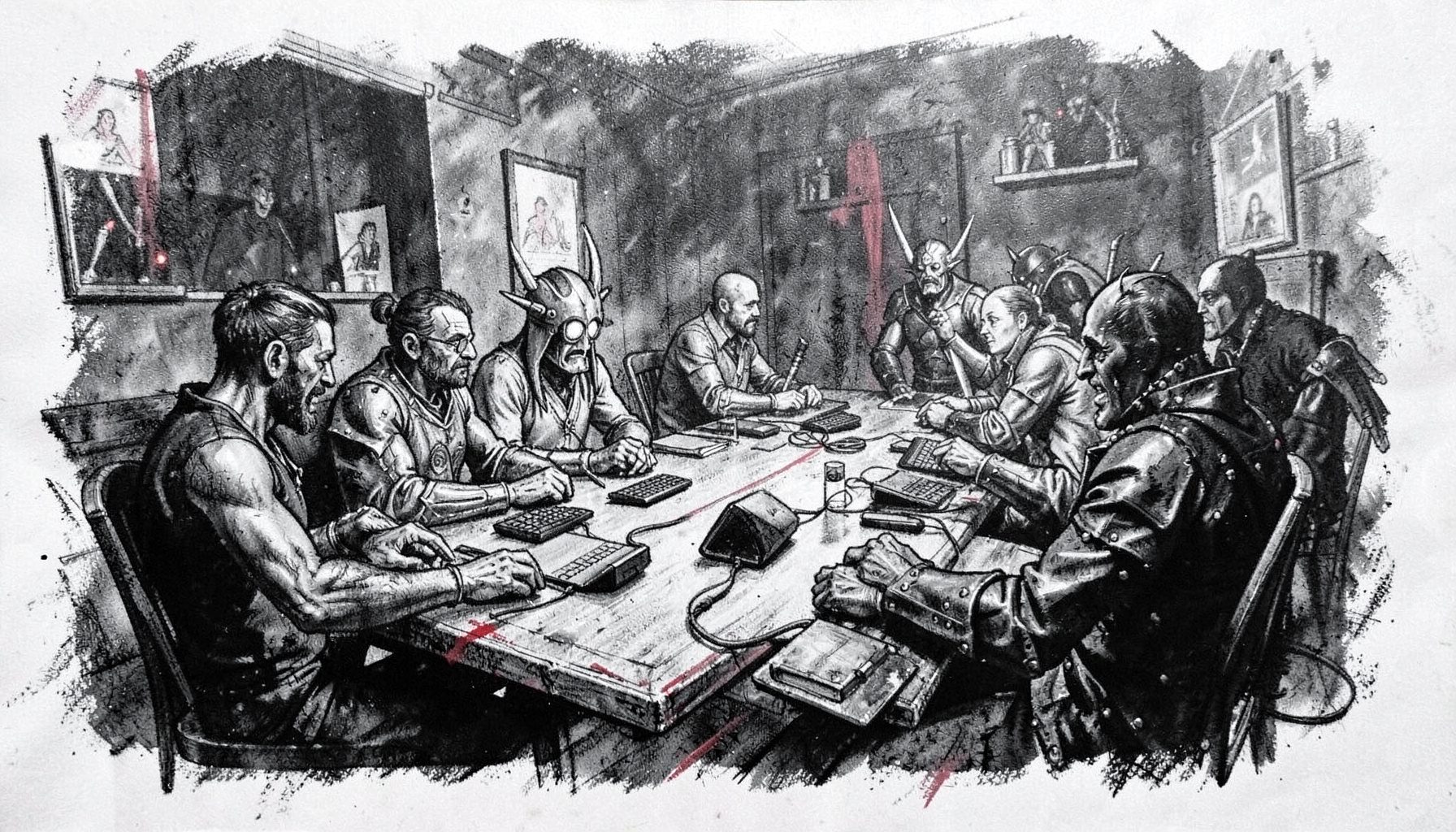
How to Run a Game in a Noisy Hotel Lobby
A hotel lobby can turn a promising tabletop session into a game of raised voices, guessed clues and half-heard rules. It can also become an ideal setting for a fast, social challenge that borrows the communal energy of a convention floor. The 2018 High Level Games Convention at the Showboat Hotel in Atlantic City, New Jersey, brought together tabletop role-players, live-action participants, designers, artists, publishers and vendors; its emphasis on inclusive participation and collaborative storytelling offers a useful model for ambitious lobby games.
For Australian game masters, the answer starts with accepting the building rather than waiting for silence. Lobbies in Sydney, Melbourne and Brisbane fill with weekend travellers, conference delegates, families and staff moving between lifts and cafés. Design around speech, footfall and luggage, and the convention atmosphere can support a memorable session even when nobody controls the soundtrack.
Choose a format that tolerates the bustle
Start by choosing what the players must hear and what they can work out visually. Formats that depend on delicate phrasing, whispered secrets or long rule explanations suffer badly in a reverberating space, whereas concise missions and shared objects tend to survive it.
| Format | Noise tolerance | Best suited to | Main risk |
|---|---|---|---|
| Printed scenario with a shared map | High | Story-focused groups comfortable with reading | Players talk over narration |
| Facilitator-led micro-adventure | Medium-high | Groups with mixed experience levels | The GM’s voice carries poorly |
| Small-team escape challenge | Medium | Groups of four to six players | Hands-on clues and short tasks |
| Open improv or LARP | Low-medium | Expressive, experienced players | Rules, pacing and safety become harder to hear |
High Level Games Convention’s escape room design account offers a practical example of using puzzle sequences to direct attention through physical materials rather than exposition. Choose a compact challenge with a visible finish line, rather than a sprawling campaign that needs perfect listening.
Plan around Australian venues and the local market
Check the physical room before designing for it. In central Sydney and Melbourne, a hotel atrium may share space with a café, a tour-desk queue and a porte-cochère, so voices can be overtaken by announcements and rolling cases. Ask for a defined footprint, a firm start and finish point, and permission to use tables, signs or a small electronic display. If a loading bay or public thoroughfare remains open, build the game around movement rather than pretending the noise will disappear.
Australian gatherings also have their own rhythm: players commonly arrive in social groups, chat while setting up, and expect a clear option to join or observe. Independent game shops, community conventions such as PAX Aus in Melbourne and GX Australia in Sydney, and local designers have made collaborative, scenario-led play familiar. Keep the rules brief, let helpers explain in plain English, and provide equivalent ways to contribute for players who prefer not to speak in front of a crowd.
Commercial and legal details need checking rather than assumption. Australian Consumer Law applies to event tickets and advertised inclusions, and most Australian consumer prices already include the 10% GST. If a licensed bar is next to the game, follow the relevant state or territory’s liquor rules; NSW’s Liquor Act 2007 and Victoria’s Liquor Control Act 1994 are separate regimes. The hotel should manage alcohol service, while the game team handles consent, accessibility, incident escalation and safe movement under the venue’s work health and safety procedures.
Give players signals that survive the noise
Give every player a visual vocabulary for start, pause, help and finish. Large numbered cards, coloured tokens and a raised hand can control a group without competing with a loudspeaker. A facilitator can wear a distinctive badge or lanyard and use one agreed gesture for trouble. Reserve headphones for optional ambience rather than essential information, since a player who cannot hear the same clue should not be excluded from the solution.
Design layers of information. Put essential instructions on a board, make atmospheric descriptions brief, and let background chatter provide comic timing without changing the answer. The convention’s collaborative storytelling keynote reinforces the value of players building meaning together: visible prompts invite discussion without requiring the entire room to listen to one speaker. Where a spoken clue matters, repeat it through the artefact, such as a ticket, phone message or map marker.
Plan for hearing differences and sensory comfort. Offer written instructions, a low-sensory route and a quiet waiting area if the hotel provides one. Avoid mandatory blindfolds, sudden blasts and unexplained physical contact, and agree on a stop signal that does not depend on speech. An inclusive game gives players control over participation while keeping the objective shared, which matters particularly when families, children and first-time attendees share the lobby with experienced role-players.
Keep the story moving when the room changes
Build the scenario around disruption rather than pretending interruption never happens. A character can deliver a clue in the middle of a noisy announcement; an impatient crowd can become part of a time limit; a delayed traveller can trigger a change of plan. Give players enough flexibility to infer missing words, but not enough flexibility to solve the puzzle without the intended material. A simple objective, a visible progress marker and two alternative clue paths provide useful resilience.
The craft advice in scenario polishing is particularly relevant here: rehearse the likely weak points, tighten transitions and make every beat carry its purpose. With a short lobby scenario, each paragraph of narration should either reveal a fact, create a decision or move the group towards the finale. When a line disappears beneath the bustle, point to the relevant object and continue; a performance that stalls over every missed sentence loses momentum.
Keep the tone warm and the boundaries explicit. Assign player roles that can be explained on cards, and make room for reluctant participants by allowing silent clue passing, drawing or pointing. A game master should acknowledge what the group has achieved, since a busy lobby can otherwise make a short session feel like an interruption to strangers rather than a shared adventure. Inclusive participation works best when everyone knows what the group can accomplish next.
Rehearse and protect the experience
Rehearse with the hotel’s conditions, not an idealised quiet room. Run the scenario at the expected session length, test the visual signals at the actual table, and ask a volunteer to deliberately talk during a key exchange. Time the reset, secure loose materials and nominate one person to liaise with front desk and security. Staff need to know when a game is active, where a distressed participant should go and who can pause it.
The operational checklist can stay compact:
- Limit the group to four to six players and run two short, staggered sessions so the surrounding queue does not become part of the puzzle.
- Print essential clues, rules and safety signals; rehearse every spoken instruction that has a visible equivalent.
- Agree start, pause, stop and emergency gestures with players, volunteers and hotel staff before the doors open.
- Offer an equivalent low-sensory route, content notes and permission to observe without drawing attention to the person choosing it.
- Log timings, damage, lost property and incidents, then brief the next team on anything that needs adjustment.
The final rehearsal should include a handover between sessions, an evacuation route and a method for returning materials to the organiser. These small operational details matter in a shared hotel, where a blurred boundary can leave families, staff or passers-by inside an active game. Keep a named contact with the venue, and make the pause decision easy for anyone to request.
What should stay with the reader is simple: a noisy hotel lobby is a design constraint. Visual clues, a forgiving structure, clear consent and a rehearsed handover allow the background noise to become atmosphere rather than a failure of the game.