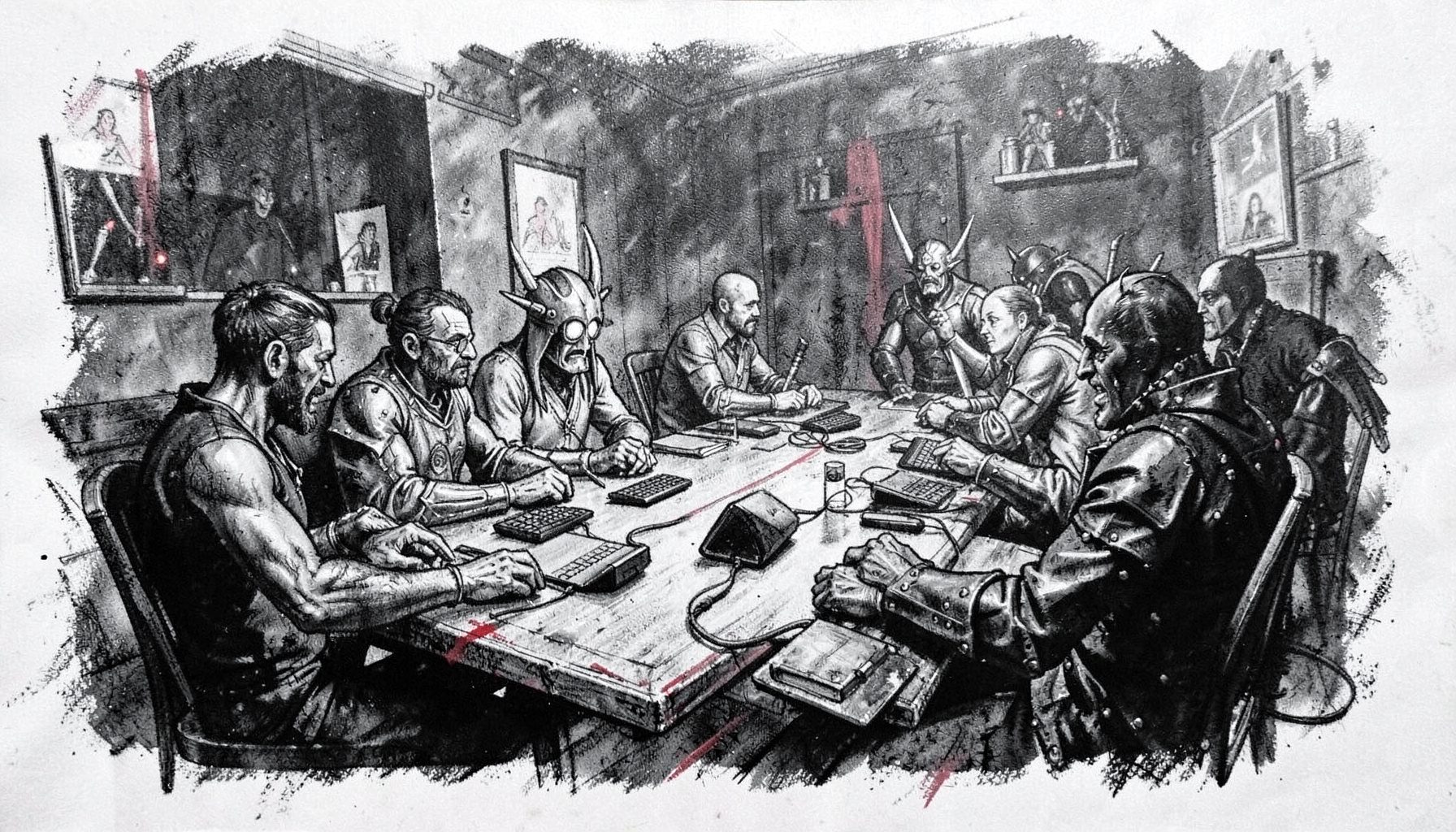
How Collaborative Storytelling Shaped HLG Con
The keynote on collaborative storytelling captured one of High Level Games Convention’s defining ideas: a game becomes richer when everyone in the room has meaningful influence over what happens next. Rather than treating the game master, performer, designer or organiser as the sole author, the speech presented storytelling as a shared activity built from offers, responses and trust.
That message suited the 2018 convention at the Showboat Hotel in Atlantic City. Tabletop role-players, LARP participants, artists, publishers, vendors and curious newcomers moved between scheduled games, workshops, panels and immersive activities. The convention environment itself encouraged people to shift roles, try unfamiliar formats and discover how different gaming communities solve the same creative problems.
The keynote also had a practical value for Australian players. Whether a group meets in a Melbourne games shop, a Brisbane community hall, a Sydney flat or around a kitchen table in regional New South Wales, collaborative play depends on the same foundations: clear boundaries, generous listening and a willingness to build on another person’s idea rather than immediately replacing it.
The room became part of the story
The speech treated the convention space as more than a backdrop. A gaming event can contain dozens of separate narratives, yet the movement between them creates a wider shared atmosphere. Someone leaving a tense LARP scene might join a relaxed board game, while a designer from the exhibitor hall might carry a new approach into an evening role-playing session.
That sense of connected discovery was visible in the variety of activities available at High Level Games Convention. The event schedule placed tabletop sessions, panels, workshops and special attractions within the same larger programme. Attendees were therefore encouraged to make choices that shaped their own convention story, rather than follow one fixed path from beginning to end.
The keynote’s central point was that participation starts before the first die is rolled. Choosing a session, introducing yourself to a new table, volunteering for a scene or asking a thoughtful question at a panel can all affect the experience of other people. In that sense, convention culture is itself a form of collaborative narrative.
This idea translates easily to Australia’s convention circuit. A participant might travel by train to PAX Aus in Melbourne, catch a bus to a local RPG night or spend a Saturday afternoon at a Sydney game store. With travel time, venue costs and busy work schedules shaping attendance, a welcoming table can make a short session feel worthwhile.
From audience to co-authors
A major theme of the keynote was the shift from passive audience member to active co-author. In a traditional performance, spectators generally receive a finished story. In tabletop RPGs and LARPs, players contribute decisions, character motivations and emotional reactions that can redirect the fiction. The facilitator still has responsibilities, but the outcome remains open.
This does not mean that every participant has equal control over every element. Collaborative storytelling works when authority is visible and negotiated. A game master may manage pacing and rules, a player may control a character’s choices, and a safety marshal may pause an activity when wellbeing requires it. Clear roles give people the confidence to improvise within a shared framework.
The keynote emphasised the value of accepting an offer. If one player introduces a mysterious connection between two characters, another player can develop it instead of dismissing it. If a LARP participant creates a prop, rumour or social conflict, other participants can respond in ways that give the contribution weight. The result is a chain of creative exchanges rather than a sequence of isolated performances.
High Level Games Convention’s immersive activities, including escape rooms and LARP experiences, made this principle especially easy to observe. A puzzle may be designed in advance, but the group’s communication determines whether everyone gets involved. The same applies to a dramatic scene: preparation supplies the structure, while participant choices supply the living detail.
Tools that keep stories moving
The speech was enthusiastic about imagination, but it did not present creativity as unlimited freedom. Shared stories need practical tools. Session expectations, consent practices, safety signals, character boundaries and agreed rules help prevent one person’s exciting idea from becoming another person’s uncomfortable experience.
This is particularly important in games involving intense themes, physical movement or public performance. The convention’s spoiler guidance reflected a broader principle: protecting discovery is a form of respect. Spoilers can remove a player’s chance to make meaningful choices, while careless descriptions of sensitive content can prevent someone from deciding whether an activity suits them.
The keynote also highlighted the importance of pacing. A strong contributor does not need to fill every silence or dominate every scene. They can ask another player what their character notices, leave room for a quieter participant, or introduce a small detail that gives the facilitator something useful to develop. Good collaborative play alternates between offering material and making space.
For Australian organisers, these tools also intersect with practical obligations. A convention or community group may need to consider venue rules, public liability insurance, child-safe procedures and state or territory work health and safety requirements. If an activity collects attendee details, the Australian Privacy Act may also be relevant, particularly for larger organisations or businesses covered by the legislation. Creative freedom works best when administration supports it.
Principles worth carrying to the table
The keynote’s ideas can be condensed into habits that apply across systems, genres and experience levels. They are useful for a short introductory session, a long-running campaign, a freeform LARP or a workshop where participants are designing a setting together.
- Treat another person’s contribution as material to develop, not an obstacle to overcome.
- Make the boundaries of the game clear before emotionally intense or physically active scenes begin.
- Share attention so that quieter players have genuine opportunities to influence events.
- Let consequences emerge from choices instead of protecting a preferred storyline.
- Review the session afterwards and identify which moments felt most genuinely shared.
These principles are especially helpful in groups formed at conventions. Players may have different assumptions about rules, humour, genre and character competence. A brief conversation at the beginning can prevent confusion later, while a generous attitude makes it easier to adapt when the table’s energy differs from expectations.
They also suit the Australian market, where gaming communities often combine retail, club and online spaces. A group might buy a rulebook from a specialist shop, organise games through Discord, attend a convention in Adelaide or Perth, and then meet monthly in a local library room. Collaborative storytelling provides continuity across those settings because it focuses on relationships and participation rather than a particular venue.
The financial side matters too. Australian gamers regularly contend with imported book prices, postage, currency conversion and the Goods and Services Tax. A welcoming table can make a smaller purchase go further: players may share resources, teach a system before someone buys it, or create memorable sessions with inexpensive materials and strong improvisation.
Designing the next shared moment
The convention’s keynote also connected storytelling with design. A game designer creates procedures that invite particular kinds of contribution, while an artist communicates tone and possibility through images, maps and props. Publishers and vendors help those ideas reach players, but the final meaning is produced at the table or in the performance space.
The Pandaemonium experience represented this relationship between prepared structure and participant invention. An immersive activity can provide atmosphere, rules and a clear premise, yet the group’s problem-solving style, emotional reactions and division of attention determine the specific experience. Two groups can enter the same scenario and leave with entirely different stories.
For organisers, the keynote offered a useful test: can a participant see how their choice matters? This does not require every decision to alter the entire setting. A changed alliance, a discovered clue, a memorable character detail or a decision to protect another player’s story may be enough. Small consequences accumulate into a sense of authorship.
The same test works for Australian clubs planning an event. A Melbourne campaign can invite players to contribute local slang or landmarks to a fictional setting, while a Brisbane LARP might adapt its timetable around public transport and summer heat. A Sydney workshop can provide low-cost alternatives for participants who cannot purchase every new release. These choices communicate that the community is designed with real people in mind.
- Begin the next session with one shared expectation about tone, safety and participation.
- Build one open-ended prompt that gives every player a chance to add setting detail.
- Track consequences lightly so that contributions can return later in surprising ways.
- Leave time for a short debrief about memorable choices and group dynamics.
The keynote’s lasting lesson was not that every story must be improvised or that facilitators should surrender all structure. It was that structure becomes more powerful when it creates room for others to respond. High Level Games Convention celebrated that balance across tabletop games, LARP, workshops, panels and immersive play.
A practical next step is to open the next game night by asking each participant to add one detail to the setting, then use at least one of those details before the session ends.