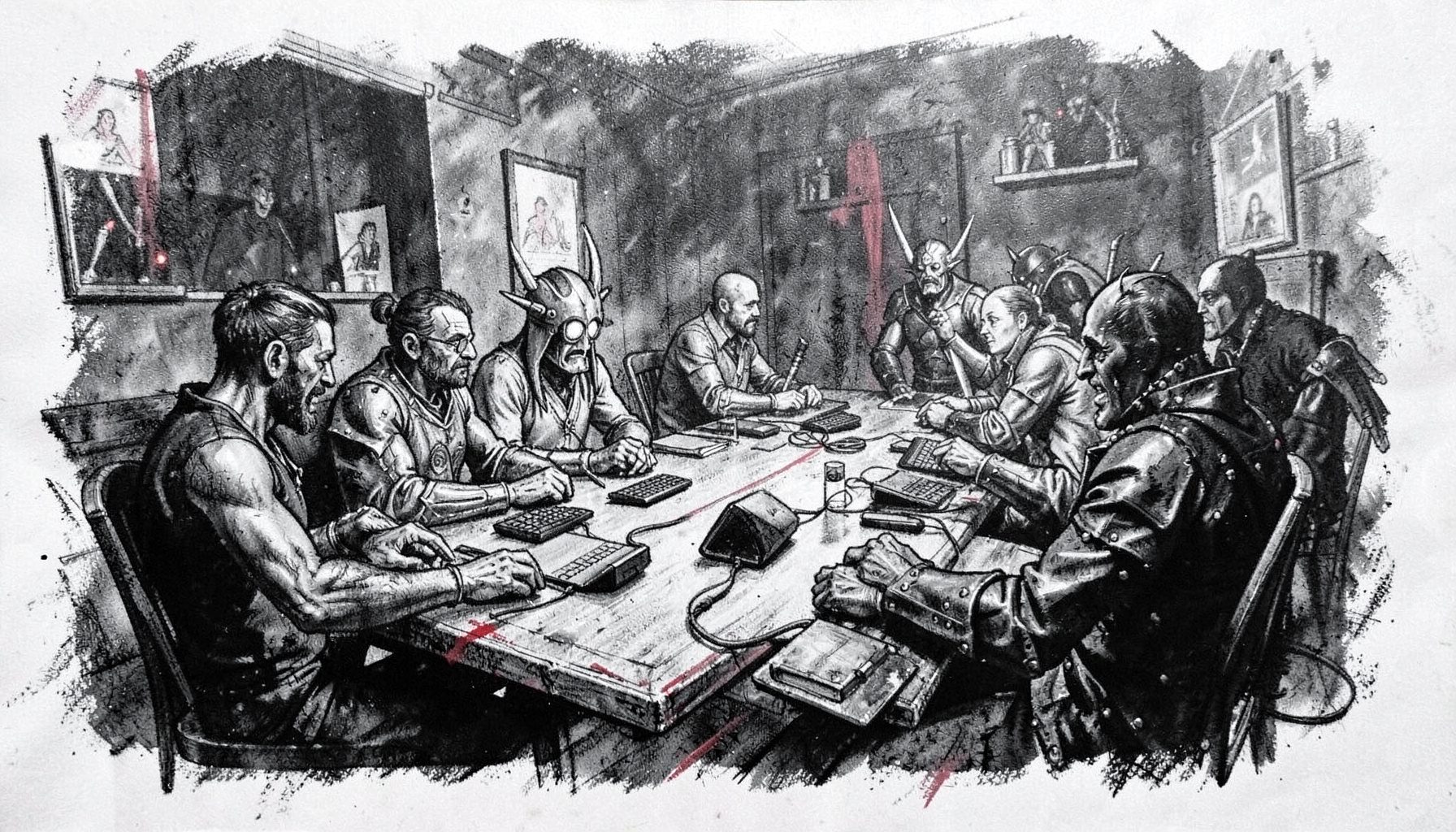
Escape room design: How HLGCon built its immersive puzzles
High Level Games Convention brought tabletop adventurers, live-action role-players, game creators, artists, publishers and vendors together at Atlantic City’s Showboat Hotel in 2018. Escape rooms sat within that wider mix of LARP encounters, workshops, panels and exhibitor stalls, turning a puzzle-solving session into a shared piece of theatre.
For Australian players accustomed to pub trivia, board-game meet-ups and compact city venues, that combination feels immediately familiar. The unfamiliar part is the concentration: a designed set, a timed objective and a sequence of clues that only makes sense when a group starts talking, testing and trusting one another.
Looking at how HLGCon assembled its immersive puzzles reveals a practical design language. It begins with a legible premise, adds objects and information that reward attention, then builds a path through increasingly coordinated decisions. Its purpose reaches beyond opening a door: it gives players a story they helped author.
From convention hall to playable world
Conventions offer designers an unusual advantage: players are already willing to try unfamiliar systems. At HLGCon, the escape-room offer could borrow from the surrounding culture of collaborative storytelling rather than feel like a stand-alone attraction. The HLGCon programme placed it among activities built around participation, improvisation and encounter.
Set design establishes the rules before anyone touches a prop. A visible objective, a clear starting position and a believable boundary tell the group what to do next. Useful escape-room scenery is not decoration for its own sake; each detail either invites inspection or quietly directs attention. Even the room’s acoustics can signal distance, danger or a change in pace.
Timed pressure sharpens those choices. A countdown gives each discovery a cost, yet the clock should measure the scenario rather than manufacture frantic confusion. Players need enough time to read a clue, compare notes and revise an incorrect theory. HLGCon’s strongest convention lesson was that immersion grows from a fair rhythm of investigation, action and brief relief.
Designing clues people can read
Readable clues begin with the question the player can answer. A sequence of numbers means little if the group cannot identify the book, key or pattern they belong to. Designers therefore build a chain of references: one clue confirms how another should be interpreted, and every solved step opens a new possibility rather than simply awarding another lock.
Props carry meaning as well as mechanism. A worn tag, a painted symbol or a slightly misplaced container can suggest a rule that formal instructions would flatten. Such cues also let experienced players contribute different strengths. The historian notices the image, the engineer tests the latch, and the organiser checks who has seen the last clue.
Puzzle design also has to account for the player who arrives late, the one who misreads a label and the one who solves steps faster than expected. Hints need a designed ladder, from a gentle nudge to a direct correction. Without that structure, a clue can become a bottleneck and the scenario can collapse into waiting at the door.
Shared problem solving at the heart
Escape-room mechanics are strongest when information is distributed across people. A code may be obvious to one player because of an earlier scene, a role or a piece of tabletop knowledge. Shared problem solving turns those asymmetries into momentum: players narrate possibilities, challenge weak assumptions and preserve useful discoveries for the next decision.
Inclusive design matters here for practical reasons as well as ethical ones. Clear icons can support players with limited reading, while physical interactions need not depend on fine motor control alone. Colour should never be the only warning, spoken instructions should not exclude a player with hearing loss, and a seated role should remain meaningful. Choices like these broaden the route through the same challenge.
Collaboration also changes the emotional rhythm. The loudest theory may fail, while a quiet observation unlocks the next stage. A good host watches for players becoming spectators and introduces a new task, object or clue instead of taking control. That role resembles a game master: attentive to the group, ready to guide and careful never to embarrass a participant.
Learning from the detention breakout
The Detention Breakout experience offers a useful example of how a strong premise can organise a compact encounter. Confinement is instantly legible: the group knows it wants release, while the setting suggests obstacles controlled by others. That clarity reduces the distance between arriving and acting, which matters in an event schedule filled with sessions and brief transitions.
In that kind of scenario, tension comes from constraint rather than arbitrary complexity. Designers can make every prop contribute to the detention environment, the escape objective or the characters’ behaviour. The best clues then double as storytelling. Players discover the scenario while handling the mechanism, so the sense of achievement remains attached to the fiction.
Short experiences demand especially careful pacing. Too much exposition delays action; too little leaves players unsure how a discovery advances the plot. A useful rhythm alternates searching, interpretation and physical resolution. When those phases connect, a successful code opens a door in the fiction as well as the room, giving the group a comprehensible reward.
Adapting the model for Australian venues
Australian adaptation starts with the places people gather. Melbourne’s laneways and Sydney’s compact entertainment districts offer dense settings for short encounters, but heritage buildings and converted spaces can mean narrow access, shared facilities and difficult loading. The practical question is whether the entire journey works with local foot traffic, venue staff and standard booking windows.
Everyday expectations matter just as much. Australian summer heat makes reliable indoor cooling and breathable costume choices relevant, while severe weather can interrupt travel plans. A venue near a pub, public transport or a familiar entertainment strip benefits from established habits around group bookings and early arrival, making it easier to convert an interested audience into players who arrive together.
The Australian market contains many independent escape-room operators and small creative teams, so direct bookings, online platforms and hotel partnerships can reach different audiences without erasing a venue’s identity. Regional venues around Adelaide, Canberra and Hobart also benefit from partnerships with local attractions and careful scheduling around school holidays and public holidays.
Legislation shapes the booking experience. Services must meet the due care and skill standard under the Australian Consumer Law, and material terms about duration, cancellations and refunds should be disclosed clearly. Where personal information is collected, the Australian Privacy Principles may apply, including safeguards for customer contact details. Clear consent for photography also respects players who do not want their reactions circulated online.
The design lesson that lasts
What HLGCon demonstrated is how tightly play and presentation can reinforce each other. A room becomes memorable when its mechanics support the fiction, its clues reward attentive cooperation, and its hosts protect the players’ sense of agency. The experience remains coherent even when a solution is discovered in an unexpected way.
For creators, the transferable process is to begin with intention, test every interaction against the player’s likely knowledge, and watch the group rather than the script. A well-placed prop can replace an explanation; a well-timed prompt can restore momentum; a deliberate pause can let a hard-won discovery land.
What players should remember is simple: the strongest escape rooms are built from fair decisions, shared meaning and stories that unfold through play, making the achievement something the group creates together.