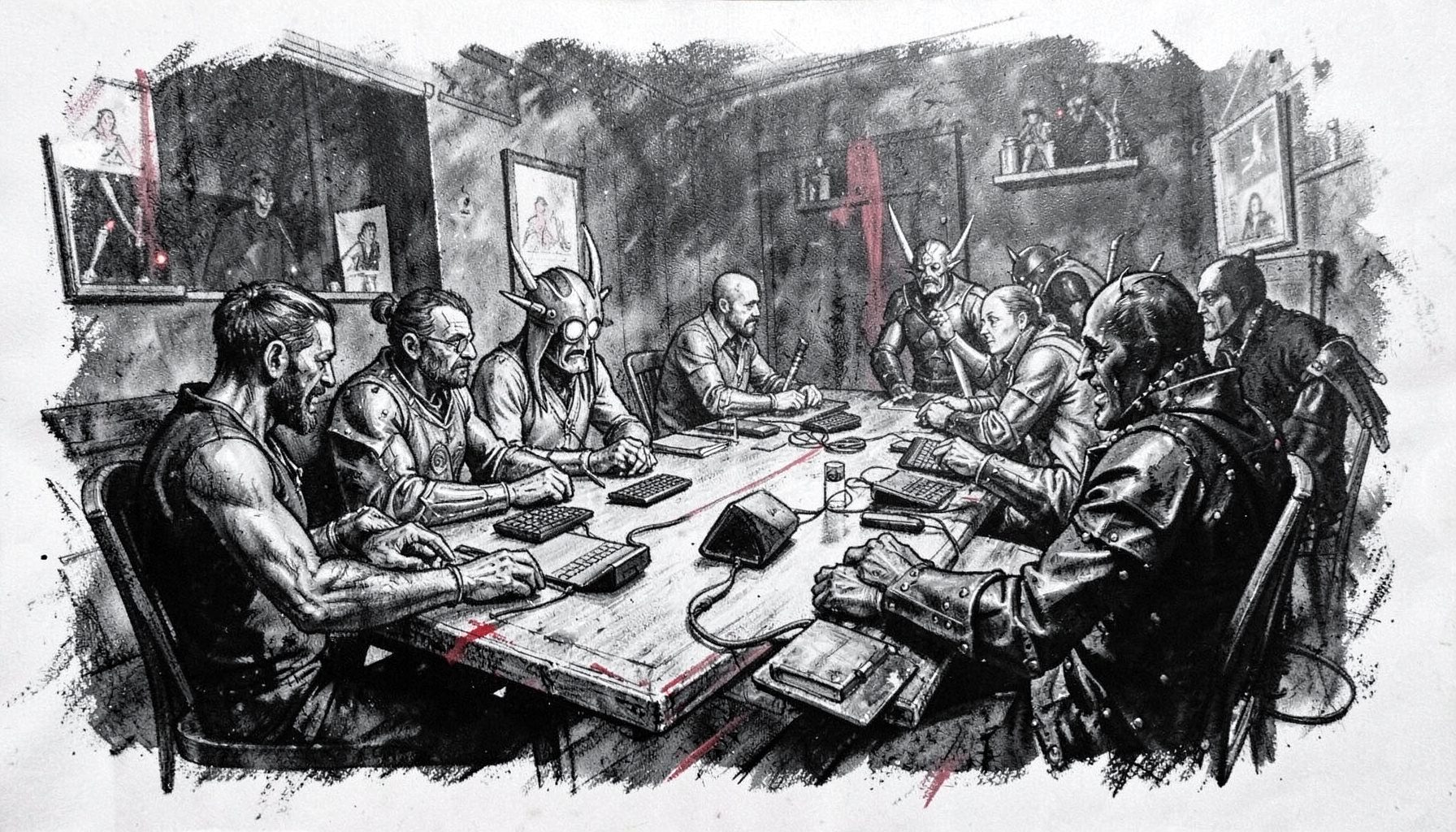
Crossing Over from the board game table to the roleplaying realm
For millions of Australians, Saturday afternoon means a board game cafe in Melbourne's CBD, a few rounds of Wingspan at Good Games in the inner suburbs, or a Twilight Imperium marathon at someone's place across Brisbane. The board gaming scene here is thriving, with conventions like PAX Australia drawing huge crowds every October, a strong calendar of store championships, and a network of dedicated FLGSs stretching from Perth to Hobart. Yet tucked just past the strategy games and deckbuilders sits an adjoining hobby: tabletop roleplaying, a space that borrows many of the same skills but asks for something fundamentally different at the table. Learn more about 287176 Dice Towers Dice Trays And Dice Bags Accessories Every Gamer Needs.
The jump from board gaming to roleplaying can feel larger than it actually is. The dice are familiar, the player-driven spirit is recognisable, and the rules-light experimental designs popular at places like Aetherworks in Sydney or Meeple Squire in Adelaide have already softened the transition for many. What changes is the centre of gravity, from optimising your engine to building a story together, and that shift, once you know where to look, is surprisingly gentle.
Reframing the idea of "winning"
For board gamers used to chasing victory points, a roleplaying session can feel strangely directionless. There is no scoreboard at the end of a five-hour D&D campaign, no leaderboard to climb, and no race track to the end of the Catan board. The reward is not who finishes first but what happens at the table together. Reorienting this expectation is often the single biggest leap, and it can take a session or two before players relax into the slower, messier rhythm of an unfolding narrative.
What helps is remembering that the same designer-driven feedback loops still exist. A clever combat in Pathfinder still gives you that satisfying crunch of a well-timed attack roll. A dramatic scene in Call of Cthulhu can land with the same weight as flipping a critical card in Race for the Galaxy. The mechanics keep your brain engaged; the goal of the session has just been redefined.
Where to find your first group in Australia
Australia has a deep bench of friendly local game stores that stock both board games and RPG starter sets, so the easiest entry point is usually the shop you already visit. Hero Nation in Melbourne's inner north and Just Games in Brisbane, for example, regularly run one-shot nights specifically targeted at newcomers from the board gaming community. Store staff can walk you through a beginner-friendly module, lend you a pre-generated character sheet, and pair you with an experienced GM for an evening session.
Beyond the FLGS, gaming communities online make it easy to find a table even in regional towns. The Australian Tabletop Gaming Network on Facebook, Discord servers like Aussie TTRPG, and the /r/RPG community often host pickup games, with Australians from Cairns to Bunbury forming ad hoc groups each weekend. Conventions are another reliable venue: PAX Australia in Melbourne, Animefest in Brisbane, and Canberra's TactiCon all host quick-fire RPG sessions designed for complete newcomers, usually with everything you need on the day.
Choosing a system that actually fits
The temptation when starting out is to default to Dungeons & Dragons because it is the most recognised name, but the Aussie RPG market has a much wider healthy ecosystem than it did a decade ago. Indie systems such as Heart: The City Beneath the Dust, Monsterhearts, and the Australian-published Honour Bound have carved out real audiences, especially among players who appreciate the lighter-weight narrative focus common in modern Eurogames. Many of these systems embed collaborative storytelling techniques directly into their core mechanics, making them ideal labs for picking up the instincts a longer campaign eventually demands.
For pure mechanical familiarity, two-player RPGs like Ironsworn or the GM-less Star Crossed make excellent bridge games. They replicate the contained decision-space of a card-driven board game while teaching you the improvisational habits of regular TTRPG play. If your group finds D&D's tactical combat appealing, Pathfinder 2e rewards the kind of analytical thinking that 18xx or spirit-heavy Euro trains.
Escaping the character creation bottleneck
Character creation is where many former board gamers stall. The temptation is to treat it like a wargame miniature list: endless optimisation, spreadsheet comparisons, and a paralysing fear of making a "bad" choice. The reality is that the first dozen hours of any RPG system are designed around exploration, and almost any character concept stays relevant when the GM adapts encounters on the fly.
A practical habit borrowed from the board gaming world is to run a session-zero at home. Sit down with paper, dice, and the basic rules, build characters together, and talk about the tone of the campaign. This mirrors the kind of rules-light gameplay enjoyed at games like A Fake Wizard Does A Fake Spell or Everdell, and it ensures that the first real session is spent playing rather than staring at a character sheet.
A few practices that smooth the process for first-timers:
- Use a pre-generated character for your first one-shot only, then build one fresh.
- Cap ability score generation at 27-point buy for groups that want strategic depth.
- Decide tone before mechanics: horror, comedy, noir, or heroic determines far more than rule choices.
- Keep a small list of three to five character concepts you could happily play for a year.
Mechanics you already know carry over
The skills honed over hundreds of hours of Spirit Island or Brass Birmingham transfer more than you might expect. Set collection becomes inventory management at a fantasy market. Worker placement becomes resource gathering during downtime phases. Even deckbuilding, in games like Hand of Fate, mirrors the iterative preparation of a 5e spellcaster building a spellbook across campaigns.
Dice probability, too, is a non-issue. Years of Pandemic Legacy, Gloomhaven, and King of Tokyo have already trained the intuition needed to read dice averages, calculate expected damage, and recognise when the outcome is locked in before the final roll. The transition is mostly about applying those instincts in a setting where the dice describe consequences rather than determine them.
Improvising without a rulebook
The skill with the steepest learning curve is improvisation. Many board gamers arrive at roleplaying after enjoying narrative-driven titles like Pandemic Legacy, Sleeping Gods, or the legacy editions of popular co-ops, but the leap to unprompted scene-by-scene invention still requires a small toolkit. Listening generously, accepting whatever the GM or another player offers, and building on it without overruling is the core habit worth practising.
For Australian players, the local convention circuit is a soft way to put that habit into action. Volunteers at the tabletop rooms of events like Melbourne's Game Users Festival and the Perth sessions hosted through Rising Tide Games often run low-pressure scenarios explicitly designed for board gamers dipping into roleplaying. Players leave with stronger instincts than they arrived with, an experience that echoes the same wonder captured in memorable panel memories from game masters who have spent decades behind the screen.
Investing in a sensible starter kit
A common rookie mistake is buying the entire core rulebook plus every expansion before the first session. Most modern starter sets include dice, a basic rulebook, and a short adventure that can run a group of four to five new players. After confirming the hobby is going to stick, a small list of useful accessories elevates the experience without breaking the budget, especially given Australian shipping costs on imported gear.
A practical upgrade path for Australian players might look like this:
- A set of polyhedral dice in a dice tray or sealed bag for transport between sessions.
- A character folio or wet-erase mat for tracking spells, slots, and hit points.
- One core rulebook (digital or print) for the system your group has agreed on.
- A small blank notebook for sketching maps, jotting NPC names, and tracking plot threads.
Looking into essential dice accessories helps clarify what is genuinely useful versus what is decorative shelf candy, and it usually saves a re-purchase down the track.
Boards serve the realm of structured decision-making. Roles serve the realm of shared meaning. Both call on the same thoughtful, present, generous player, and the crossover between them is shorter than the chasm in your head. The board game table has already taught you how to wait your turn, read the room, and commit to a meaningful decision; the roleplaying table simply invites those same instincts to breathe a little deeper. Hold that line at your next session, and the rest of the table will follow.