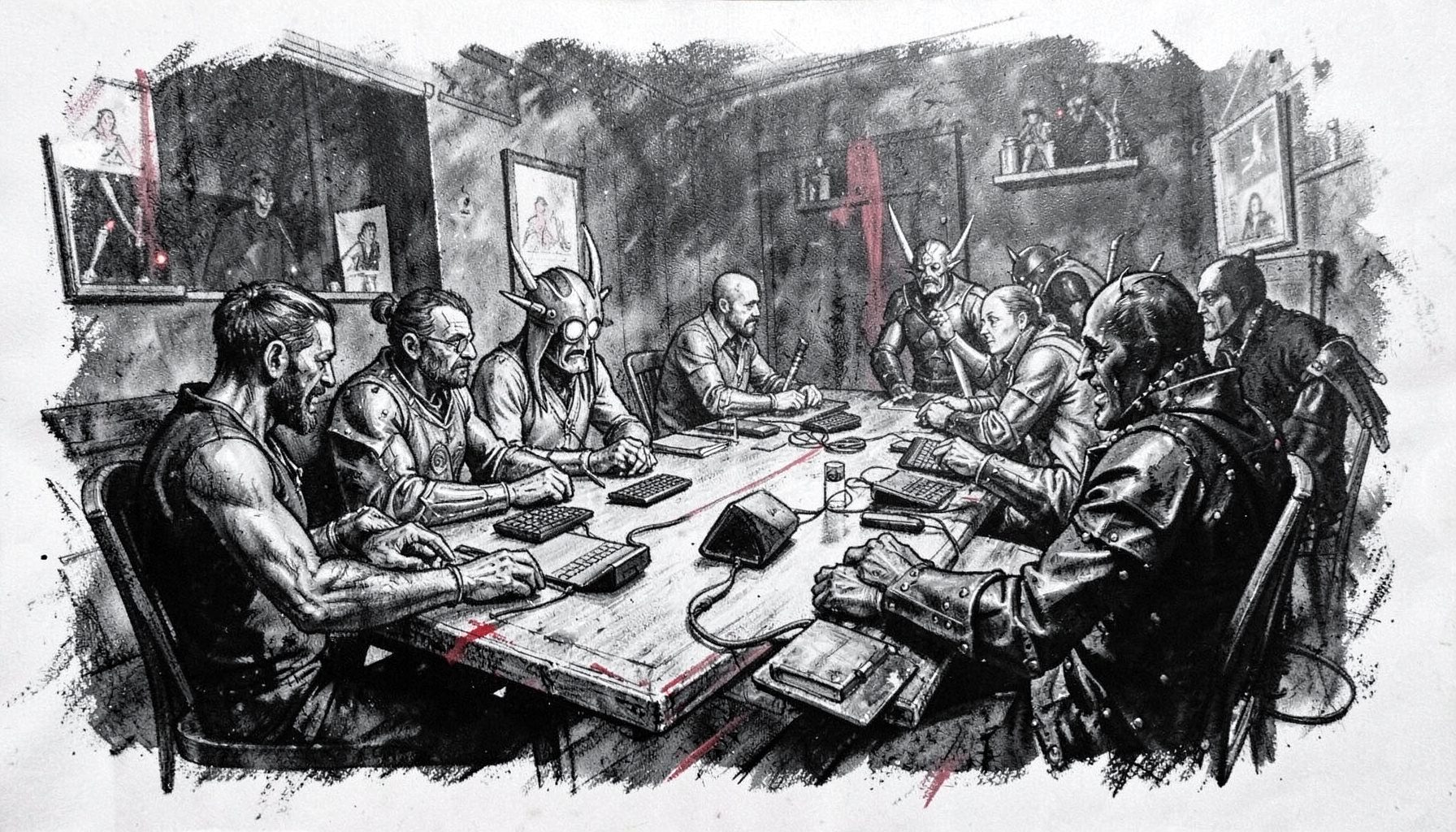
The Most Memorable Panel from High Level Games Convention
At High Level Games Convention in 2018, the most memorable panel was not built around a famous product launch or a spectacular special effect. It was a conversation with Game Masters who had spent more than two decades preparing adventures, managing difficult tables and learning how to turn unexpected player choices into lasting stories.
Held at the Showboat Hotel in Atlantic City, New Jersey, the convention brought together tabletop role-players, LARP participants, designers, artists, publishers and vendors. The panel reflected that broad community. Its speakers came from different gaming traditions, yet their advice kept returning to the same idea: long-term experience comes from listening carefully and adapting quickly.
For Australian players, the discussion still feels familiar. A gaming group in Melbourne, Sydney, Brisbane or Perth may meet after work, share snacks brought from home and negotiate a limited range of local releases and venues. The settings may differ, but the problems are remarkably similar: how to keep players engaged, make newcomers feel welcome and ensure that a memorable session does not depend on a perfect script.
Experience measured in decades
The veteran Game Masters did not describe twenty years of play as a straight climb towards mastery. They spoke about discarded campaigns, awkward rules calls, missed clues and sessions that lost momentum. Their authority came from having made those mistakes repeatedly, then learning which problems could be prevented and which simply had to be handled with grace.
One recurring lesson was that preparation should create possibilities rather than lock the group onto a single route. A detailed setting can help a GM feel confident, but players will often ignore the carefully prepared doorway and focus on a minor shopkeeper, a strange rumour or an object mentioned in passing. The experienced response is to recognise the energy at the table and move the important material there.
That attitude is particularly useful for convention games, where players may be strangers and the available time is limited. A veteran GM can establish a clear premise, offer meaningful choices and still leave enough space for the group to shape the outcome. The result feels organised without becoming rigid.
The table teaches the teacher
The panel’s strongest stories often involved players who changed the game. One speaker recalled a cautious group that turned a planned confrontation into a negotiation. Another described a character concept that appeared disruptive at first but eventually gave the campaign its emotional centre. These anecdotes showed that player agency is not a threat to a GM’s work; it is the material from which the best scenes are made.
Listening, however, does not mean allowing one person to dominate every decision. The veterans distinguished between productive improvisation and behaviour that narrows the experience for everyone else. They recommended watching who speaks, who has stopped contributing and which ideas are being accepted automatically because they came from the most confident player.
This lesson carries into LARP, where physical presence and performance can make participation even more uneven. Clear safety agreements, accessible scenarios and explicit invitations to contribute help prevent volume, confidence or prior experience from becoming an unofficial ranking system. High Level Games Convention’s emphasis on inclusive participation gave those points practical weight.
Rules, rulings and responsibility
Experienced Game Masters did not agree that rules should always be followed literally or ignored whenever they became inconvenient. Instead, they described rules as a shared language. A ruling can depart from the written text when it protects pacing or supports the fiction, but players need to understand why the decision was made and whether it will apply consistently later.
The speakers also discussed the ethical side of authority. A GM controls information, consequences and often the pace of the session. That control can create memorable tension, yet it can also make players feel trapped if sensitive themes are introduced without warning. Session boundaries, private check-ins and an agreed method for pausing play were treated as basic tools rather than optional extras.
That approach is relevant to Australian groups working within a diverse local market. A game purchased in Australian dollars may arrive with different availability, shipping costs or licensing arrangements than the same title in the United States. Groups also operate under venue rules, liquor licensing requirements and age-related policies when they meet in clubs, libraries, hotels or community halls. Good facilitation includes respecting those real-world boundaries.
Designing moments that survive memory
The panellists were less interested in constant spectacle than in meaningful change. A quiet decision could stay with players longer than a large battle if it altered a relationship, exposed a character’s values or gave the group responsibility for an uncertain outcome. Memorable play came from consequence, not simply intensity.
They recommended building scenarios around pressure and choice. Give the players a problem with more than one reasonable response, make the cost of each option visible and allow the world to react. A veteran GM does not need to predict every action; they need to know what matters, what may change and how the setting responds.
This is also why convention scheduling matters. Attendees need time to recover, eat and move between activities rather than filling every hour with formal play. High Level Games Convention combined panels, workshops, an exhibitor hall, LARP experiences and escape rooms, making pacing part of the event’s design. A useful guide to a balanced convention schedule captures the same principle at the event level: good experiences need room to breathe.
A wider gaming culture
The conversation moved beyond traditional tabletop campaigns into design, publishing and the changing habits of players. Some attendees were interested in becoming professional creators; others were simply looking for a welcoming weekly game. The veteran speakers treated both goals as legitimate, while warning that commercial visibility should not be confused with creative value.
They also recognised that gaming now sits beside many forms of interactive entertainment. A convention visitor might enjoy a board game, a live-action scenario, a digital title and a gambling-themed mechanic in the same weekend, but those experiences carry different expectations and risks. When discussing chance, reward loops and player spending, it is useful to examine a real-money bonus review with attention to terms, consumer protections and responsible gambling rather than treating promotional language as entertainment advice.
For Australian readers, that distinction matters because gambling advertising and online wagering are regulated differently from ordinary tabletop play. State and territory rules affect venues, promotions and permitted activities, while the Australian Consumer Law still shapes expectations around misleading claims and paid services. A convention can explore probability and risk in a game without blurring the line between fictional stakes and real financial decisions.
What beginners can borrow immediately
The panel did not suggest that new GMs should imitate a twenty-year veteran’s voice, genre preferences or performance style. Its practical value was simpler. Beginners can borrow habits that experienced facilitators developed through repetition: start with a clear premise, ask players what they want to see, prepare flexible obstacles and record consequences after each session.
A short post-game note can be surprisingly powerful. Write down which NPCs attracted attention, where the group became confused, which rules slowed play and which character received too little spotlight. This creates a feedback loop without turning a friendly campaign into an examination. It is also a useful way to manage the irregular schedules common in Australian groups, where commuting, shift work and long distances can interrupt a regular fortnightly game.
The comparison below summarises how the panel’s advice applies across several common formats.
| Gaming format | Main GM challenge | Useful veteran habit | Memorable result |
|---|---|---|---|
| Weekly tabletop campaign | Maintaining continuity | Track consequences and character goals | Player choices reshape the setting |
| Convention one-shot | Limited time with unfamiliar players | Establish premise and boundaries quickly | A complete story with genuine agency |
| LARP scenario | Balancing immersion and safety | Use clear signals, roles and consent tools | Participation feels dramatic and secure |
| Escape room or puzzle event | Keeping momentum without giving away answers | Offer graduated clues and observe the group | Discovery remains satisfying |
| Online session | Managing attention and technical delays | Keep scenes focused and communicate breaks | Remote players stay involved |
Carrying the panel forward
The lasting value of the session was its combination of humility and confidence. The veteran Game Masters had survived bad sessions, rules disputes and campaigns that never reached their intended ending. They did not present experience as a guarantee of perfection. They presented it as a willingness to notice what the group needs and make the next useful decision.
That principle also connects with the convention’s escape-room programming. In a timed puzzle environment, teams may need to revise their assumptions, divide tasks and accept that an elegant first theory is wrong. A practical account of the Detention Breakout experience reflects that same tension between preparation and adaptation: structure creates pressure, while collaboration determines how participants respond.
For anyone running games in Australia, the most useful takeaway is portable and inexpensive. Before the next session, write a one-page brief containing the premise, three flexible complications, each player’s likely spotlight moment and one boundary or safety check. Bring that page to the table and use it as a map, not a script.