The Art of Collaborative Storytelling in Tabletop RPGs
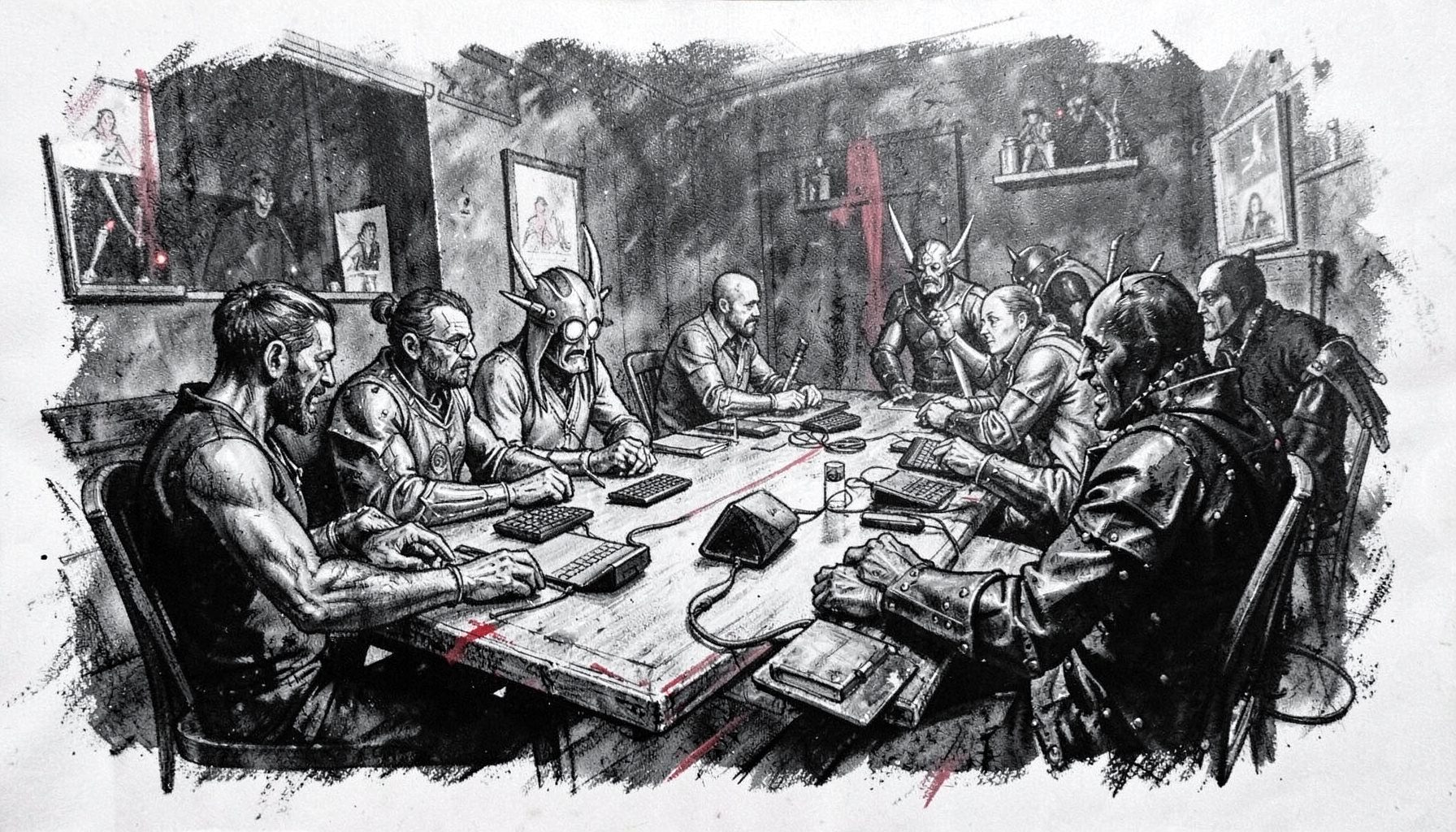
A tabletop role-playing game is built from shared attention. One person may describe the setting and portray its dangers, but the story gains shape through every player’s decision, hesitation, joke and unexpected idea. The most memorable campaigns feel less like performances delivered to an audience and more like scenes assembled by the whole table.
This approach suits the social spirit of conventions such as High Level Games Convention, held at the Showboat Hotel in Atlantic City in 2018. Players, designers, artists, publishers and live-action role-players met through sessions, workshops, panels, an exhibitor hall and immersive activities. The event treated gaming as a community practice, where different kinds of creativity could overlap.
Australian players will recognise the appeal. A group might gather in a Melbourne game shop, a Brisbane lounge room or a Sydney university club, then continue a campaign online when work rosters, long distances or public transport make regular meetings difficult. With games, books and convention tickets often priced in Australian dollars and shipped across a large country, a welcoming table matters as much as the rule system.
Collaborative storytelling also offers a useful alternative to competitive habits. The aim is not to defeat the game master or produce the cleverest monologue. It is to create a fictional world where everyone has room to contribute, respond and make meaningful choices. Good facilitation gives that creativity direction without squeezing it into a fixed script.
Shared Authority At The Table
The game master usually controls the setting, non-player characters and unfolding threats, while players guide their characters. That division provides structure, but it should not become absolute ownership. Players can add details about a neighbourhood, invent a relationship with an innkeeper or explain why their character knows a local custom. These contributions make the world feel inhabited rather than pre-packaged.
A strong facilitator accepts useful ideas while protecting coherence. If a player proposes that their ranger once worked at the royal observatory, the game master can incorporate it without allowing the character to know every secret in the kingdom. Authority becomes flexible: the facilitator decides what fits, while the group supplies material worth fitting in.
This balance is particularly valuable in convention games, where strangers may have different levels of experience. A beginner should be able to suggest an approach without needing a decade of system knowledge. HLGCon’s beginner RPG guide reflects the value of clear entry points for people discovering tabletop play.
Listening Creates Better Fiction
Collaborative play depends on listening as much as speaking. Players need to notice the detail another person has introduced and build on it rather than immediately redirecting attention to their own character. A bard’s song might become evidence in an investigation; a fighter’s old scar might connect to an enemy; a joke about a suspicious goat might develop into a village mystery.
This does not require every contribution to be dramatic. Quiet players may show engagement through careful questions, tactical suggestions or a single vivid description. The facilitator can make room by pausing after a scene, inviting a character’s reaction, or asking what someone notices rather than demanding a performance.
The table’s conversational rhythm matters in Australian groups too. A relaxed “yeah, nah” can signal uncertainty, while a quick “good on ya” may encourage a bold idea, but slang should never become a barrier for players from different backgrounds. Shared fiction works best when humour creates belonging rather than testing who understands the in-jokes.
Building On Yes
A useful principle in improvisational storytelling is to accept a contribution before adding a complication. “Yes, and” does not mean agreeing to every proposal exactly as stated. It means recognising the creative offer, then giving it consequences. If a character claims to know a hidden route through the city, the facilitator might accept that knowledge while placing a price on using it.
Players can apply the same method to one another. When someone says, “My character recognises the crest,” another player might respond, “Then my character remembers seeing it on the letter we burned.” The scene becomes richer because the second idea extends the first rather than competing with it.
Boundaries remain essential. A player can decline a direction that makes them uncomfortable, and the group can use safety tools such as lines, veils, open-door breaks or an agreed pause phrase. Consent is part of the creative method: people take bigger imaginative risks when they know the table will respect a limit.
Character Choices Need Consequences
A character becomes compelling through decisions under pressure, not through an elaborate biography alone. Backstory is most useful when it creates relationships, obligations and unresolved tensions that can enter play. A former smuggler may owe money to a dockmaster; a healer may refuse to abandon an enemy; a scholar may recognise that the villain’s theory is partly correct.
Consequences turn those details into shared narrative. If players betray an ally, the story should remember it. If they save a town, that success may alter prices, politics or local gossip. Consequences do not have to be punishments. They can open new alliances, reveal unexpected responsibilities or change how the world sees the party.
For live-action and tabletop players moving between formats, the principles overlap even when the physical experience differs. A practical guide to building a LARP character shows how motivations, relationships and playable goals help a character contribute during a busy convention weekend. The same foundations support a tabletop role, even when the action happens around a small table.
Designing Scenes For Everyone
A scene should offer several kinds of participation. One player may enjoy negotiation, another tactical planning, another exploration, and another emotional conversation. A varied session allows these strengths to matter without requiring everyone to enjoy the same spotlight. The best encounter is rarely a single puzzle with one correct solution.
Facilitators can prepare situations instead of scripts. Give the group a problem, competing interests and a few clues, then allow their approach to determine what happens. If the characters need access to a restricted archive, they might forge credentials, negotiate with a librarian, sneak through a storm drain or expose the official who controls it.
When planning a convention session, practical limits shape the design. A two-hour slot at a convention in Adelaide or Perth needs a focused premise and clear stakes, while a regular campaign can let a mystery unfold over several evenings. Travel time, venue noise and the cost of attending Australian events make preparation worthwhile, but structure should support spontaneity rather than eliminate it.
Tools For A More Generous Session
Small habits can protect the group’s shared attention. Keep rules explanations brief during dramatic moments, ask players what their characters do before describing the result, and make sure discoveries do not depend on one person remembering every detail. A shared note, index card or digital campaign document can hold names, clues and promises.
Useful table practices include:
- Establish the tone, boundaries and expected level of rules knowledge before play
- Invite quieter players into scenes without putting them under uncomfortable pressure
- Describe failures as changes in the situation rather than dead ends
- Share spotlight time between character abilities, relationships and decisions
- Pause briefly when the table becomes confused, tense or overloaded
Accessibility also involves the physical and social environment. Check whether players need seating adjustments, readable handouts, breaks, lower lighting or alternatives to loud group performance. Australian venues can vary widely, from air-conditioned hotel rooms to crowded community halls, so a little planning helps everyone stay present through a long session.
Inclusive practice does not flatten differences between players. It makes those differences usable. A player familiar with Māori or Aboriginal storytelling traditions, a lover of anime-inspired games, or someone new to fantasy conventions may bring a perspective that changes the group’s assumptions. Respectful curiosity can turn those differences into texture without treating anyone as a cultural resource.
From Convention Table To Ongoing Campaign
A convention can demonstrate collaborative storytelling in concentrated form. At an event such as HLGCon’s programme, a player might move from a tabletop session to a panel, workshop, LARP experience or escape room, encountering different approaches to character, setting and group participation. Each activity reveals that narrative can be shaped through rules, bodies, props, conversation and shared space.
The challenge after a convention is carrying that openness into a regular campaign. Groups can begin each session by recalling unresolved threads, then end by recording the choices that changed the situation. A short debrief helps identify which moments felt exciting, confusing or overlooked without turning the game into a performance review.
For Australian groups, an ongoing campaign may need flexible scheduling. Players in regional areas might use voice chat between face-to-face meet-ups, while city groups may rotate venues between homes, libraries and game stores. A campaign can survive missed sessions when its story belongs to the whole group rather than depending on one perfect attendance pattern.
What Players Carry Forward
The deepest skill in tabletop role-playing is treating another person’s idea as material for discovery. That means asking what a detail changes, allowing a failed roll to create a new direction, and giving every player a reasonable chance to affect the fictional world. The plot becomes memorable because it could not have been written in exactly the same way by anyone alone.
Collaborative storytelling is therefore a discipline of generosity and attention. Rules provide a shared language, character choices provide momentum, and the group’s responses create meaning. Whether the session takes place at a convention hotel, a suburban kitchen table or an online gathering spanning several Australian time zones, the essential principle remains: listen closely, build together and remember that everyone at the table helps make the story real.