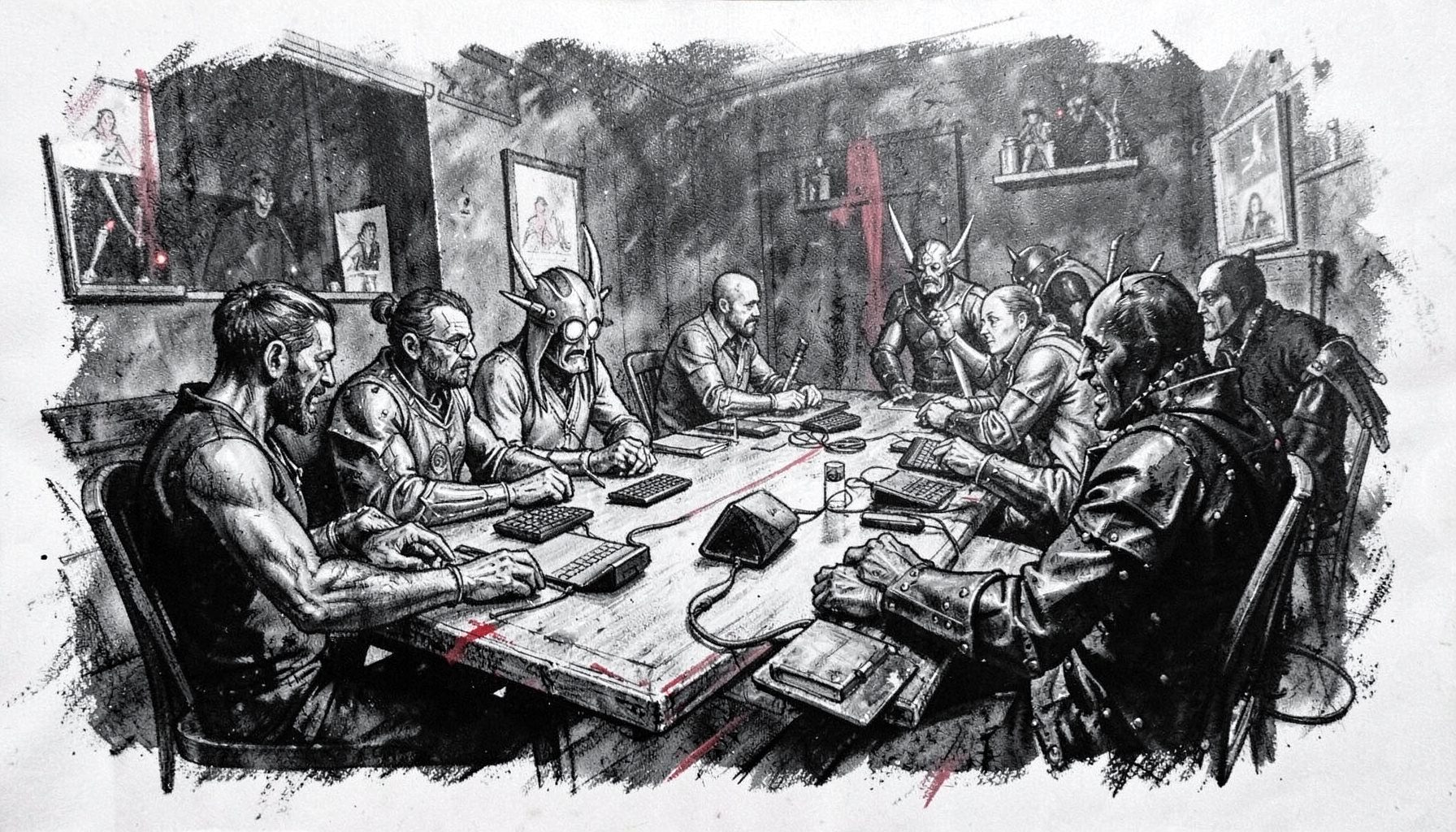
A Beginner’s Guide to Tabletop RPGs at HLGCon 2018
High Level Games Convention, or HLGCon 2018, gave newcomers a friendly way to explore tabletop role-playing games at the Showboat Hotel in Atlantic City, New Jersey. The convention brought together players, game masters, designers, artists, publishers and vendors for several days of shared storytelling.
For an Australian visitor, a tabletop RPG can seem unfamiliar at first. There may be unusual dice, character sheets, fantasy terminology and a group of people who already appear to know one another. In practice, the hobby is built around conversation, imagination and a few simple rules.
A role-playing game usually has one game master who describes the setting, presents problems and interprets the rules. The other players portray individual characters, deciding what those characters say and do. Dice or other randomisers help determine whether risky actions succeed.
HLGCon’s programme also extended beyond traditional campaigns. Attendees could try live-action role-playing, workshops, panels, escape rooms, exhibitor activities and social events. That mixture made the convention useful for anyone interested in collaborative storytelling, whether they had played Dungeons & Dragons for years or had never rolled a twenty-sided die.
What Happens During A Tabletop RPG Session
A typical session begins with a short explanation of the game, the setting and the characters. Some events use pre-generated characters, which is ideal for beginners because you can start playing without spending an evening calculating abilities, choosing equipment or writing a backstory.
The game master then establishes a scene. You might be investigating a missing shipment, negotiating with a suspicious merchant or exploring an abandoned space station. You describe your character’s response in ordinary language, and the game master explains what happens next. When the outcome is uncertain, the group follows the game’s rules and rolls dice.
You do not need to perform, speak in an accent or invent brilliant dialogue. Saying, “My ranger checks the window for tracks,” is enough. The most important habit is listening to the other players and leaving room for their characters to contribute.
At HLGCon, sessions could vary greatly in tone. A fantasy adventure might sit near a science-fiction game, a horror mystery or a rules-light storytelling experiment. Check the premise and content notes before joining, especially if you prefer to avoid intense horror, adult themes or complex tactical combat.
Choosing A Game And Finding Your Place
Beginners often worry that they need to recognise every system before sitting down. You only need enough information to understand the basic premise, the expected tone and the approximate session length. A convention game usually teaches the essential rules at the table.
Look for descriptions containing phrases such as “beginner friendly”, “learn to play”, “characters provided” or “drop-in session”. A two- to four-hour game is often easier for a first experience than a full-day event. If you are travelling from Melbourne, Sydney, Brisbane or Adelaide, leave room in your schedule for rest and time-zone adjustment rather than booking every available slot.
The convention’s guest lineup could also help you identify designers, performers and creators whose work interests you. Panels and demonstrations are useful alternatives when a game is full, and they offer a low-pressure way to learn how different people approach game design.
A friendly table will explain its expectations clearly. Ask whether the session uses shared dice, whether phones are acceptable during breaks and whether the game includes player-versus-player conflict. In Australia, many players are used to casual meet-ups at local game shops, libraries and community halls, so the same relaxed attitude can make it easier to introduce yourself at an American convention.
Prepare For The Convention Experience
Atlantic City is a long journey for many Australians, so practical planning matters. A visitor from Sydney or Brisbane may need to coordinate international flights, accommodation and local transport, while someone travelling from Melbourne or Perth should allow extra time for jet lag. The Showboat Hotel provided the central convention setting, making it worthwhile to check how far your accommodation is from the venue before committing to late-night activities.
Carry comfortable shoes, a refillable water bottle, a small notebook and a phone charger. Convention days involve more walking and standing than expected. Australian travellers may also be accustomed to EFTPOS and tap payments everywhere, whereas American vendors in 2018 could have different card, cash and tipping arrangements. Keeping a modest amount of US cash alongside a payment card was sensible for small purchases.
The exhibitor hall was a chance to browse rulebooks, dice, miniatures, artwork and independent games. If you buy something, keep receipts and remember that Australian Consumer Law protects purchases made in Australia, not necessarily goods bought from an overseas convention vendor. Check baggage limits before buying large books, boxed games or fragile collectibles.
Alcohol service and age rules also differ between Australia and the United States. Follow the hotel’s licensing requirements, carry suitable identification and do not assume that Australian drinking customs apply in New Jersey. Respecting venue policies helps keep gaming spaces comfortable for attendees of different ages.
Plan Your First Convention Day
A little preparation can prevent decision fatigue. HLGCon included many concurrent activities, so choose a few priorities and leave open time for conversations, meals and unexpected discoveries. The following checklist suits a first-time attendee:
- Select one beginner-friendly RPG session and one backup activity.
- Read the event description for tone, length, age guidance and required materials.
- Pack dice only if the session asks you to bring them; many introductory games provide supplies.
- Wear layers because convention rooms can feel cooler than busy corridors.
- Set a spending limit for books, art, accessories and vendor exclusives.
At the table, good etiquette is more valuable than expert rules knowledge. Everyone benefits when players share attention, accept rulings calmly and help new participants follow the action. These habits are particularly useful when a session includes strangers from different gaming cultures:
- Introduce yourself and briefly describe your experience level.
- Ask the game master to explain unfamiliar terms or mechanics.
- Let each player have space to speak and make meaningful choices.
- Keep character conflict separate from personal disagreement.
- Tell the organiser if a topic or behaviour makes the session uncomfortable.
HLGCon’s inclusive community focus meant participation could take several forms. You might play a game, attend a workshop, watch a live-action scene, explore an escape room or talk with a designer about a prototype. There is no requirement to be constantly active; taking a quiet break is part of managing a long convention day.
If you enjoy a particular session, note the game’s name and creator before leaving. That small detail makes it easier to find a local group after returning to Australia. Game shops in Sydney, Melbourne, Brisbane, Canberra and other cities often host learn-to-play nights, organised campaigns and board-game meet-ups.
Turn A Convention Session Into A Lasting Hobby
The first game may feel confusing because several new skills arrive at once: reading a character sheet, speaking in character, tracking turns and understanding a rules system. That confusion usually fades quickly. Focus on one decision at a time rather than trying to memorise every modifier.
After the session, consider what you enjoyed. You may prefer tactical combat, investigative mysteries, character drama, comedy or world-building. You may also discover that you like designing adventures more than playing a character. HLGCon’s workshops and creator events were valuable because they showed how many roles exist within the hobby.
Some Australian players join online groups because travel between cities can be expensive and local campaigns may fill quickly. Others prefer face-to-face games at a suburban game store or a friend’s home. If you organise a group yourself, agree on meeting times, safety boundaries, food arrangements and how rules disputes will be handled. A shared Google calendar and a simple group chat can make regular sessions much easier to maintain.
HLGCon also invited participation from creators and organisers through its event submission form. That detail reflects an important part of tabletop culture: conventions are shaped by the people who offer games, talks and activities, not only by professional publishers. A beginner who starts by playing may eventually run a one-shot, design a setting or volunteer at a local event.
The choices below show how different convention activities can serve different first-time goals:
| Activity | Best for | What to expect | Preparation |
|---|---|---|---|
| Beginner RPG session | Learning the core hobby | Guided play with rules explained | Read the description |
| Panel or workshop | Understanding design and storytelling | Discussion, examples and questions | Bring notes |
| LARP experience | Trying physical, character-led play | Costumes, movement and in-world interaction | Check clothing guidance |
| Escape room | Solving a shared challenge | Timed puzzles and teamwork | Arrive early |
| Exhibitor hall | Discovering games and creators | Books, art, dice and demonstrations | Set a budget |
A successful first visit does not depend on winning, buying the newest rulebook or understanding every convention acronym. It depends on finding one welcoming activity, making a few choices together and noticing what kind of play makes you want to return. Before travelling, save the session details you want to attend and place one beginner-friendly game on your personal schedule.