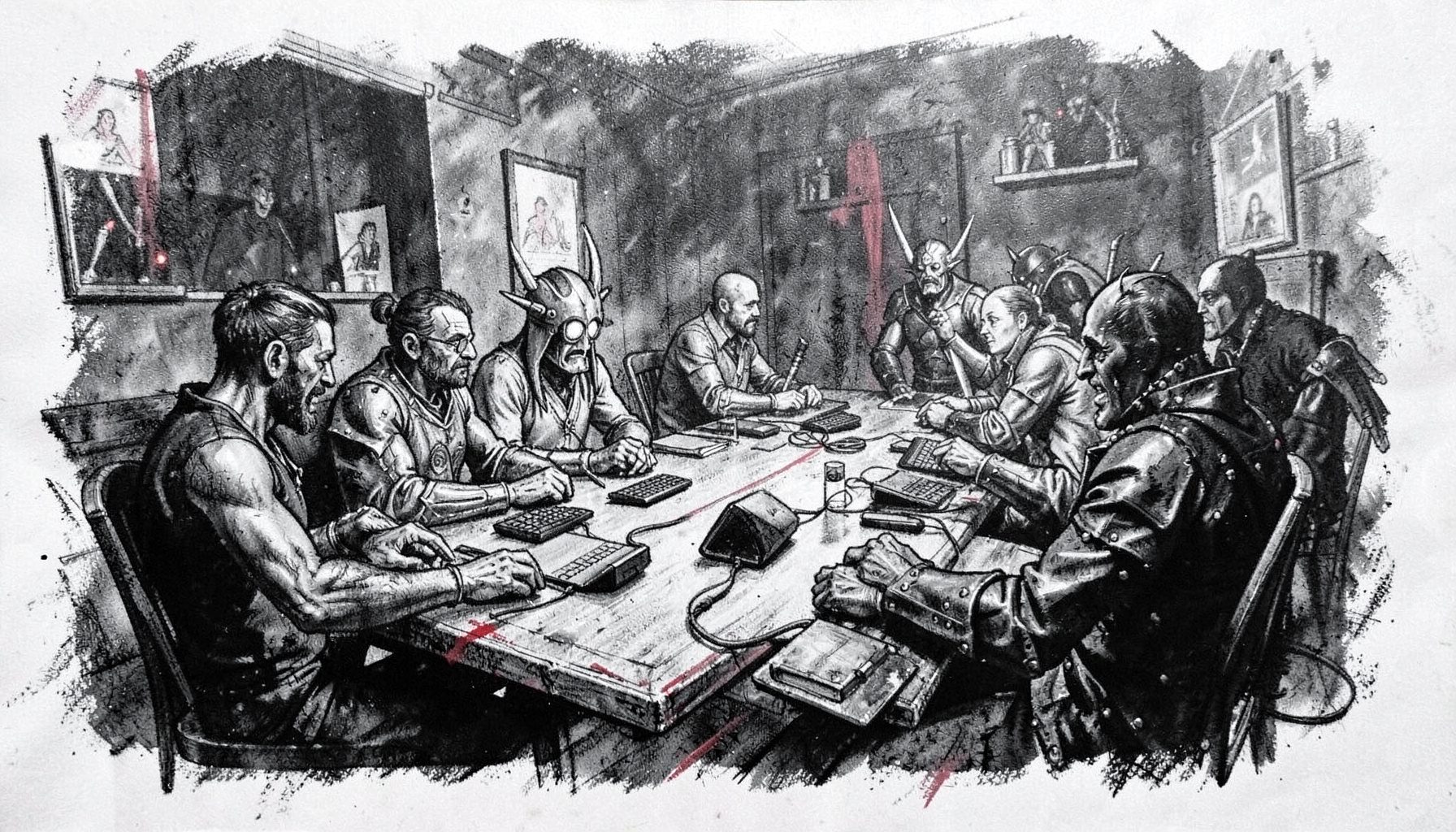
Why Atlantic City Was a Surprising LARP Setting
Atlantic City is usually associated with casino floors, neon signs, seaside hotels and the wooden boardwalk stretching along New Jersey’s coast. It may sound like an unusual location for live-action role-playing, especially beside familiar fantasy settings such as castles, forests or purpose-built campgrounds. Yet that contrast gave the High Level Games Convention a memorable identity in 2018.
Held at the Showboat Hotel, the convention placed tabletop players, LARPers, designers, artists and publishers in a setting already full of atmosphere. The building’s scale, coastal character and history created useful spaces for intrigue, adventure and collaborative storytelling, while the surrounding city supplied visual details that could easily inspire a modern supernatural campaign.
For Australian players, the appeal is easy to understand. A LARP venue does not need to look like a medieval village to support immersive play. A large hotel in a busy entertainment district can offer corridors, lounges, event rooms and public gathering areas that encourage social scenes, faction politics and unexpected encounters.
A Boardwalk City Full Of Story Hooks
Atlantic City carries a strong sense of place. The boardwalk, oceanfront hotels and grand entertainment venues create an environment where glamour and decay sit close together. That tension is valuable for live-action role-playing because it supports characters with competing motives: wealthy patrons, desperate gamblers, occult investigators, performers, fixers and travellers passing through town.
The city also has a layered history. Its reputation has shifted through periods of prosperity, decline, redevelopment and tourism. A game designer can turn those changes into fictional history, using abandoned buildings, old family businesses or rival hotel empires as the foundation for a campaign. The setting feels lived-in before the first character arrives.
This kind of urban atmosphere can be more flexible than a remote outdoor site. A fantasy LARP might use the hotel as a noble court, a guild headquarters or a temporary embassy. A contemporary game could treat it as a convention centre, casino resort or private refuge. The same physical location can support different genres without requiring elaborate scenery.
The Hotel Became Part Of The Game
The Showboat Hotel offered the practical advantages of a convention venue while retaining a strong visual identity. Large function rooms could host panels, workshops, tabletop sessions and LARP briefings. Hallways and shared areas gave players natural transition spaces between formal activities, which are often where role-play develops spontaneously.
A hotel also creates useful boundaries. Organisers can separate noisy social areas from quiet rules briefings, private scenes and safety check-ins. That structure matters in an immersive game, particularly when a convention includes first-time participants. Clear room assignments and visible staff support help players understand when they are inside the fiction and when they are attending ordinary convention programming.
Comfort is part of immersion, too. Participants may spend many hours standing, moving between rooms or wearing layered costumes. Practical clothing advice such as comfortable costume layers is especially relevant in a hotel environment, where players need mobility without sacrificing the visual identity of their character.
For an Australian audience, the comparison might be a role-play event hosted in a large Melbourne hotel, a Brisbane function centre or a heritage venue in Adelaide. The location does not need to be purpose-built for LARP. It needs enough room for safe movement, accessible facilities, clear supervision and a setting that players can reinterpret together.
Casinos, Secrecy And Social Tension
Atlantic City’s gambling culture offers an immediate framework for games based on risk and negotiation. Even when a LARP does not use real gambling, casino imagery suggests hidden debts, uncertain alliances, high-stakes bargains and people trying to maintain a polished public image. Those themes fit mystery, crime, horror and urban fantasy particularly well.
The contrast between public performance and private intention is central to many live-action games. A character might smile through a formal dinner while secretly arranging a betrayal. Another might use a glamorous costume to hide a dangerous past. The hotel setting makes these interactions feel plausible because players are already surrounded by spaces designed for entertainment, status and spectacle.
A casino-inspired environment also encourages small, contained scenes. Two characters can negotiate in a lounge, a group can investigate a rumour near an event room, and a faction leader can deliver a speech to assembled guests. These scenes do not require elaborate props. They rely on strong character objectives, clear boundaries and a venue that gives each interaction a believable context.
The concept can be adapted for the Australian market without copying American casino culture directly. A local game might draw on Melbourne’s laneways, Sydney’s harbour hotels, Gold Coast tourism or the atmosphere of a regional club. Organisers should also consider Australian gambling regulations, venue policies and community expectations when designing a casino-themed experience.
Community Made The Setting More Immersive
The convention’s strength came from participation across the gaming community. LARPers, tabletop groups, artists, publishers and vendors brought different expectations and creative skills. That variety meant the venue was not simply a backdrop. It became a meeting point where visitors could move between fictional play, game design discussions, demonstrations and informal conversations.
For new participants, a convention-based LARP can feel less intimidating than an isolated campaign weekend. There are other activities nearby, and players can observe before committing to a scene. Workshops and panels can explain safety tools, character creation, consent practices and improvisation. Those supports help build a healthier community around immersive games.
Game masters also benefit from the convention structure. They can test a short scenario, collect feedback and meet players who enjoy different genres. A useful guide to running a first convention game reflects the preparation required, from scheduling and rules explanations to managing expectations at the table or in the play space.
Australian conventions often face a different scale and geography. Players may travel from Perth to Melbourne, from Canberra to Sydney or from regional Queensland to Brisbane, making concise, well-organised sessions especially valuable. Events such as PAX Aus, Supanova and local tabletop conventions show that there is an audience for collaborative gaming, but organisers still need to account for travel costs, public transport, accommodation and the limited availability of specialist venues.
Making An Unusual Venue Work
A surprising LARP setting succeeds when the organisers turn its real features into playable assets. The boardwalk can inspire rumours or faction entrances. A hotel lobby can become a neutral meeting place. A private function room can serve as a council chamber, laboratory or royal court. Even the building’s ordinary restrictions can sharpen the fiction by forcing characters to plan around time, access and privacy.
The following elements help transform a convention hotel into a coherent live-action environment:
- Distinct rooms assigned to specific factions, scenes or narrative functions
- Clear signage that separates in-character areas from safety and registration spaces
- Flexible costume guidelines suited to long sessions and changing weather
- Staff or game masters available for rules questions and conflict de-escalation
- Props, sound cues and lighting used selectively rather than as expensive decoration
Budget planning matters as much as atmosphere. Independent designers may have limited access to paid advertising, specialist printers or large scenery collections. A practical low-cost convention marketing approach can help a LARP reach players through social media, community groups, flyers, demo sessions and partnerships with local retailers.
For Australian organisers, ticket pricing should be considered in Australian dollars and set against the realities of a smaller, geographically dispersed market. A weekend event in Sydney may have a different cost structure from one in Hobart or Newcastle. Public transport access, late-night travel, air conditioning, summer heat and venue accessibility can affect attendance as much as the game premise.
The most important lesson from Atlantic City is that immersion comes from shared interpretation. The Showboat Hotel did not need to resemble a fantasy fortress. Its corridors, rooms, coastal location and entertainment history gave players enough material to build a world together. When choosing a venue, organisers can begin with practical features—safe movement, useful rooms, reliable facilities—and then let the participants turn those features into story.
A hotel beside a boardwalk may seem an unlikely LARP location, but that is precisely why it works: the familiar becomes strange when players give it secrets, factions and consequences. The practical takeaway is to choose a venue with adaptable spaces and a strong identity, then design the game so every real feature can support play.