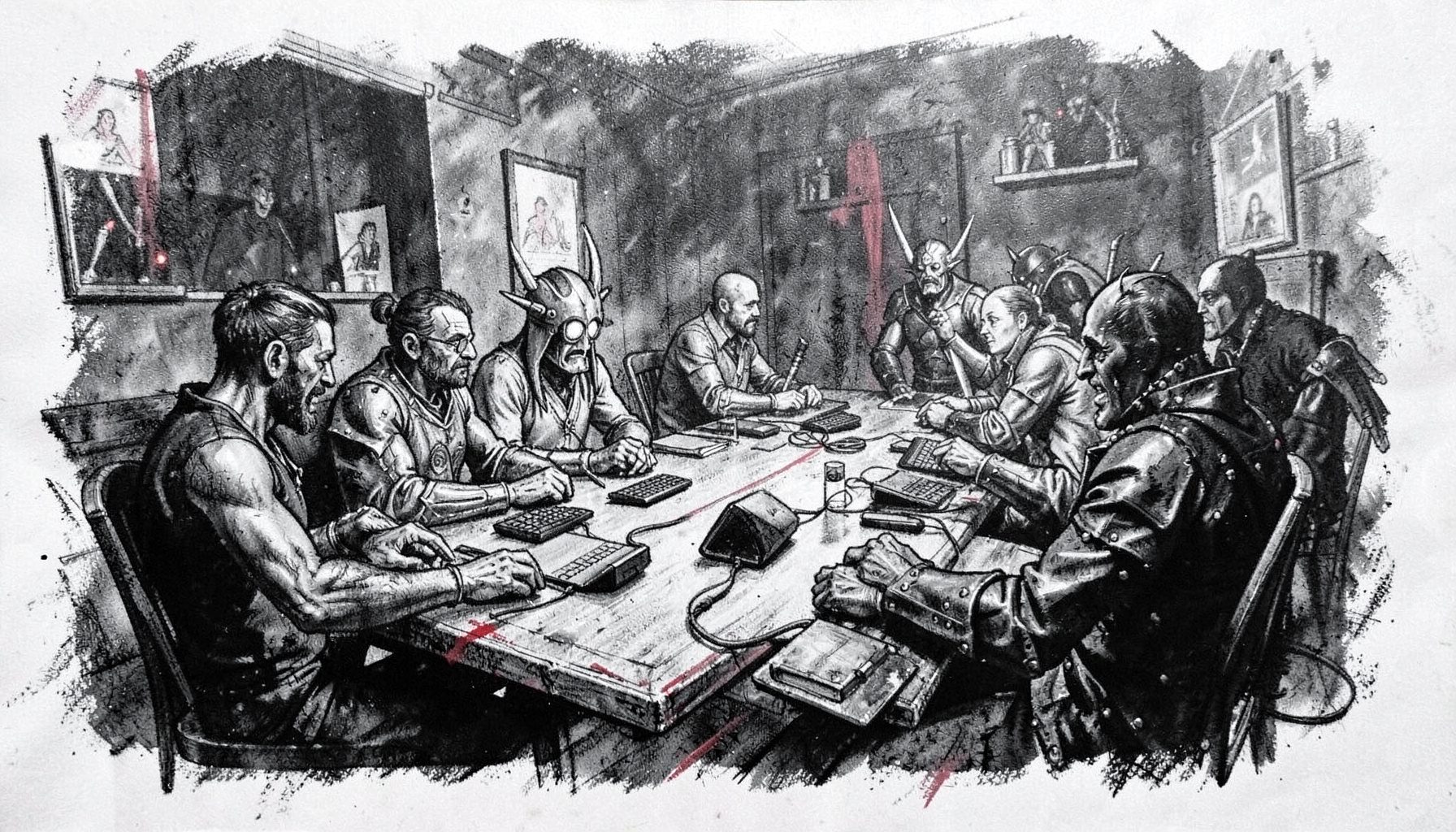
A Guide to Attending Your First Convention as a Game Master
Attending your first convention as a game master is equal parts play and responsibility. You will guide a shared story for people you may never meet, work inside unfamiliar schedules, and discover how a room full of strangers turns a printed scenario into a memorable evening.
High Level Games Convention, held at the Showboat Hotel in Atlantic City in 2018, offers a useful snapshot of that experience. Tabletop role-players and live-action participants shared the venue with designers, artists, publishers and vendors. LARP games, panels, workshops, an exhibitor hall and escape rooms created several ways to join in, while the emphasis on inclusive participation made collaboration more important than performance.
A first-time GM may arrive with a character creation idea, a half-prepared adventure or a carefully tested one-shot. The practical challenge is turning that preparation into a session that starts on time, explains the rules quickly and gives every player a meaningful role.
Australian conventions have their own rhythm. Events such as Supanova, GCAP in Canberra, Continuum in Melbourne and PAX Aus give first-timers plenty of choice, although a single large event can feel very different from a compact regional con. The badge is only the beginning: schedules, travel, game etiquette, volunteer-run spaces and the local hobby market all shape the day.
Practical Preparation Checklist
Decide what success looks like before packing. For a first convention, running one polished session is more valuable than promising an entire campaign. Check the published programme, note registration deadlines and choose a game that fits your available preparation time. A clear plan also leaves room for an unfamiliar venue, delayed players or an unexpected group size.
- Choose a scenario with a definite beginning, middle and end.
- Read the full adventure and prepare answers to likely rules questions.
- Set a firm session length, including a short comfort break.
- Bring essential dice, pencils, character sheets and backup notes.
- Explain the premise, tone and safety boundaries before play begins.
- Reserve time for registration, travel delays and finding the correct room.
- Keep one simpler activity available if the main session cannot run.
Australian game stores, role-playing forums and convention Discord channels can help with final checks. Ask a local contact about parking, quiet spaces, food options and whether sessions are seated or played on raised tables. Their practical advice will be more reliable than assuming every convention follows the same format.
Designing a Session Strangers Can Join
For a manageable first outing, choose a one-shot with a clear beginning and end. The convention archive’s quickstart RPG guides can help you compare approachable systems and learn their basics in one sitting. A lightweight system is useful when players have never used the rules before, but familiarity matters more than novelty.
Build the first ten minutes as an onboarding sequence. Explain the setting, the central problem, what each player controls and how the group will make decisions. Offer pre-generated characters for anyone who wants to jump straight in, while leaving room for players who enjoy creating their own. Give each person an immediate hook so nobody spends the opening scene wondering whether they matter.
Set expectations for the story’s emotional temperature. A convention game may involve deception, combat, grief or intimate scenes, so establish boundaries without undermining the mystery. Explain the venue’s signal for pausing, check whether anyone needs a quieter role, and never require a player to disclose personal information to participate.
Logistics, Money and Local Navigation
Australian convention prices are usually quoted in Australian dollars, and public ticket pages commonly show GST-inclusive totals rather than adding tax at the till. Eftpos, Visa and Mastercard are widely accepted, although carrying a little cash can help with creators selling odds and ends. Check what your badge covers before budgeting; some events charge separately for workshops, food, travel or premium programme activities.
Major cities usually place convention venues near rail, bus or tram routes, but the site may still occupy several buildings. Sydney’s Opal and light rail, Melbourne’s Myki and tram network, and Brisbane’s TransLink can make public transport simpler than searching for parking. Download the relevant app, save the venue address offline and allow extra time if the convention is spread across different rooms or nearby venues.
Many Australian conventions depend on volunteers, so staff and GMs are expected to follow the published code of conduct and help newcomers find their way. Casual dress is normal, and wearing elaborate cosplay is optional even at events where it is popular. Treat volunteers as partners rather than obstacle-catchers: ask them about session changes, accessibility and local rules instead of assuming every procedure matches another convention.
Promote the game without buying advertising: a concise pitch, a pinned social post and a sign at the con can fill a few seats. The advice on marketing on a budget fits that approach. Focus on the player experience rather than listing every rule or lore point.
Running the Game on Convention Day
Arrive early enough to find the room, check the display and settle your materials before players arrive. Introduce yourself as the GM, confirm the time limit and place any notes where only you can see them. If another group is using the space, coordinate with the volunteer or assigned marshal rather than beginning through the furniture.
Australian convention culture is often direct but good-natured. Say, “I need everyone to stop talking for one round,” rather than issuing a long, indirect complaint. Familiar expressions such as “arvo” and “no worries” may appear in conversation, but clarity is more important than imitating local slang. Give equal attention to quieter players and avoid letting confident role-players make every decision.
Watch the clock without rushing the story. Pause for a comfort break, note important choices and bring the session to a clear endpoint rather than stopping wherever the timer ends. Respect different play cultures: tabletop rules do not automatically translate into LARP behaviour, and participants moving between formats may need different safety expectations. After the final beat, thank the players and leave the space ready for the next group.
Keep the Game Human
The format you choose affects preparation, pacing and player expectations. A published scenario reduces improvisation, while a flexible scenario supports unexpected choices but demands stronger local knowledge. The following comparison highlights the most useful distinctions:
| Format | What the GM handles | Best fit for | Main trade-off |
|---|---|---|---|
| Prepared one-shot | Rules, pacing and a fixed plot | A first convention or limited preparation time | Less room for unexpected directions |
| Flexible scenario | Rules, pacing and improvised consequences | An experienced GM comfortable making decisions | Requires careful preparation and note-taking |
| Rules-light microgame | Rules, a central choice and short encounters | New players who need fast onboarding | Less opportunity for a deep campaign |
| Tournament scenario | Rules, encounters and a balanced challenge | Groups already familiar with the system | Creative solutions may face strict limits |
Choose the format that lets you concentrate on people rather than administration. A smooth session does not require perfect voices, flawless improvisation or an elaborate map. It requires a shared objective, clear boundaries and enough attention to notice when a player has become disengaged.
Remember that a first convention is not a test of world-building or rules knowledge. It is an opportunity to tell a story with people, trust the room and leave the next session better prepared than the first. The badge gets you through the door, but the human details determine whether the day feels welcoming: a clear welcome, a well-paced story and enough space for every player to take part.