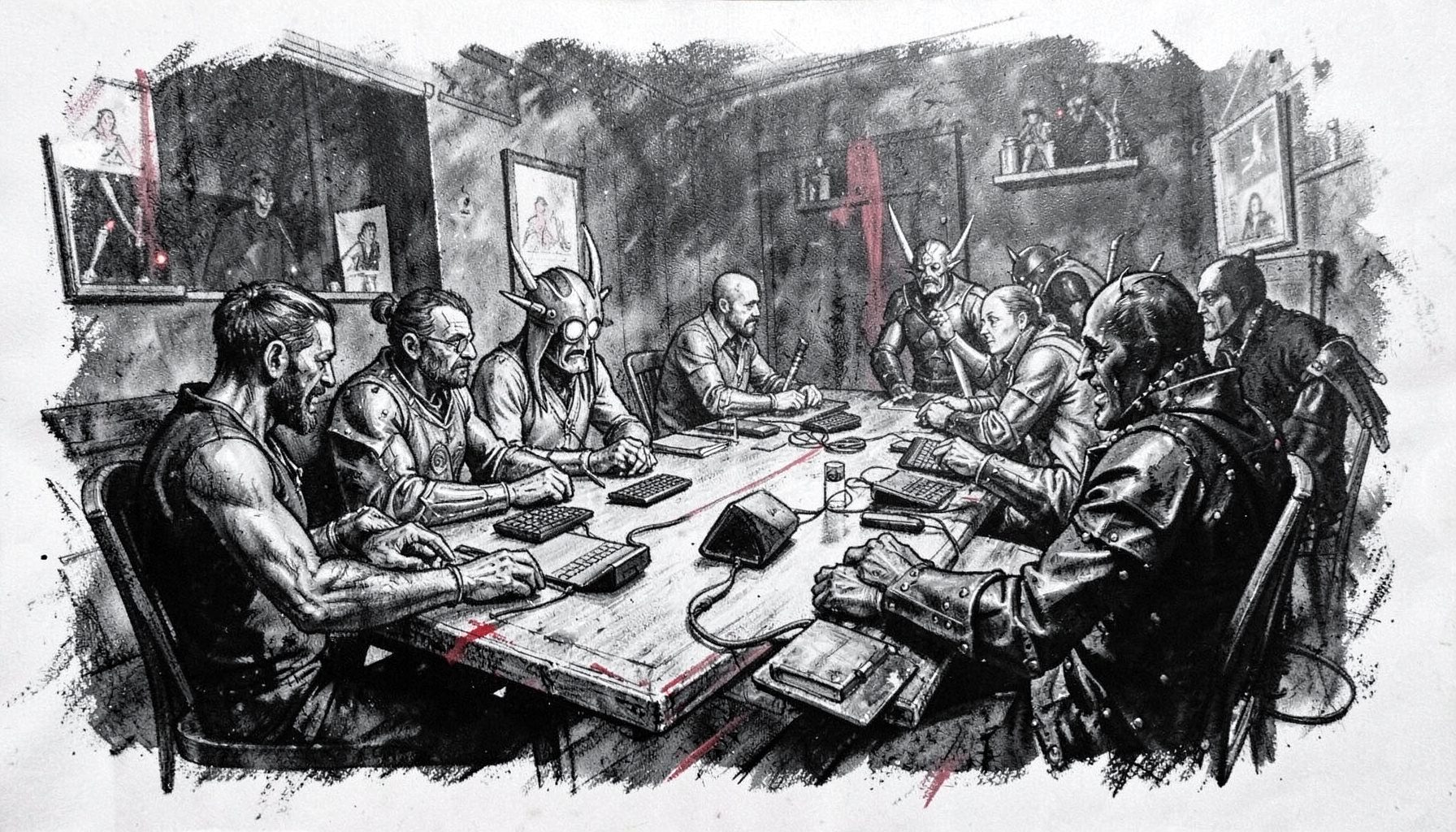
Free RPGs you can learn in a single session
Australians have always been quick to adopt new pastimes, and tabletop role-playing games are no exception. With busy schedules, long commutes between Sydney and Perth, and a pub culture extending to game nights, finding time to learn complex rule systems can feel impossible. The good news is that a growing library of free RPGs is designed for this scenario: rules-light, focused on storytelling, and ready to run in an evening. These games reward curiosity over preparation, whether you're a newcomer or a veteran sampling something new.
The Australian gaming scene has matured significantly, with conventions in Melbourne, Brisbane, and Adelaide drawing thousands of attendees. Events like PAX Australia and the fondly remembered High Level Games Convention have helped normalise tabletop play as a mainstream hobby. Regional cities like Hobart and Darwin host local meetups through Facebook groups and Discord servers, meaning picking up a new system rarely has to be a solo endeavour.
One-session RPGs compress character creation, narrative arcs, and resolution mechanics into a manageable package. Unlike dungeon crawlers demanding hours of prep, these games include pre-generated characters, simple d6 or card-based systems, and guidance for first-time game masters. They embody the Australian spirit of "have a go" — a phrase capturing experimental, low-stakes gaming.
Why one-session RPGs suit Australian schedules
Between work commitments, family obligations, and weekend trips to Bunnings or the local footy match, carving out time for a multi-session campaign can be tough. One-session RPGs fit neatly into a Friday night in Fremantle, a Sunday afternoon in a Surry Hills share house, or a lunch break in Brisbane. The commitment is small, the satisfaction high, and there's no penalty for missing a week.
Many Australians have embraced the "drop-in, drop-out" nature of these games, which mirrors the casual approach to other recreational activities. A group can decide on Friday to play something on Saturday, download a free PDF, and be rolling dice by evening. This spontaneity appeals to younger players juggling university and casual employment. It makes these games ideal for testing whether you enjoy tabletop role-playing before investing in expensive rulebooks.
The economic angle matters too. With cost-of-living pressures across the country, free RPGs remove the financial barrier. Anyone with a smartphone, a printer, and a handful of dice can access complete game systems. Some titles use playing cards or apps instead of polyhedral dice, meaning you can play anywhere — from a Carlton café to a Grampians campsite.
Rules-light systems that make sense immediately
The beauty of modern indie RPG design lies in its minimalism. Games like Lasers & Feelings, Everyone is John, and Honey Heist use one-page rule sets learned in minutes. They operate on a simple mechanic: roll a die, add a modifier, compare to a target number. The Australian market has responded enthusiastically, with stores in Melbourne's CBD and Sydney's Newtown stocking dedicated shelves for zine-sized releases.
Many games draw inspiration from local storytelling traditions, whether larrikin humour from works like Bluey or the mythic resonance of Aboriginal oral histories. The short-form format allows for experimental narratives. You can play a game about managing a Sydney Harbour ferry, investigating a haunted Adelaide Hills winery, or surviving a long-haul flight from Tullamarine to Heathrow — all within two hours.
For those intimidated by traditional RPG tropes, these one-page wonders offer a gentle on-ramp with no need to memorise spell lists. The focus stays on collaborative storytelling, aligning with the inclusive community values that events like the High Level Games Convention championed during their 2018 run. To experience a similar atmosphere closer to home, Australian players often visit the hlgcon.com site for inspiration on running inclusive events.
Solo and small-group options for isolated areas
Australia's vast geography means many players live hours from the nearest game store. In towns like Broken Hill, Mount Isa, or Warrnambool, finding a regular group can be challenging. Solo RPGs offer a practical solution, requiring only the player and a journaling system. Titles like The Wretched and the free version of Ironsworn provide structured solo play that feels like collaborative storytelling with an invisible partner.
Small-group games for two or three players plus a game master work well for intimate settings. These systems emphasise character relationships over combat, making them perfect for quiet evenings at home. A couple in a Hobart apartment, a parent and teenager in Cairns, or housemates in Darwin can all enjoy rich narratives without a full table. Single-person households make up a significant portion of the Australian population, and these games cater directly to that demographic.
Online play has become a lifeline for geographically isolated players. Discord servers, Roll20, and Foundry VTT allow Australians to connect globally with people in New Zealand, the UK, or the US. Time zone differences can work in your favour — a game scheduled for 7pm AEST in Sydney becomes a comfortable morning session for European players. This interconnectedness has fostered a vibrant international community of one-session RPG enthusiasts.
Building characters quickly without sacrificing depth
Character creation in one-session RPGs is designed to be fast, but that doesn't mean it's shallow. Many systems use prompts, random tables, or guided questionnaires to help players build compelling personalities in under fifteen minutes. This approach mirrors techniques used in improvisational theatre, which has a strong following in Melbourne and Adelaide. The goal is to create a character with clear motivations and potential for growth within a single session.
Australian designers have contributed to this space, with titles like Heart: The City Beneath offering quickstart rules that showcase local talent. The free guides for Dungeon World and World of Dungeons provide enough mechanical scaffolding for meaningful choices without overwhelming newcomers. Players select a playbook, mark a few boxes, and they're ready to play.
The process often involves asking "what does your character want?" and "what's standing in their way?" These questions work just as well in a Carlton share house as they do in a PAX Australia panel. The emphasis on collaborative creation means the group helps shape the character, which builds investment and ensures everyone feels included.
Conventions, meetups, and community events
While High Level Games Convention was a US-based event, the spirit of inclusive play lives on through Australian equivalents. PAX Australia, held annually in Melbourne, features dedicated tabletop areas where publishers demo quickstart rules. Good Games stores host learn-to-play nights, and university societies in Sydney, Brisbane, and Perth organise regular one-shot events for students and newcomers.
Local communities have embraced the format through initiatives like "RPG Day" and "International Tabletop Day," which often feature tables running quickstart scenarios. These provide low-pressure environments to try new systems alongside experienced players. The Australian Classification Board has generally been supportive of tabletop gaming, with most RPG content falling outside classification requirements unless it includes explicit material that would warrant an R18+ rating.
For those interested in the LARP side of the hobby, resources exist to help newcomers prepare their first characters for live events. A useful starting point is this LARP character guide that walks beginners through basic choices. Australian LARP groups operate in most states, often using public parks or community centres for weekend battles and role-play scenarios. The skills learned in one-session tabletop games transfer directly to live-action play, making them excellent preparation for larger conventions.
Standout free RPGs worth downloading this weekend
- Lasers & Feelings by John Harper — A one-page space opera resolving every action with a single die roll based on whether you're good with lasers or feelings. Perfect for zero-prep groups.
- Honey Heist by Grant Howitt — A comedic crime caper where you play as bears stealing honey. Uses a simple two-stat system and absurd random tables.
- Everyone is John by Michael Sullivan — A hilarious party game where players control aspects of a single character named John, competing to fulfil private goals.
- The Wretched by Chris Bissette — A solo journaling game about a monster in a dark fantasy world, requiring only a notebook and a six-sided die.
- For the Queen by Alex Roberts — A card-driven story game for three to six players that generates rich narratives through prompt-based questions and hidden agendas.
- Ironsworn (free version) by Shawn Tomkin — A complete fantasy RPG with solo and co-op options, featuring mechanics for exploration, combat, and oath-based storytelling.
What to carry forward from your first session
The lasting value of these games lies in their accessibility. A rainy weekend in a Melbourne share house, an evening in a Perth apartment, or a long road trip through the Red Centre can all become opportunities for imaginative play. These systems prove that meaningful storytelling doesn't require hundreds of pages of rules or significant financial investment. They embody the best aspects of Australian recreational culture: mateship, creativity, and the willingness to give something new a go.
By starting with a one-session RPG, you build confidence, develop GM skills, and expand your gaming horizons without committing to a long campaign. You discover what mechanics resonate with your group, what themes spark engagement, and what kind of games you genuinely enjoy. This knowledge becomes the foundation for whatever you choose to play next, whether that's a multi-year campaign, a series of connected one-shots, or an entirely different hobby altogether. The memory of that first session, the laughter shared around the table, and the characters brought briefly to life will stay with you long after the dice are put away.