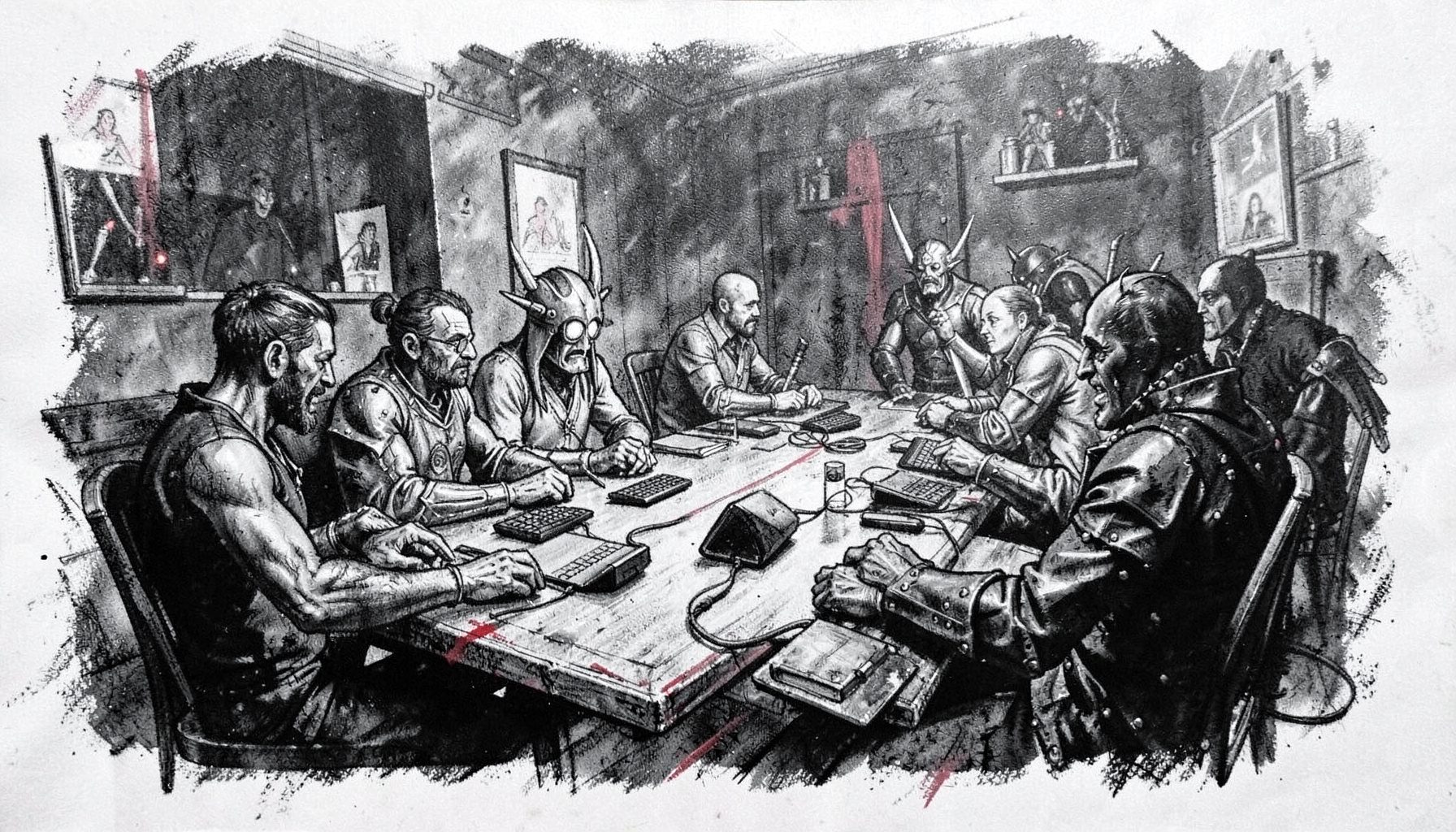
The people who made HLGCon feel at home
A thank you letter to the Showboat Hotel staff should begin with a simple truth: conventions are remembered for their games, but they are sustained by hospitality. When High Level Games Convention came to Atlantic City in 2018, the Showboat Hotel became more than a place to sleep between sessions. Its staff helped create the conditions in which strangers could become teams, artists could test ideas, and an entire temporary community could play without friction.
That community included tabletop role-players, live-action role-players, designers, writers, artists, publishers, vendors, volunteers, and first-time attendees. They arrived with different expectations and levels of experience, then shared spaces for workshops, panels, LARP encounters, tabletop sessions, escape rooms, and the exhibitor hall. The staff’s contribution sat behind all of that activity, turning the practical edges of a convention into something guests could trust.
The welcome before the first game
Arrival is a convention’s first test. A long registration queue, an unclear meeting point, or a room that is not ready can set the tone before anyone reaches a character sheet. At the Showboat, the hotel team’s steady work—welcoming visitors, directing traffic, answering practical questions, and keeping spaces ready—made a complicated arrival feel manageable. Their calm was especially valuable for attendees who were nervous about entering a room full of experienced gamers.
That kind of welcome is not automatically guaranteed at a large gathering. It depends on people noticing what is missing and fixing it before it becomes a problem. The Showboat staff did that work quietly: keeping information current, helping groups find the right floor, and responding when a busy programme created pressure around doors, corridors, and shared facilities. Their attention made room for the inclusive participation the convention valued.
Australian guests may recognise the contrast with major events in Melbourne, Sydney, or Brisbane, where convention crowds often move between a convention centre and nearby hotels. Here, the hotel was the hub rather than merely a base. A simple direction or a patient answer could be the difference between arriving late to a workshop and settling in ready to learn.
Rooms that had to hold many kinds of play
The Showboat had to support several forms of play at once. A quiet tabletop session, a crowded LARP, an artist talk, and an escape-room challenge each ask something different from a shared venue. Rooms needed to be accessible, reasonably quiet, and prepared for whatever activity had been scheduled. Between those demands, hotel staff helped absorb the changes that no printed programme can fully predict.
The event schedule shows the density and variety that made HLGCon distinctive. Sessions overlapped; panels and games competed for attention; workshops turned visitors into participants; and the exhibitor hall added another stream of conversation. Hotel workers helped hold that structure together, from helping a misplaced badge reach the right person to keeping a changing room assignment clear.
For an Australian audience, the setting also offers a useful contrast with everyday hospitality. Back home, a flat white might be the default order, reusable water bottles are common, and tipping is optional rather than a major part of a restaurant bill. In Atlantic City, staff had to welcome international and local guests into a fast-moving event while respecting the practical expectations of people used to different service rhythms. Thanking them means recognising that adaptation is part of hospitality.
The invisible work behind a smooth convention
A convention’s visible activity depends on countless unseen tasks. Bins need emptying before a long afternoon session. Furniture must be moved without blocking a fire route. A spill needs attention before someone slips. A guest with a damaged bag or an urgent medication question needs a human response, not a recorded announcement. The Showboat Hotel staff carried these details so that the programme could remain the main story.
The volunteer team spotlight captures a similar truth about event work: the people who keep things moving rarely receive the centre of attention. Hotel staff and volunteers occupied complementary roles. Volunteers guided participants through the culture of the event; hotel employees maintained the physical environment around it. Neither role was secondary, and both determined whether the atmosphere felt welcoming or merely functional.
That care also had a commercial and legal dimension. In Australia, hospitality businesses operate under the Australian Consumer Law, while covered organisations must handle personal information in line with the Privacy Act 1988 and the Australian Privacy Principles. At an international convention, the hotel and organiser also had to manage attendee data, pricing, safety, and service standards across jurisdictions. Thoughtful service was therefore part of responsible operations as well as genuine generosity.
Details that deserve a place in the guest book
The clearest thanks are often found in small, repeatable acts. These are the contributions that should remain attached to the memory of HLGCon 2018:
- Welcoming attendees and helping them find registration, meeting points, and session rooms.
- Keeping gaming spaces clean, comfortable, and ready for the next group of participants.
- Responding quickly when a room, meal break, or piece of equipment created a sudden problem.
- Supporting a mix of quiet tabletop play, physical LARP action, panels, workshops, and escape rooms.
- Treating volunteers, vendors, artists, and first-time visitors with the same practical care.
Taken together, those actions gave guests something difficult to manufacture: confidence that the day would keep moving while they concentrated on play.
- More time and attention for the games, panels, and workshops they had sought.
- A gentler entry point for newcomers unsure how a convention worked.
- Consistency across very different activities, from quiet tables to physical LARP.
- Space for artists, designers, vendors, and volunteers to do their work.
- A shared sense that people, not just schedules, were being looked after.
The artist panel discussions show how much creative energy the programme held. Artists and designers were not simply giving polished performances; they were sharing working methods, inviting questions, and helping others imagine a career in game creation. The hotel’s contribution was to give those exchanges a secure and hospitable setting without pulling attention away from the people speaking.
For Australian readers, the local market offers another lens. Prices at home are commonly shown in Australian dollars with GST included, and everyday errands often place families near a Coles or Woolworths rather than a single large shopping trip. The contrast with an American hotel market is obvious, yet the underlying service expectation is familiar: people want fair information, dependable facilities, and to be treated with respect. The Showboat Hotel met that expectation for a convention crowd assembled from many places.
Carrying the thanks forward
A letter of thanks is not a prize or a performance review. It is a record of work that might otherwise disappear once the exhibitor hall closes and the last game ends. The Showboat Hotel staff helped make HLGCon 2018 a place where imagination could become shared action. Their contribution deserves to be remembered alongside the character sheets, painted miniatures, panel insights, and stories created inside the hotel.
My next step is to send a short email to the Showboat Hotel’s events team, naming the welcome desk, room readiness, and steady support that helped keep HLGCon moving.