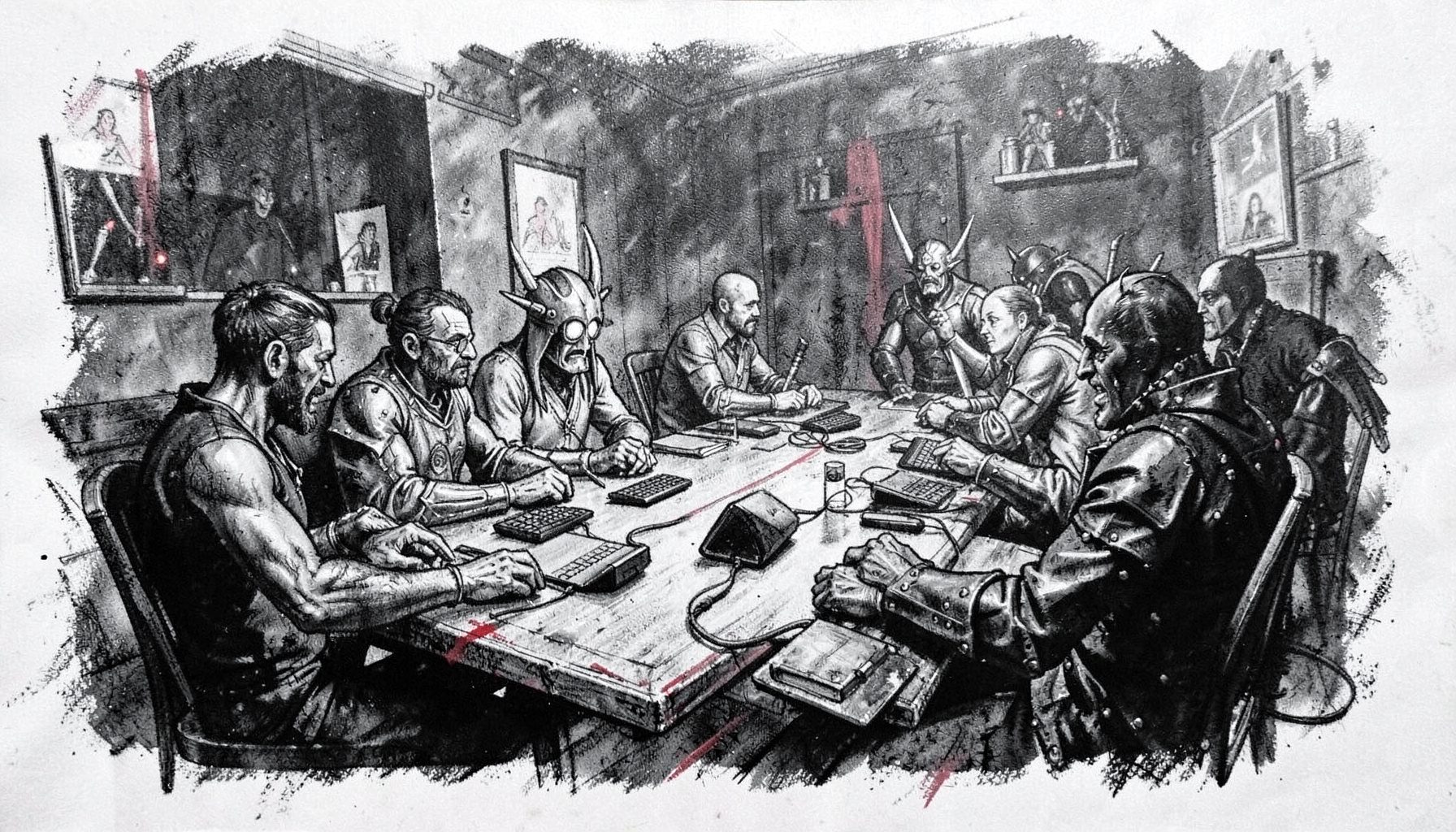
Spotlight On The HLGCon Volunteer Team
At High Level Games Convention, the visible programme was only part of the experience. Guests saw LARP sessions, tabletop games, panels, workshops, vendors and escape-room activities, yet much of the event’s rhythm depended on people working quietly around the edges. Volunteers helped turn a busy hotel convention into a welcoming shared space.
The convention took place at the Showboat Hotel in Atlantic City, New Jersey, in 2018. It brought together role-players, designers, artists, publishers and curious newcomers, creating a mixed audience with different expectations. Some guests arrived with years of campaign experience, while others were testing the waters at their first convention.
For Australian readers, the volunteer model feels familiar. Whether helping at PAX Aus in Melbourne, a local games convention in Brisbane, or a community event at a suburban RSL, volunteers often become the practical bridge between organisers and attendees. They answer the “where do I go?” questions, smooth over small problems and set the social tone before anyone has rolled a die.
| Volunteer Area | What Guests Experienced | Why It Mattered |
|---|---|---|
| Registration and information | Clear directions, schedules and friendly assistance | Reduced confusion in a busy venue |
| Tabletop gaming | Room support, session guidance and timekeeping | Helped games start and finish smoothly |
| LARP and immersive play | Safety, logistics and participant care | Protected the atmosphere and player confidence |
| Panels and workshops | Seating, equipment and speaker support | Kept learning sessions accessible |
| Community care | Welcoming behaviour and practical problem-solving | Made inclusion feel tangible |
The Work Behind The Welcome
A volunteer team usually begins working well before the first guest arrives. Schedules must be checked, rooms prepared, signage placed and last-minute changes communicated. At a hotel convention, this can involve navigating lifts, corridors, ballrooms and shared public areas while keeping the event’s identity consistent.
That practical work is easy to miss because successful operations look effortless. A guest may simply see a table ready for play, a panel starting on time or a staff member who knows where the quietest route is. Behind each moment is often someone who read the schedule carefully, carried supplies across the venue or stayed alert for changes.
For an Australian attendee, the equivalent might be a volunteer directing people from a convention foyer to a gaming room while answering questions about public transport, accessibility or the nearest coffee stop. A relaxed “no worries” attitude can help, but it needs to be matched with accurate information and dependable follow-through.
Connecting Strangers Through Play
Tabletop conventions rely on social confidence. A visitor may want to join a game but feel awkward approaching a table of established players. Volunteers reduce that barrier by explaining how sign-ups work, introducing people, checking spaces and helping players find a suitable session.
Their role is especially important when the event includes different game styles. A guest interested in crunchy tactical rules may need a different recommendation from someone seeking collaborative storytelling or a rules-light horror game. Volunteers do not need to be experts in every title; they need enough awareness to listen, identify the right fit and direct people wisely.
That human connection reflects the way many Australian gaming communities grow. At a Melbourne game store, a Sydney board-game café or a regional convention in Newcastle, a newcomer often returns because somebody made the first visit feel manageable. The volunteer who explains a table’s tone or introduces a solo attendee may influence whether that person becomes part of the wider community.
Supporting Immersive Experiences
LARP asks more from an event team than simply opening a gaming room. Participants may need costume guidance, safety information, character prompts, props or help understanding the boundaries of the scenario. Volunteers support the fiction while also monitoring the real-world conditions around it.
The LARP track review offers useful context for understanding why immersive programming stood out at the convention. A strong LARP experience depends on atmosphere, but atmosphere is fragile. A missing prop, unclear queue or overlooked safety concern can pull players out of the story quickly.
Volunteers help preserve that balance. They may explain a rule without breaking the mood, identify when a participant needs assistance or coordinate with organisers when a scene runs differently from plan. Their contribution is often invisible precisely because the experience feels natural.
Keeping Learning Spaces Open
Panels and workshops give conventions their educational energy. Guests can hear how designers build mechanics, how artists develop a visual language or how actual-play culture influences the hobby. Volunteers make those sessions workable by helping with microphones, room layouts, timing, audience flow and speaker needs.
The convention’s panel discussion on video games and tabletop RPG mechanics illustrates the kind of crossover conversation volunteers helped facilitate. A session like that can attract people from different parts of the hobby, and a calm room team helps everyone focus on the ideas rather than the logistics.
There is a practical lesson here for Australian events, where limited budgets and volunteer-led programming are common. A panel does not need elaborate staging to succeed. It needs a prepared room, a functioning microphone, visible timekeeping and someone ready to solve a small problem before it becomes a distraction.
Small Decisions That Protect Inclusion
Inclusive community participation is built through repeated, ordinary decisions. A volunteer can make a room easier to enter by greeting people without assumptions, explaining jargon, respecting names and pronouns, or identifying a quieter place when the main corridor becomes overwhelming.
These duties require judgement rather than a rigid script. Someone may need directions, while another person may need a discreet conversation about an uncomfortable interaction. The best volunteer response is usually calm, respectful and proportionate, with clear escalation to an organiser when the matter goes beyond the volunteer’s role.
Useful habits for convention volunteers include:
- Learn the venue layout, accessibility routes and emergency procedures.
- Use plain language when explaining schedules, rules and queues.
- Avoid assuming that every guest wants the same level of social interaction.
- Record changes promptly so information stays consistent across the team.
- Escalate safety or conduct concerns instead of trying to handle everything alone.
For Australian guests, accessibility questions may include lifts, heat, long walks from public transport or the availability of food that suits different needs. A volunteer cannot control every venue limitation, yet they can communicate honestly and help a guest plan around it.
The Human Infrastructure Of A Convention
The volunteer team also acts as the event’s informal communications network. Organisers may be managing schedules, exhibitors and programming at a high level, while volunteers notice what is happening on the ground. They see which room is filling quickly, where signage is confusing and when an activity needs extra support.
That feedback loop matters in a convention hotel. Showboat’s multiple spaces and public areas create opportunities for discovery, but they can also make navigation less obvious. A person who has just travelled from interstate or overseas may not know where to find a session, and a clear answer can save time and frustration.
The wider HLGCon archive preserves the event’s public identity, but the volunteer experience lives in smaller memories: a corrected timetable, a replacement chair, a found badge or an introduction that led to a new gaming group. Those moments rarely appear in promotional material, yet they shape how an event is remembered.
What Guests Often Remember
People tend to remember the emotional texture of a convention as much as its headline programme. They recall whether they felt welcome, whether staff treated questions seriously and whether the event made it easy to participate. Volunteers influence all three impressions through dozens of brief interactions.
They also help connect the event’s different communities. A designer may meet a player, a LARPer may discover a tabletop system, and a first-time attendee may find a group willing to teach them. This cross-pollination is a major strength of conventions built around collaborative storytelling.
The most valuable volunteer qualities are often simple and transferable:
- Patience when schedules change or queues become confusing.
- Curiosity about different games, play styles and communities.
- Reliability during early starts, late finishes and busy transitions.
- Confidence to ask an organiser for help when necessary.
- Warmth that feels genuine rather than performative.
Australian conventions often depend on the same combination of practical competence and social ease. A volunteer who can handle a registration issue, point out the closest tram stop and still welcome a nervous newcomer contributes far beyond a single shift.
Turning Appreciation Into Practice
The unsung nature of volunteer labour does not make it secondary. It means the work is woven through the entire convention experience. Volunteers support safety, access, communication, atmosphere and continuity, allowing guests and creators to concentrate on play and conversation.
Their example also shows why community events need clear structures. Good intentions are valuable, but teams work better with briefings, role descriptions, escalation paths, breaks and visible points of contact. Recognition matters too, whether through proper meals, public thanks, complimentary access or simply treating volunteer time as skilled labour.
For anyone attending or helping at a future convention, the practical takeaway is straightforward: learn the venue, communicate clearly, notice who may need support and treat every small interaction as part of the event itself.