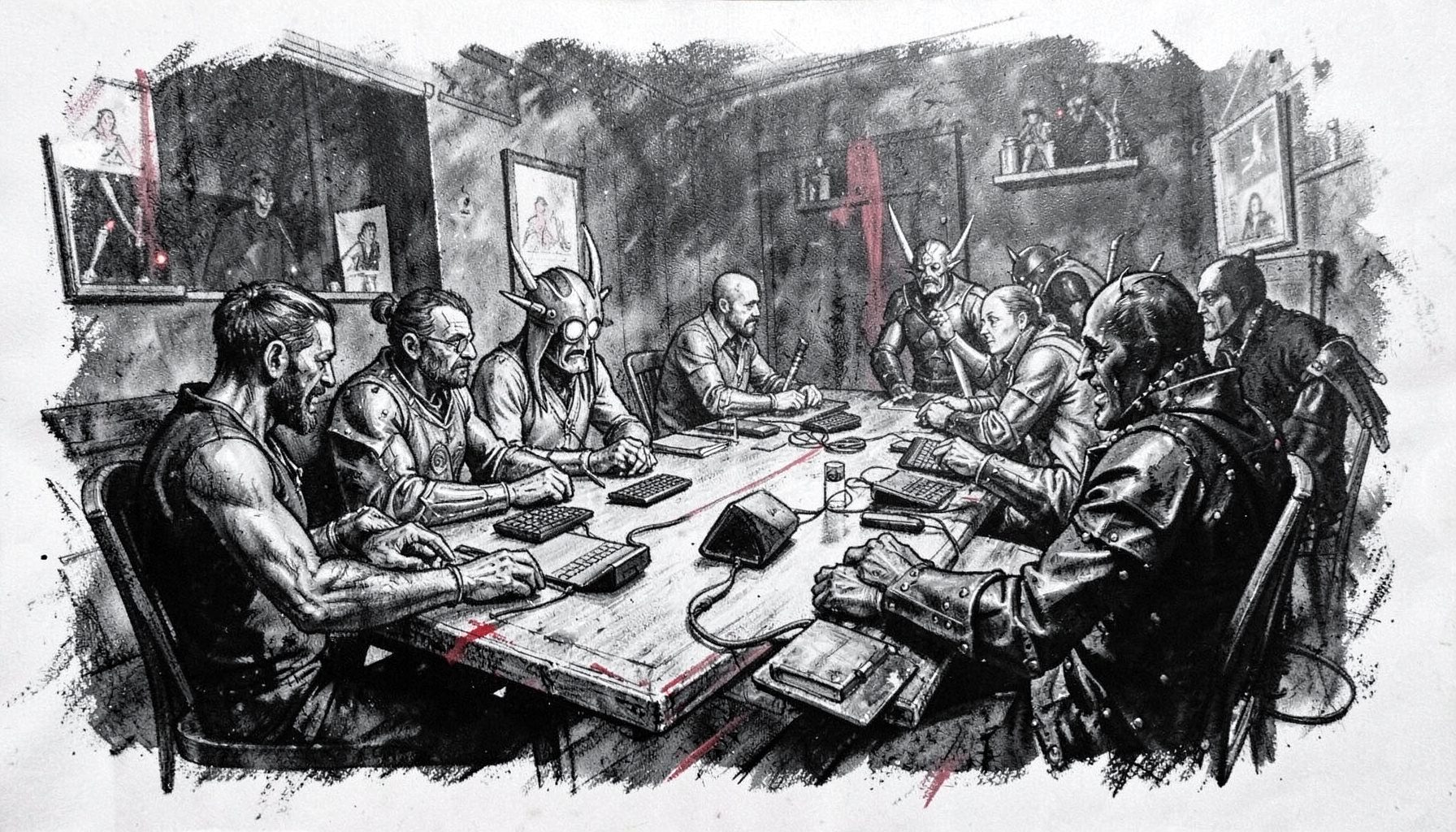
Why HLGCon’s LARP Track Stood Apart on the East Coast
High Level Games Convention, held at Atlantic City’s Showboat Hotel in 2018, treated live-action role-playing as a central form of convention storytelling rather than a niche activity tucked away from the main programme. Players could enter fictional situations, make meaningful choices and build scenes with other attendees, while still sharing the venue with tabletop gamers, designers, artists and publishers.
That positioning mattered among East Coast conventions. Many gaming events offered a LARP block or a particular campaign, but HLGCon connected live-action play with workshops, panels, an exhibitor hall, escape-room-style activities and a broad tabletop schedule. The result was a convention ecosystem where a person could try LARP in the morning, discuss game design in the afternoon and join another collaborative experience in the evening.
For Australian readers, the comparison is useful because the local market spans very different event styles, from large commercial gatherings in Melbourne and Sydney to volunteer-led gaming weekends in Brisbane, Adelaide and Perth. HLGCon’s model showed how a convention could make immersive play approachable without stripping away its depth, theatricality or community ownership.
LARP Was Part Of The Convention’s Main Identity
HLGCon did not present LARP as an isolated attraction for a small specialist audience. Its broader programme placed live-action role-players in the same social and creative environment as tabletop groups, independent designers, artists and publishers. That mixture encouraged movement between communities that are often separated by event format.
A tabletop player could see LARP as another way to explore character, conflict and rules, rather than as an intimidating performance discipline. An experienced role-player could find ideas in a panel about independent publishing or continue conversations in the exhibitor hall. This cross-pollination gave the track a stronger cultural presence than a single scheduled game might have achieved.
The distinction is especially relevant in Australia, where a convention visitor may travel from Sydney to Melbourne for a major event but still look for a welcoming pathway into smaller role-playing communities. HLGCon’s structure suggested that LARP grows more effectively when it is visible beside the rest of gaming culture, rather than hidden behind specialist terminology.
A Range Of Experiences Reduced The Entry Barrier
The LARP offering worked because it could support different levels of commitment. A newcomer did not need to arrive with an elaborate costume, years of campaign history or a deep knowledge of a fictional setting. Shorter sessions and self-contained scenarios could provide a complete experience within the convention timetable.
At the same time, experienced players had room to pursue more nuanced character work and collaborative storytelling. The value of a live-action event comes from the interaction between participants, so a well-designed session can offer depth without requiring a long-running campaign. HLGCon’s approach recognised that accessibility and sophistication are not opposites.
This flexibility resembles the strongest Australian convention programming, where attendees may choose between a quick introductory game, a multi-hour tournament or a workshop on a Sunday afternoon. It also suits a market in which many players balance conventions with work, family commitments and long travel distances. A clear, varied schedule makes participation possible for people who cannot dedicate an entire weekend to one campaign.
The Showboat Hotel Became Part Of The Experience
Holding the convention at the Showboat Hotel gave HLGCon a distinctive physical environment. A hotel convention space naturally supports lingering: attendees can move from a scheduled session to an informal conversation, return to their rooms, meet friends in shared areas and continue character or design discussions beyond a single activity.
For LARP, that continuity can be valuable. The game does not have to feel like a sealed room that begins and ends with a briefing. The surrounding convention can create anticipation before a session and reflection afterwards. Players may encounter props, costumes, setting ideas or fellow participants elsewhere in the venue, allowing the fictional experience to echo through the day.
That kind of venue-based immersion has an Australian parallel in residential conventions and regional gaming weekends, where shared accommodation becomes part of the social fabric. It is different from attending a large exhibition centre in Melbourne or Sydney for a few hours, where the crowd disperses quickly after the halls close. HLGCon benefited from a setting that made community continuity easier.
Collaborative Storytelling Took Priority Over Spectatorship
The strongest feature of the track was its emphasis on participation. In a LARP, attendees are not simply watching a story unfold; their decisions, relationships and reactions help determine what the story becomes. HLGCon’s wider focus on collaborative storytelling reinforced that principle across the event.
This approach separates immersive role-play from a staged show. Costumes and performance can add atmosphere, but the central creative work remains shared. A quiet character choice may affect another player’s goals, while an unexpected alliance can redirect the emotional shape of a scene. Participants become co-authors, even when the organisers provide the setting, prompts and boundaries.
That model suits communities familiar with improvisation and shared ownership. Australian players often move between tabletop campaigns, freeform games, historical LARP and festival-style immersive events, each with its own conventions. HLGCon’s LARP track offered a common meeting point where the emphasis was on making a story together rather than proving who had the most elaborate kit.
Inclusion Was Built Into The Invitation
A welcoming LARP track needs more than a friendly description. It must communicate that beginners, different play styles and varied comfort levels have a legitimate place in the room. HLGCon’s emphasis on inclusive community participation helped frame live-action role-play as an activity open to curious attendees, rather than a closed club with a demanding social code.
This matters because newcomers often worry about improvising in front of strangers, misunderstanding rules or arriving without the right costume. Clear expectations, supportive facilitation and a culture that respects boundaries can remove those anxieties. When participants know that consent, communication and personal comfort are taken seriously, they can take creative risks inside the fiction.
The lesson has particular relevance for Australian organisers working with a geographically dispersed player base. Someone travelling from Perth to an event in Brisbane may be entering a community they have only encountered online. Likewise, a first-time attendee at a Melbourne convention may need practical information about accessibility, costumes, content warnings and participation requirements before committing to a session.
Its Programme Connected Play With Game Design
HLGCon’s LARP track also benefited from being surrounded by people who were actively making games. Designers, artists and publishers brought attention to the construction of rules, settings and player experiences. That context made it easier to view LARP as a design medium, rather than simply a recreational activity.
The connection was especially valuable for independent creators. Conversations about how a scenario handles pacing, agency, safety and character prompts can be as useful as a formal workshop. Attendees interested in developing their own games could observe different approaches and meet people who had taken experimental ideas into public play. The convention’s coverage of indie game designers reflects that creative ecosystem.
For the Australian market, where small publishers and home-grown designers often work with modest print runs and community testing, this is a practical strength. A designer from Canberra or Hobart may rely on conventions to find playtesters, collaborators and early supporters. HLGCon demonstrated how LARP can sit inside that independent development pipeline, giving creators a live laboratory for narrative and interaction.
The Schedule Encouraged Discovery
A distinctive convention track is shaped as much by its timetable as by its individual events. HLGCon’s programme could guide attendees from a LARP session to a panel, workshop, tabletop game or immersive activity without making those interests feel unrelated. That encouraged discovery and gave visitors permission to try something outside their usual habits.
The full schedule is useful evidence of this broader programming philosophy. A schedule can reveal whether LARP has been treated as a token attraction or integrated into the event’s main rhythm. At HLGCon, the surrounding activities helped give live-action sessions context, momentum and a larger audience.
For Australian attendees accustomed to carefully planning a packed convention weekend, this matters. Flights, accommodation and ticket prices can make every time slot important, especially when travelling interstate from Adelaide to Sydney or from Brisbane to Melbourne. A coherent timetable makes it easier to justify trying LARP because the experience forms part of a valuable day rather than requiring a separate trip or specialist event.
Practical Features That Strengthened The Track
HLGCon’s approach offers several useful principles for conventions developing immersive programming:
- Place LARP sessions beside tabletop games, panels and design workshops so attendees can move naturally between communities.
- Offer short, self-contained scenarios alongside deeper sessions for visitors with different levels of time and experience.
- Explain costumes, content, accessibility, safety and participation expectations before registration.
- Use venue spaces that support informal conversation before and after play, rather than treating each game as a sealed appointment.
- Give independent creators opportunities to test scenarios, discuss design choices and meet potential collaborators.
- Build the timetable around discovery, allowing newcomers to sample immersive play without sacrificing other convention interests.
These principles are adaptable to Australian conditions. A volunteer-run event in regional New South Wales may have fewer rooms and a smaller budget than a hotel convention, while a large PAX Aus-style gathering may need stronger crowd management and clearer wayfinding. The underlying idea remains practical: LARP becomes more inviting when the event supports the whole participant journey, from first curiosity to post-game conversation.
HLGCon also showed that an inclusive atmosphere is an operational choice, not just a promotional phrase. Organisers need staff who can explain sessions, facilitators who can manage boundaries and booking systems that do not make beginners feel excluded. Those details are particularly important when an event draws people from different local scenes, age groups and gaming traditions.
HLGCon’s LARP track stood apart because it connected immersion with the rest of convention life. It made room for theatrical play without turning LARP into a spectacle, supported newcomers without flattening the experience and linked player creativity with independent game design.
The lasting lesson is simple: live-action role-playing becomes most distinctive when the convention treats it as a shared creative language—visible, accessible and woven into the community around it.