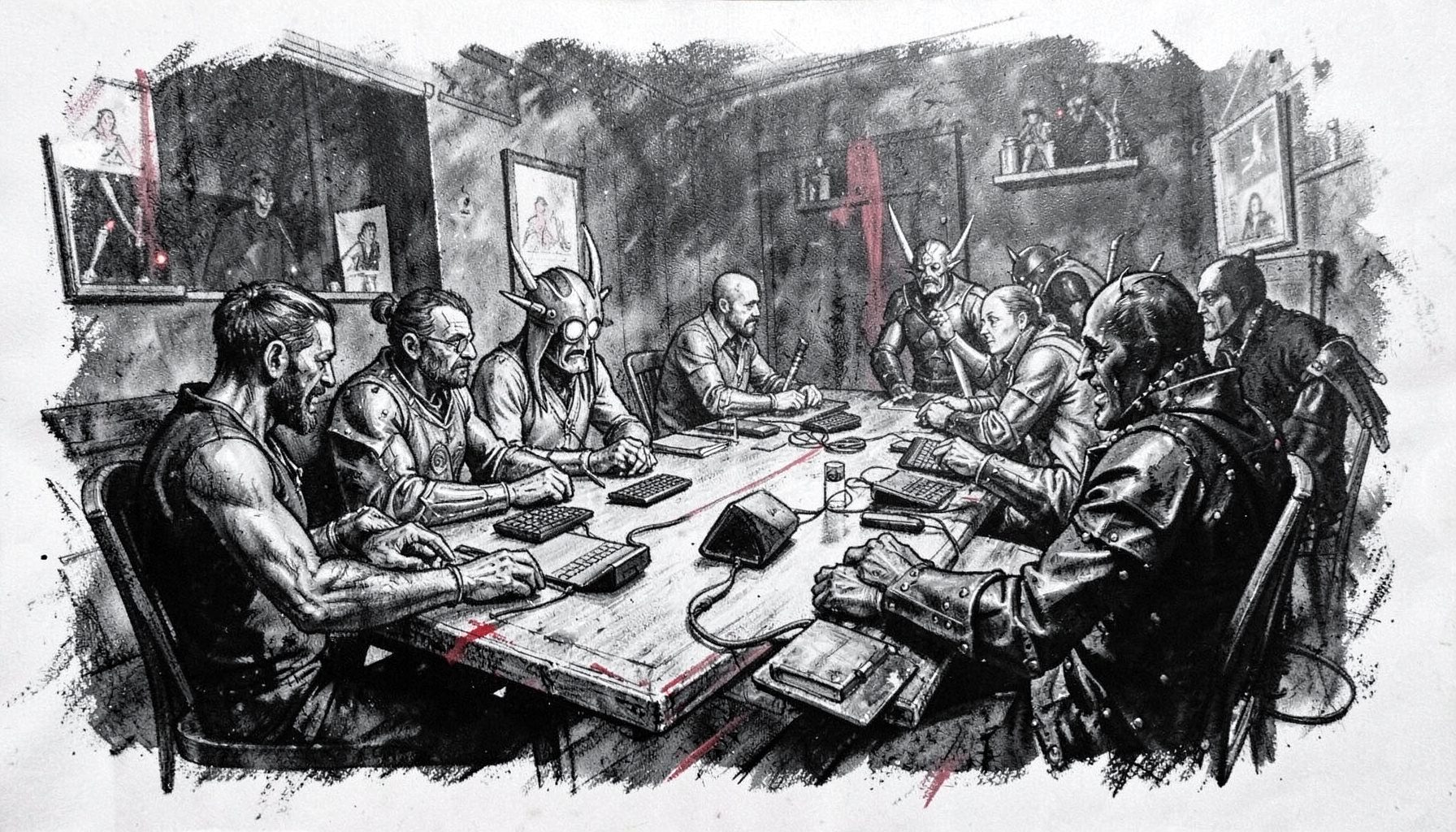
Indie Designers Finding Their First Audience at HLGCon
High Level Games Convention gave independent creators a setting where an unfinished idea could become a shared experience. Held at the Showboat Hotel in Atlantic City in 2018, HLGCon brought tabletop role-players, LARP participants, artists, publishers, vendors and curious newcomers into the same lively space. For designers making their first public appearance, that mixture offered something more valuable than a sales pitch: immediate contact with people ready to play, question and build alongside them.
A debut at a convention is rarely just a launch moment. It is a practical test of rules, tone, presentation and community fit. HLGCon’s panels, workshops, exhibitor hall, escape rooms and collaborative sessions created several ways for independent game makers to discover what worked. That model remains relevant to Australian creators, whether they are travelling to PAX Aus in Melbourne, running a playtest in Brisbane, or carrying a prototype to a local game shop for an arvo session.
A Convention Built for First-Time Creators
HLGCon was especially useful for designers who did not have a large publisher behind them. An indie creator can arrive with a small print run, a hand-drawn character sheet or a rules concept that has only been tested with friends. In a convention environment, that modest beginning can still attract players who enjoy seeing a game take shape.
The event’s broad programme reduced the pressure of presenting a finished product. A designer might discuss worldbuilding in a workshop, run a short tabletop session, then hear reactions from visitors in the exhibitor hall. Someone interested in role-playing games but unsure where to begin could also follow a beginner's guide, making the convention more approachable for potential first-time players.
For an independent designer, that accessibility matters. New games depend on people feeling comfortable enough to sit down, ask basic questions and experiment without worrying about getting every rule right.
Why Atlantic City Mattered
The Showboat Hotel gave HLGCon a contained, social environment. Participants could move between scheduled games, informal conversations, panels and immersive activities without the event feeling like a single-track trade show. That movement encouraged unexpected connections: a LARP performer could influence a tabletop designer’s approach to characterisation, while an artist might help a game maker rethink how a rules reference looked at the table.
Atlantic City also placed the convention within reach of a wide American gaming community. Designers could meet people with different play cultures, regional preferences and expectations about genre. A fantasy game that felt familiar to one group might seem unusual to another, and those contrasts helped expose assumptions that were easy to miss during private testing.
Australian creators face a different geography. A designer from Perth may need to budget for flights and accommodation before reaching a major event, while someone in regional New South Wales may rely on online playtests or a smaller convention circuit. HLGCon’s lesson is that a welcoming venue can make distance worthwhile when it gives emerging designers several kinds of audience contact in one place.
What Designers Could Test In Public
A convention debut provides fast, human feedback. It shows where players hesitate, which choices excite them and whether the designer’s explanation matches the experience at the table. The most useful responses are often practical rather than dramatic: a player cannot find a rule, a safety tool needs clearer wording, or a supposedly essential step slows the session.
The designers who appeared in HLGCon’s independent scene could use the event to examine several parts of a game at once:
- Whether a new player can understand the core premise within a few minutes
- Whether the rules support the intended mood, from tense horror to relaxed adventure
- Whether character creation leaves room for different identities and play styles
- Whether the game remains enjoyable when a group takes an unexpected approach
A good playtest does not simply ask whether people liked the game. It observes what they actually do. A participant who ignores a suggested path may have found a more interesting one, while a quiet player may reveal that the structure rewards confident speakers too heavily. Those observations can lead to stronger design than general praise.
For Australians used to small home groups, this public testing style can feel a bit full-on at first. Yet a game that survives a noisy convention table, unfamiliar players and limited time has gained valuable evidence before the creator spends heavily on printing or freight.
Comparing Indie Debut Spaces
Different parts of HLGCon supported different stages of a designer’s work. The comparison below shows how each setting could contribute to an emerging game’s development.
| HLGCon setting | Best use for an indie designer | What players could reveal | Likely design outcome |
|---|---|---|---|
| Tabletop session | Test rules and pacing | Confusing procedures or exciting choices | Streamlined mechanics |
| Workshop | Explain an idea and invite discussion | Gaps in theme or structure | Clearer design direction |
| Panel | Learn from experienced creators | Industry and publishing expectations | More realistic production plans |
| Exhibitor hall | Present a concept to passers-by | Which visuals and hooks attract attention | Stronger pitch and presentation |
| LARP activity | Explore embodied storytelling | How players respond physically and socially | Better use of space and roleplay |
| Escape room | Study cooperative problem-solving | Communication patterns and group dynamics | More engaging shared challenges |
This range mattered because no single test could answer every design question. A table session might prove that the central mechanic works, while a conversation in the hall could show that the game’s premise was difficult to explain. Independent development becomes more efficient when those forms of evidence are considered together.
It also helped designers see that presentation is part of play. A readable handout, a memorable visual identity and a clear invitation can determine whether someone tries a new game. In a busy convention setting, the first thirty seconds often shape the rest of the interaction.
Community Was Part Of The Design
HLGCon’s emphasis on inclusive participation made community feedback a central design resource. Indie role-playing games often depend on trust: players need to understand the boundaries of the fiction, the expectations around conflict and the ways consent is handled. A convention that welcomes different experience levels gives designers a chance to test whether those expectations are visible rather than assumed.
The strongest debut experiences usually combine creative ambition with practical care. Designers can learn a great deal from how players respond to safety tools, accessibility needs and character options:
- Clear explanations help newcomers join without feeling behind
- Flexible character creation supports varied identities and campaign ideas
- Safety procedures work best when they are easy to use during play
- Inclusive artwork and language signal who is welcome at the table
These details are especially relevant in Australia’s diverse gaming community, where groups may include players from different cultural backgrounds, age groups and levels of convention experience. A creator selling at PAX Aus, CanCon or a community event in Adelaide needs to think about transport, venue access, table space and the cost of a game as carefully as the setting.
Feedback also travels through community networks. A designer may meet a retailer in Sydney, a podcaster in Melbourne or a play group in Hobart, then continue testing long after the convention ends. That gradual spread can matter more than a single burst of attention.
From Prototype To Sustainable Product
A debut can reveal whether an idea is ready for publication, but it can also show that the game needs a different format. A short convention scenario might work better as a starter adventure. A LARP concept might need facilitator notes, prop guidance or a smaller player count. An ambitious campaign game may benefit from becoming a focused one-shot before expanding.
Independent creators must then weigh creative choices against production realities. In Australia, imported dice, card stock and specialist printing can become expensive once exchange rates and postage are included. Local printers may offer better access but require different file preparation or minimum quantities. Small publishers often begin with digital files, print-on-demand options or limited batches sold directly at conventions.
The audience’s response can help determine that path. If players remember the setting but struggle with the rulebook, editing should come first. If the mechanics are strong but the pitch is vague, the creator may need a sharper description and a better demonstration. If people ask whether the game supports online play, virtual tabletop tools may become worthwhile for a country where long travel distances separate gaming groups.
A sustainable indie project is therefore more than a clever mechanic. It needs a format that can be explained, produced, transported and supported without exhausting its creator.
The Lasting Value Of A Convention Debut
The designers who debuted around HLGCon benefited from being seen while their games were still developing. That stage creates a different relationship with players. Instead of presenting a sealed product, the creator can invite people into the process and show that feedback has a visible effect on the next version.
For Australian designers, the same principle works at any scale. A first public playtest might happen at a library in Canberra, a games café in Melbourne, a university club in Sydney or a regional convention reached after a long drive. The venue does not need to be enormous. It needs enough trust, curiosity and structure for players to offer honest reactions.
HLGCon’s indie spotlight is therefore best understood as a model of creative exchange. New designers gained a place to test ideas, while attendees gained the pleasure of influencing games before those games reached a wider market. The central lesson is simple: a debut becomes meaningful when players are treated as collaborators, and when every conversation, session and awkward rule moment helps shape what the game can become.