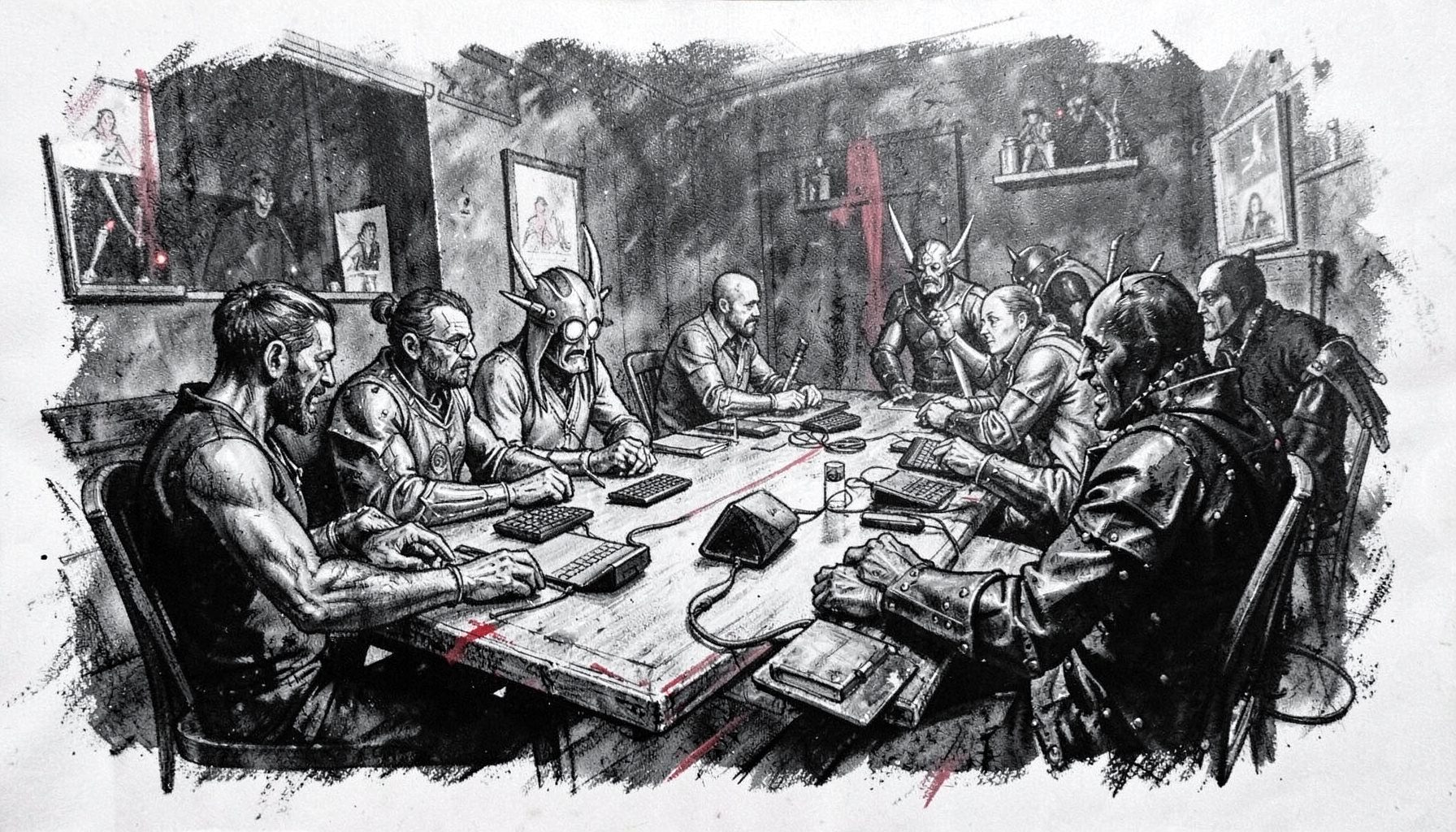
highlights for aspiring game artists at HLG Con
The High Level Games Convention in 2018 drew creators working at the intersection of narrative and visual storytelling. Aspiring game artists wandered the Showboat Hotel surrounded by writers, designers, publishers and players exchanging ideas across the weekend. The panel schedule tackled everything from portfolio reviews to running a freelance illustration business.
For Australian creators eyeing international conventions, HLG Con offered something hard to find at home: a concentrated burst of industry voices in one venue. Melbourne and Sydney have thriving indie scenes and Brisbane hosts its own gaming gatherings, but North American conventions draw publishers and artists from across the global TTRPG market. That made the 2018 edition a useful case study for Australians planning their first overseas trip.
The panels stood out because they were practical. Presenters shared templates, contract clauses, brushes, lighting setups and pitch decks, and encouraged attendees to bring sketchbooks. The atmosphere was that of a working studio dropped into a casino ballroom, with the Atlantic City boardwalk just outside the doors.
Portfolio reviews and live critiques
One of the most valuable formats was the live critique, where working artists projected portfolios and received feedback in front of an audience. For illustrators from Perth or Adelaide who rarely sit across from a senior concept artist, watching a public review was like a free masterclass. Reviewers typically opened with what was working, then moved into specifics about composition, value structure, and how clearly the art communicated mechanics or mood.
Presenters stressed that a TTRPG portfolio is not a fine art portfolio. A piece for a rulebook needs to read at thumbnail size, since players often encounter the art first on a virtual tabletop screen. Pieces that relied on tiny details were flagged, while pieces with strong silhouettes were praised. The other consistent advice was to include process work: sketchbook pages, value studies and WIP layers showed publishers that an artist could be trusted with deadlines.
Working with indie publishers on TTRPG projects
Indie publishing houses dominate the tabletop scene, and HLG Con reflected that. Panels on working with small publishers covered submission packages, paid test illustrations and Kickstarter add-ons. Presenters ran through a typical timeline from concept sketches through to a final delivery that lined up with a printer's deadline. For someone in Hobart or Darwin running a one-person studio, the takeaway was that publishers cared more about reliability than flashy style.
Crowdfunding came up repeatedly. Speakers unpacked how add-on tiers and unlock goals get designed. A $25 reward might net the artist roughly half after production and shipping, which shapes tier pricing. Australian artists should remember that fulfilment across the Tasman or Pacific adds cost. Many publishers present had open submissions, and attendees were pointed toward the event's guest lineup page to identify who to approach.
Illustration techniques for fantasy and sci-fi settings
Technique panels leaned into specifics: rendering believable stone, designing alien costumes, drawing horses in motion without shortcuts. Several artists walked through their lighting setups, explaining why they kept a key light at a 45-degree angle and a rim light from behind. For an illustrator working out of a flat in Melbourne's inner north, these granular choices matter because they shape the look of a whole body of work.
One creature design session was particularly popular. The presenter encouraged attendees to start with a behavioural note, then let anatomy follow. This movement-based thinking is something Australian art schools such as the Academy of Interactive Entertainment in Canberra already encourage. The HLG Con programming included an immersive activity called Detention Breakout with a strong visual identity, and several artists pointed to it as an example of how props and environments can support a narrative.
The freelance business: contracts, pricing and clients
Money was the topic everyone wanted to discuss and few wanted to start. Presenters shared day rates, project rates and royalty splits using projected spreadsheets. The advice was to price for the work after tax, not before, and to remember that half a freelancer's week goes to non-billable tasks like email and invoicing. The rule was to multiply desired annual income by 1.3 to account for downtime, divide by billable hours, and never charge less.
Contracts were treated as a make-or-break issue. Artists walked through red flags: vague scope, kill fees that only covered time, and work-for-hire clauses that swallowed copyright. The Australian context matters because the Australian Consumer Law provides protections that freelance illustrators sometimes overlook when signing overseas contracts. Artists working with North American publishers were advised to negotiate clauses that explicitly address moral rights, which carry strong legal backing in Australia.
Inclusive design and representation in game art
A recurring theme was inclusion, both in the panels and in the art they discussed. Presenters emphasised that inclusive design is a habit built into the earliest sketches rather than added later. Several sessions showed before-and-after case studies where a default elf or alien had been redrawn with a wider range of body types, skin tones and cultural references. For Australian creators, this conversation connects directly to the country's multicultural reality and the responsibility to reflect it in fantasy worlds.
One panel addressed First Nations representation in TTRPG art. Presenters, several of whom had worked with Indigenous creators, walked through the principles of cultural consultation and the value of paying consultants. This aligns with the protocols followed by Australian institutions such as the Australia Council for the Arts. Accessibility was also covered, with panels discussing how to design cover art that remains striking when converted to high-contrast or grayscale for low-vision readers.
Pitching face-to-face at conventions
Pitching in person is a different skill from pitching by email, and HLG Con offered several panels on how to do it well. The most repeated advice was to research publishers before approaching their booth, then lead with a specific question rather than a vague introduction. Showing genuine familiarity with a publisher's recent releases was the fastest way to start a real conversation.
Several artists shared their pitch templates: a single page with a thumbnail, a one-sentence pitch, contact details and a QR code linking to a portfolio. Body language mattered more than presenters expected, with open posture and eye contact flagged as professional habits. Panels also covered the etiquette of following up after the convention, including how long to wait before sending a polite email. This is good news for Australian artists entering rooms where nobody knows their name, since a clean pitch closes the distance quickly.
Career paths: from convention circuit to studio work
The closing panels looked at long-term careers rather than first commissions. Presenters came from very different backgrounds: some had started as fan artists, others had come through advertising or video game studios before pivoting to TTRPG work. Their stories shared a common arc of building a body of work over five to ten years, then finding that commissions compounded once a publisher could trust them with deadlines.
Several artists spoke about the rhythm of a convention year. HLG Con sat alongside Gen Con, PAX Unplugged and European shows as a key moment to launch products. Australians thinking about this rhythm should know that local events such as PAX Australia in Melbourne and tabletop meetups in Sydney and Brisbane offer similar pitching opportunities. The advice repeated across panels was to treat every convention as both a chance to sell work and a chance to learn, sketching in panels and following up with peers within a week.
For aspiring game artists preparing for their next convention, the lessons from the 2018 High Level Games Convention come down to a handful of habits. Bring a portfolio that reads at thumbnail size, price for the work after tax, learn the contract language, and treat every conversation as the start of a long collaboration. For Australians in particular, the local scene is strong enough to support a career, but the international convention circuit remains one of the fastest ways to meet the publishers who will hire you over the next decade. The panels worth attending are the ones where an artist leaves with a single new practice to try the next morning, and that is the standard worth keeping when choosing which sessions to sit in on.