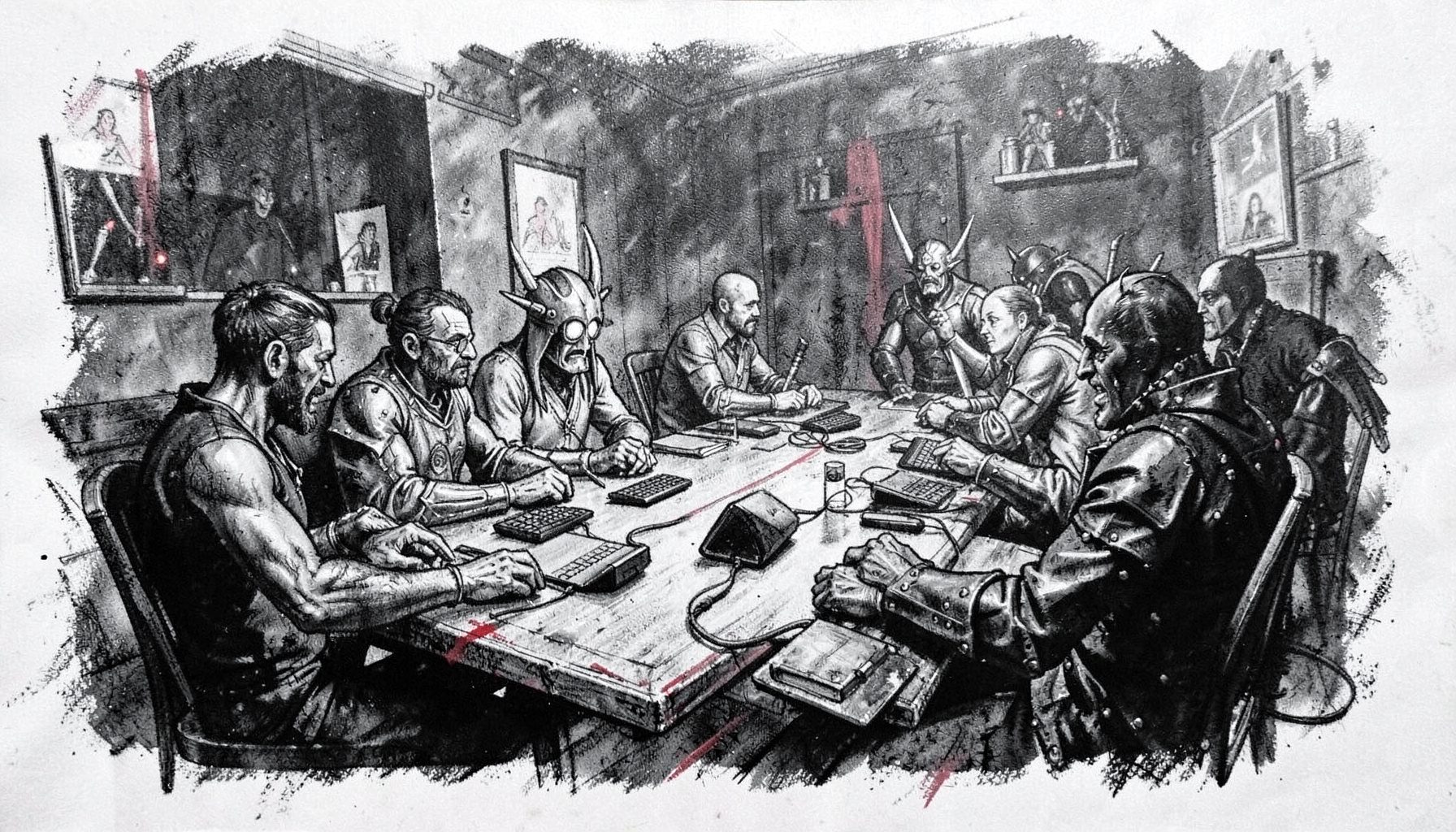
The do’s and don’ts of running an open table RPG
An open table RPG is a scheduled tabletop roleplaying session that anyone may join, often as a one-shot rather than part of an ongoing campaign. The game master sets the scenario, explains the rules and supports a group that can change in size or experience from week to week. At the 2018 High Level Games Convention at the Showboat Hotel in Atlantic City, this model suits collaborative storytelling: strangers become a party for a few hours and learn through play.
The challenge is bigger than running a good adventure. A facilitator must welcome newcomers, protect confidentiality, handle conflicting preferences and keep everyone involved without turning the table into a lecture. Clear preparation and humane boundaries make that challenge manageable, whether the session sits beside busy convention gaming halls or in a quiet pub in Melbourne.
Prepare for players arriving with different experience
Open-table attendance is unpredictable, so design for a self-contained story with a clear beginning and ending. Give players everything they need in a short briefing: your objective, how roleplaying works, which rules apply and how long the session will run. A one-page adventure summary can prevent confusion without revealing every plot twist.
New players should not need to know the rules of a game they have never played, while experienced players should not be forced into a simplistic style. Offer pre-generated characters with different motivations and abilities, explain that character creation is optional, and invite questions without treating them as failures. Check access needs and content preferences before the scenario begins.
Make the rules serve the story
Rules should remove friction, not become the destination. Teach only what the group needs for this scene: ability checks, a resolution method and any combat system you actually use. Give a short example, then apply the same logic consistently. A rules-light approach works well for casual one-shots, but unclear exceptions create arguments faster than complexity does.
A good game master does not spring surprise rules on players or use dice to humiliate a reluctant volunteer. Explain what is at stake, let players choose how to approach a problem and make failure move the story forward. Timebox combat and investigation, watch for one player dominating and use a short recap to reconnect the group after an intense exchange.
Treat consent and ethics as design priorities
Consent is an ongoing practice, not a form signed at the door. Establish that players may pause, step away or step out of a scene, and agree on lines, veils and safe words that trigger a check-in. Avoid surprise physical contact or actions involving another player’s character without prior agreement.
The 2018 convention’s ethics discussion recap shows why design choices deserve scrutiny. Check which perspectives a scenario treats as normal, whether stereotypes are being challenged or repeated, and what happens when fiction touches real prejudice. Give players a way to flag a problem that preserves their dignity and privacy.
A debrief can turn a difficult scene into a learning experience, but it should not require anyone to disclose personal trauma. Ask what the group wants to carry forward, correct factual assumptions and offer a private route for concerns that should not be discussed publicly.
Protect spoilers and player agency
Secret planning needs patient handling. The convention’s no-spoilers style guide offers a useful principle: let anticipation build without revealing private notes, unrevealed encounters or mechanical surprises. Ask before describing a character’s secret or referencing another group’s story, and keep player notes out of common sight.
Player agency means the group can shape the solution, even when the game master controls the setting. Offer meaningful choices, resist forcing betrayal or a predetermined emotional reaction, and let a failed plan reveal a complication rather than ending everyone’s fun. A strong finale may reward the group’s decisions rather than merely restore the published plot.
Use atmosphere without taking control
Atmosphere can make an ordinary room feel like a dungeon, alien archive or tense council chamber. Use lighting, music, simple props and a few sensory details while keeping rules visible and speech clear. Check volume and accessibility, and never use flashing effects, intense scent or unexpected touch without warning.
The recap of movie-scene LARP recreation demonstrates how a familiar reference can inspire play without dictating it. Identify the dramatic function of a scene, then give players roles and constraints that create a different story. Copying a filmed sequence may produce spectacle, yet collaborative problem-solving produces an actual game.
Run the event with Australian realities in mind
Australian cities offer plenty of convention spaces, but local geography affects attendance. CanCon in Canberra, PAX Aus in Melbourne, OzCon in Adelaide and local conventions in Sydney and Brisbane have served different communities and schedules. Advertise times in Australian Eastern Standard Time or other local zones, account for daylight-saving changes and choose a venue near public transport where possible.
A hotel or pub used for gaming should meet Australian expectations and legal requirements. Check capacity, emergency exits, age rules and the venue’s liquor licence; staff may also restrict outside alcohol and personal play equipment. Many indoor hospitality areas are smoke-free, while outdoor smoking rules differ by state, so explain the local arrangements rather than assume a uniform national rule.
The local market mixes globally familiar games with Australian designers and small publishers. Hobby shops and convention exhibitors commonly stock Dungeons & Dragons, Call of Cthulhu and systems such as Blades in the Dark, while locally made games can offer distinctive settings. Choose a scenario with an accessible hook and explain specialist mechanics before play rather than assuming every attendee knows the system.
Administrative details matter when the event charges a fee, stores information or uses published material. Australian Consumer Law affects ticket terms and refunds; where applicable, the Privacy Act 1988 and Spam Act 2003 govern personal data and email marketing. Use licensed adventure copies, obtain written venue approval, and consider public liability cover and a simple risk assessment suited to the venue.
A practical checklist for game masters
Before players arrive, the game master should:
- Publish the duration, audience, content notes and any rules or character sheets players need.
- Prepare varied pre-generated characters while leaving room for original concepts.
- Confirm the booking, table capacity, accessible route, toilet access and break schedule.
- Brief any co-facilitators on consent boundaries, emergency procedures and shared cues.
- Pack dice, pencils, spare sheets, tokens and a backup source for essential rules.
When the session begins, keep these priorities in view:
- Welcome players, explain the premise and check consent before introducing a difficult theme.
- Explain only the rules needed now, and answer questions without showing impatience.
- Invite quieter players into decisions and redirect dominating behaviour early.
- Make space for creative solutions, consequences and respectful disagreement.
- Close with a clear recap, useful feedback and a safe route for private concerns.
The table succeeds when players know what is expected, feel safe enough to contribute and retain agency over their characters. The lasting principle is simple: good facilitation combines clear structure with flexibility, treating people as collaborators rather than an audience for a performance.