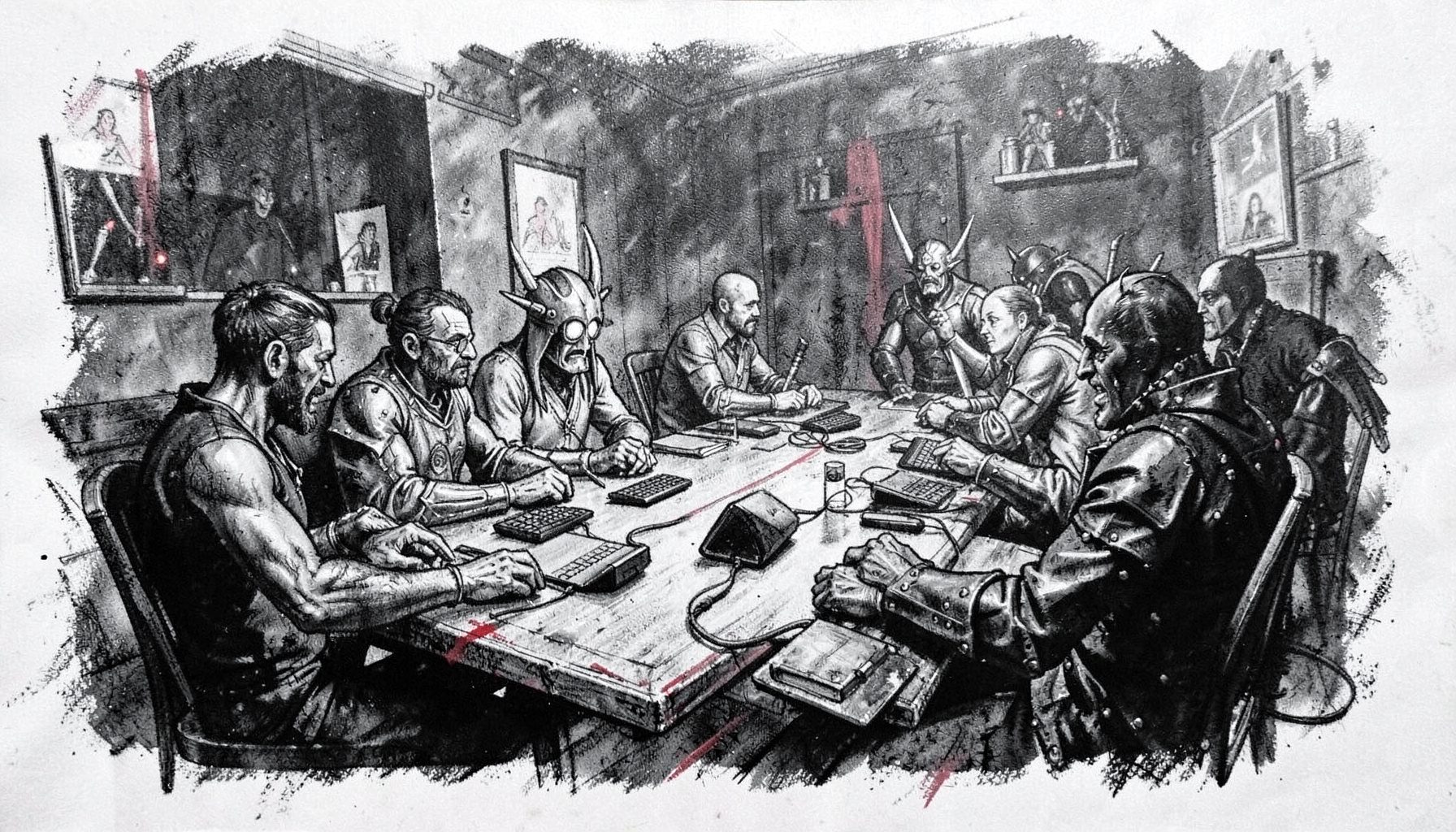
Recreating a Favourite Movie Scene in a LARP
A memorable film scene can be a powerful starting point for live-action role-play. The aim is not to reproduce every camera angle, line reading or special effect. It is to capture the emotional engine of the moment and rebuild it as a shared experience in which players make choices inside the story.
A LARP version works best when the audience becomes part of the dramatic machinery. A tense negotiation can give every participant a secret objective, while a famous chase can become a timed search through a convention venue. The scene remains recognisable through its mood, conflict and imagery, even when the plot changes around the players.
For Australian players, the adaptation also needs to suit local venues, budgets and expectations. A scene staged in a Sydney community hall, a Melbourne warehouse venue or a Brisbane convention room may require different approaches to noise, weather, transport, accessibility and equipment. Thoughtful design turns those limitations into part of the atmosphere.
Find The Scene’s Dramatic Core
Start by identifying what makes the film moment memorable. It might be a confrontation between allies, a desperate escape, a revelation at a dinner table or a quiet decision before a dangerous mission. Write down the scene’s essential ingredients without copying its dialogue: who wants what, what stands in the way, what information is hidden and what could change by the end.
This process separates inspiration from imitation. A LARP adaptation should give players room to influence events, so the original ending cannot be treated as fixed. If the film scene ends with a character walking away, players might instead decide whether the relationship survives, whether the betrayal is exposed or whether a third faction intervenes.
Choose a scene with playable tension rather than relying solely on visual spectacle. A spaceship battle may look impressive on screen but become awkward in a small hall. A courtroom exchange, haunted-house investigation or tense family gathering can generate stronger role-play with a few props and well-prepared character objectives.
Translate Film Language Into Player Choices
Cinema controls attention through editing, close-ups, music and camera movement. LARP has different tools. Give each participant a reason to enter the scene, something they know that others do not and a decision that cannot be postponed. These elements create the equivalent of a close-up: a player’s choice becomes the focus.
Use beats to shape the action. A beat might reveal evidence, interrupt a speech, change an alliance or force a character to make a public promise. Prepare several possible beats, but allow the players to reach them through their own actions. This keeps the experience dramatic without making it feel like a scripted performance.
Information design is particularly important. Secrets should be distributed among several characters rather than held by one director. A player who discovers a missing key, recognises an impostor or knows the true meaning of a message should have a clear reason to act. The resulting scene feels alive because the plot moves through conversation and decision-making.
Build A Setting That Fits Australia
Local detail can make a familiar cinematic situation feel fresh. A coastal mystery might unfold in a fictional New South Wales surf town, while a political thriller could use the atmosphere of a Canberra committee room. A Melbourne laneway, a Perth arts venue or a Gold Coast hotel ballroom can suggest place without requiring a large set.
Think about practical conditions in the Australian market. Venue hire, insurance, public transport and prop costs can shape the event as much as creative ambition. A small LARP may rely on op-shop clothing, printed signage and borrowed furniture, while a larger convention production can invest in lighting, radio microphones and dedicated crew. Budget in Australian dollars from the beginning, including delivery fees and replacement supplies.
Local customs can also provide texture. A suspicious gathering around a sausage sizzle, a tense meeting after a suburban footy match or a character arriving late because of a rail replacement bus can ground a fantasy or modern setting. These references work best when they support the story rather than becoming jokes pasted onto it.
Protect Performance, Consent And Accessibility
A recreated film scene may involve arguments, threats, romance, grief or physical danger. Before play begins, explain the boundaries clearly and provide ways to pause or redirect uncomfortable content. Safety tools such as an open-door policy, content notes, traffic-light cards or a discreet check-in system can be adapted to the venue and player group.
Physical action should be simulated rather than improvised. A chase can use declared movement, timed zones or a token system instead of running through crowded corridors. Combat can rely on approved foam equipment and trained marshals. Never assume that a dramatic shove, surprise touch or forced confession is acceptable simply because it happened in the source film.
Accessibility should shape the design from its earliest stage. Offer seated roles, readable handouts, quiet areas and alternatives to loud sound effects. Make sure the venue has suitable toilets, step-free access where possible and clear instructions about transport or parking. Inclusive participation strengthens the drama because more players can contribute with confidence.
Use Props, Costume And Sound With Purpose
Props should communicate status, history or danger. A sealed envelope can carry more dramatic weight than an expensive replica if several characters need to interpret its contents. Costume pieces can establish allegiance through colour, badges, scarves or jewellery, allowing players to read the room quickly.
Sound can suggest the scale of a film scene without overwhelming the role-play. A short music cue may mark a transition, while a distant announcement, storm recording or train sound can establish an unseen world. Check volume levels carefully, particularly in shared convention spaces and venues near accommodation.
Useful production choices include:
- Adaptable costumes that work for different body types and temperatures
- Printed documents with clues, objectives and fictional branding
- Safe props that can be handled repeatedly without damage
- Battery-powered lighting for rooms where candles are prohibited
- A clearly labelled kit containing tape, cable ties and spare stationery
Avoid building the entire experience around one iconic object. If the story depends on a single fragile prop, a missing battery or broken clasp can disrupt the session. Prepare substitutes and make sure the dramatic information can survive even when the physical item does not.
Rehearse The Shape Without Fixing The Ending
A short rehearsal should cover entrances, safety procedures, prop handling and the meaning of key signals. It should not force players to memorise the film’s dialogue. Encourage performers to understand their character’s motivation, relationships and limits so they can respond naturally when the scene changes.
Facilitators can prepare a simple escalation track. At the opening, characters may be polite or uncertain. A discovery raises pressure, a failed bargain creates a new problem and the final decision reveals what each person values. The track provides momentum while leaving the outcome in the hands of the group.
A practical run sheet might include:
- A five-minute briefing on setting, boundaries and objectives
- An opening situation that gives every character a reason to act
- Two or three possible turning points triggered by player behaviour
- A time signal for the final decision or confrontation
- A debrief with space for emotional decompression
At a convention, allow time for registration, late arrivals and venue changes. Australian events can involve long travel between suburbs or cities, especially when players are coming from Sydney, Melbourne, Adelaide or regional areas. A flexible opening scene helps people join without requiring the entire experience to be restarted.
Let The Community Shape The Experience
The strongest adaptations are collaborative rather than precious. Players may bring genre knowledge, performance ideas or cultural perspectives that reveal possibilities the organiser missed. Invite them to interpret the source material instead of treating the film as a test with one correct answer.
Convention culture offers useful examples of how small contributions create shared atmosphere. A report on open mic recap shows how informal stories and personal gaming habits can become communal entertainment. A LARP scene can use the same spirit: a player’s superstition, improvised ritual or unexpected joke may become a memorable part of the event.
Guest designers, performers and facilitators can also help participants move beyond imitation. Reviewing guest profiles can offer ideas for choosing panellists, workshop leaders or special performers whose experience matches the scene’s tone. Their role might be to play a catalyst, teach a fictional skill or help newcomers feel welcome, rather than simply appear as a celebrity attraction.
Make The Memory Belong To The Players
After the scene, hold a calm debrief while the details are still vivid. Ask players which choice changed the direction of events, which prop or piece of information mattered and when the fictional world began to feel real. The discussion should focus on experience and craft, not on judging whether anyone performed the movie accurately.
A good adaptation leaves room for several versions of the same story. One group may preserve the original tragedy, another may negotiate a reconciliation and a third may discover an entirely new antagonist. Those differences are evidence that the LARP succeeded as a participatory form rather than functioning as a live reenactment.
The best movie-inspired LARP does not ask players to become copies of famous characters. It gives them a charged situation, meaningful relationships and enough freedom to create consequences together. What the reader should remember is simple: preserve the scene’s emotional conflict, then let the players decide what happens next.