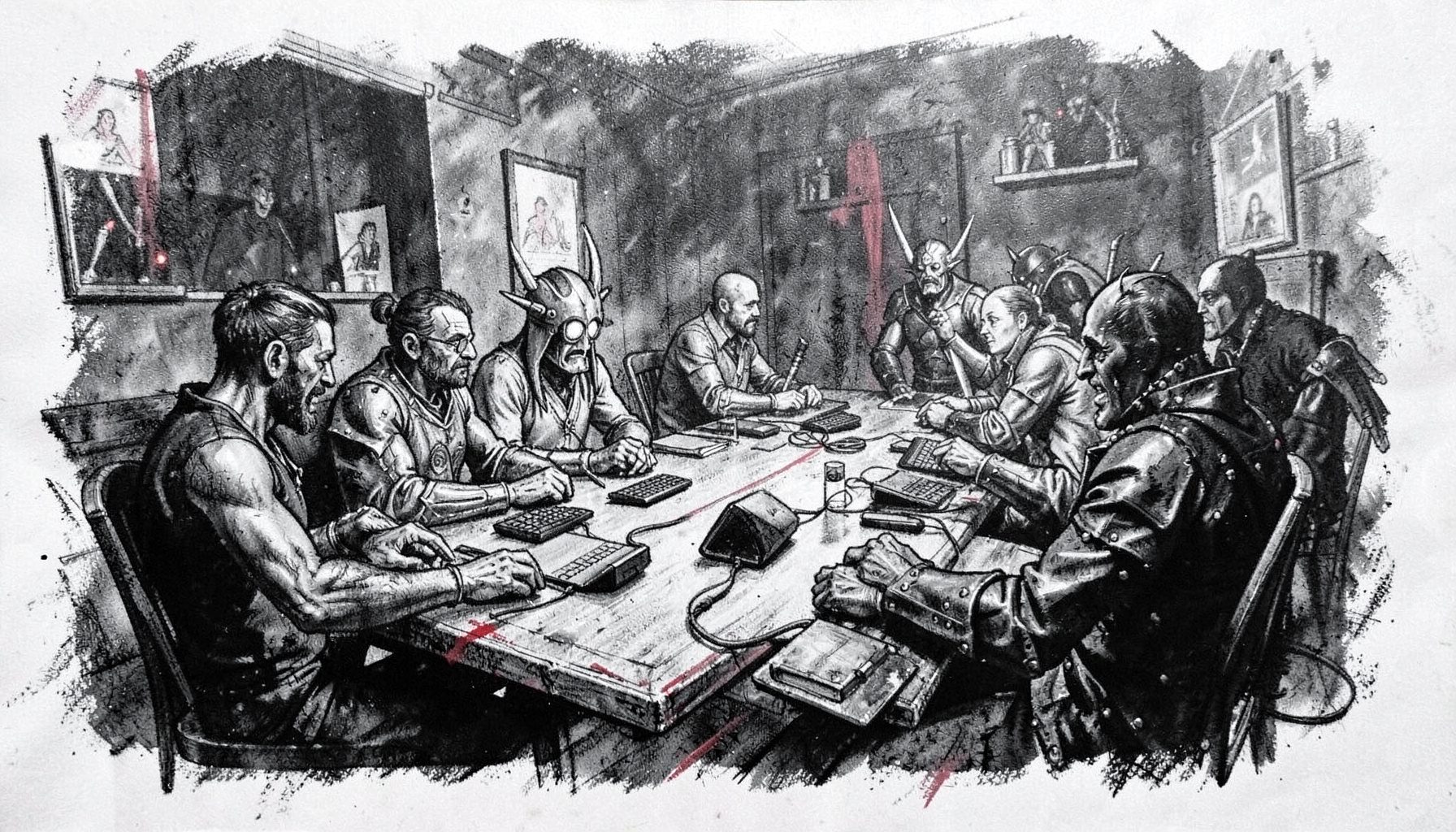
Ethics in Game Design: Lessons from High Level Games
High Level Games Convention 2018 brought tabletop role-players, live-action participants, designers, artists, publishers and vendors together at the Showboat Hotel in Atlantic City, New Jersey. Its mixture of LARP experiences, tabletop sessions, panels, workshops, an exhibitor hall and escape rooms offered a useful setting for discussing ethics in game design. The subject was not confined to a single panel; it connected the creative choices behind games with the power those games exercise over players.
That connection matters because every scenario, rule and reward establishes a relationship between a facilitator and the people taking part. Ethical design asks who benefits, who bears the risk, whose perspective is missing and whether participants can influence the experience. It also asks whether the emotional consequences of play are handled responsibly. The discussion presented ethics as an ongoing design responsibility rather than a set of warnings added after a game is finished.
Why ethics belongs at the design table
Game design is often described through systems, narrative, characters and spectacle, but those elements also teach players what the world rewards. A game that treats cruelty as interesting without offering meaningful context can normalise harm just as effectively as a game that rewards care and cooperation. Designers therefore shape behaviour through incentives, tone and the consequences attached to player choices.
The conversation connected that creative responsibility to the convention’s wider emphasis on inclusive participation and collaborative storytelling. The 2018 convention details show how many forms of play were represented in one programme, creating opportunities to compare how each handled disagreement, identity and vulnerability. An escape room, a dice-heavy campaign and a live-action scene may involve different mechanics, yet each can exclude participants when its rules are unclear or its assumptions are narrow.
Ethical design is consequently not simply about avoiding controversial subjects. It involves understanding the difference between productive discomfort and needless harm. Conflict, loss and moral ambiguity can support meaningful play, but participants need information, options and respect so that difficult material does not become an excuse for unsafe behaviour. Good practice makes those boundaries visible without turning every encounter into a lecture about appropriate conduct.
Consent, safety and player agency
Safety and consent were central because both tabletop and live-action games require trust. A game master or facilitator controls pacing, information and consequences, while players surrender some control by agreeing to follow a shared scenario. That imbalance becomes more noticeable when a story involves combat, intimate themes, physical contact, personal identity or frightening imagery.
The discussion stressed that safety tools must be practical rather than decorative. Players need to know how to pause, decline a theme or change a fictional relationship without being mocked or penalised. In LARP, this also covers physical boundaries, safe combat practices, equipment standards and clear ways to leave an encounter. A rule that exists on paper but creates social pressure to continue does little to protect anybody.
Agency also includes the ability to understand why a situation is happening and what choices are available. A game may produce unintended consequences when its rules reward a narrow approach, fail to explain penalties or make one path appear morally mandatory. Facilitators should test scenarios with varied groups, seek feedback without demanding that every participant become a design consultant, and treat reported discomfort as useful information rather than resistance to the story.
Debriefing was presented as another expression of player agency. A session can leave someone disturbed even when every rule was followed, and an end-of-game reflection gives participants space to process that response. It also allows facilitators to notice patterns that a debriefing guide alone cannot identify. The objective is not to eliminate strong emotion, but to distinguish the intensity intended by the story from harm caused by avoidable design choices.
Representation and cultural responsibility
Representation questions extend beyond choosing a familiar fantasy race for an enemy. They concern whose history is used as atmosphere, whose language becomes shorthand for mystery and whose customs are treated as rewards for the player hero. Discussion participants considered how designers can move beyond stereotypes by consulting people with relevant knowledge, compensating that labour and crediting sources where appropriate.
This has particular force in Australia, where Aboriginal and Torres Strait Islander cultures are living and diverse communities rather than settings for generic ruins or ancient magic. Acknowledging Country at a public event is a customary and welcome gesture, but it cannot replace genuine consultation when a game depicts First Nations characters, Country or ceremonial practices. Teams should also avoid assuming that one community can represent the others, and should not borrow restricted knowledge merely because it creates an atmosphere of authenticity.
Māori and Pasifika perspectives add another dimension to Australian and cross-Tasman game development. Designers working across Aotearoa and Australia can learn from approaches that place whakapapa, community relationships and collective responsibility into the design process. That does not mean every game must carry the weight of cultural explanation; it means the people represented should have a voice in how they are represented.
A companion slice-of-life LARP interview offered a constructive counterpoint to grand campaign narratives. Carefully observed ordinary relationships can reveal power, identity and belonging with less reliance on spectacle. A world becomes more credible when its conflicts emerge from people’s routines, institutions and histories rather than from a generic demand for heroic violence.
Systems, incentives and difficult choices
Moral choice systems require particular care because players often identify ethical behaviour with what the game rewards. If compassion is available but consistently inefficient, the system may communicate that selfishness is rational. Designers should examine not only the options presented but also the rewards, information and mechanical pressure surrounding them.
This does not require every dilemma to have an ideal answer. Strong scenarios can place competing values in genuine tension and leave consequences visible in later play. The ethical problem arises when the game claims to reward one value while secretly punishing another, or when an apparent choice is invalid because the rules only support the intended solution. Transparent systems let players recognise the values a scenario is testing without requiring a single approved response.
Responsibility also extends to commercial pressure. Publishers, organisers and vendors balance artistic aims with attendance, budget and brand expectations. Short-term compromises may seem harmless if a panel promises to address them later, but players experience the finished product without access to those internal discussions. Ethical practice requires decisions to be documented, tested and revisited when evidence shows that a mechanic or scenario is causing avoidable harm.
Facilitators occupy a similarly important position. They interpret rules, portray characters and decide how player boundaries affect the narrative. A written rulebook can support them, but training, mentoring and permission to adapt material are equally necessary. A respectful convention culture is built through hundreds of small decisions, including how organisers respond when somebody reports a problem.
Practical lessons for Australian game makers
Australian role-playing communities stretch across Melbourne’s active café scene, Sydney’s convention and publishing networks, and smaller gatherings in Adelaide, Brisbane, Perth and regional centres. Distance makes regular in-person play difficult for some participants, while shipping imported books and miniatures can make collection costs substantial in Australian dollars. Designers can respond with secure online tools, clear safety protocols, affordable digital resources and events that rotate between cities rather than concentrating access in the eastern capitals.
Local customs and regulation also belong in a design brief. Australian events may open with an Acknowledgement of Country, while games presented to a public audience may require classification guidance from the Australian Classification Board. Accessibility should likewise be planned as part of the experience, not added as a special version for particular players. These realities do not dilute creative ambition; they make a game easier to enter and safer to use.
Questions for every design brief
- Whose experiences, knowledge or cultural material will appear, and who has helped shape them?
- Can players decline, modify or pause any element without losing access to the game?
- Which incentives communicate what the designer considers ethical behaviour?
- What feedback, reporting and debriefing processes will participants be able to use?
- Who is responsible for testing and responding to unintended harm?
Checks to make before play begins
- Explain safety tools during character creation rather than after a difficult scene begins.
- Test physical actions, combat systems and accessibility options with varied participants.
- Review cultural references with appropriate community expertise and credit contributors.
- Provide facilitator guidance for adapting storylines while preserving shared rules.
- Publish a reporting route and explain what organisers will do with concerns.
What should remain with players and designers
The discussion linked ethical judgement to ordinary design decisions: what a reward teaches, whose story is centred, how consent is respected and whether a facilitator can be held accountable for the experience. Its central message was that intention alone is insufficient. A responsible game must translate its values into visible systems, usable boundaries and meaningful ways for participants to respond.
The most useful legacy is therefore a habit of asking better questions during development rather than waiting for controversy after release. Designers should invite criticism from players who are not part of the core team, preserve the authority of those directly affected by a portrayal, and treat care as a quality of the game itself. Ethical practice does not remove difficult choices; it makes the consequences of those choices easier to understand and more responsive to the people involved.
The lasting lesson is that ethical game design is the practice of sharing power, reducing avoidable harm and widening the circle of people whose stories can belong at the table.