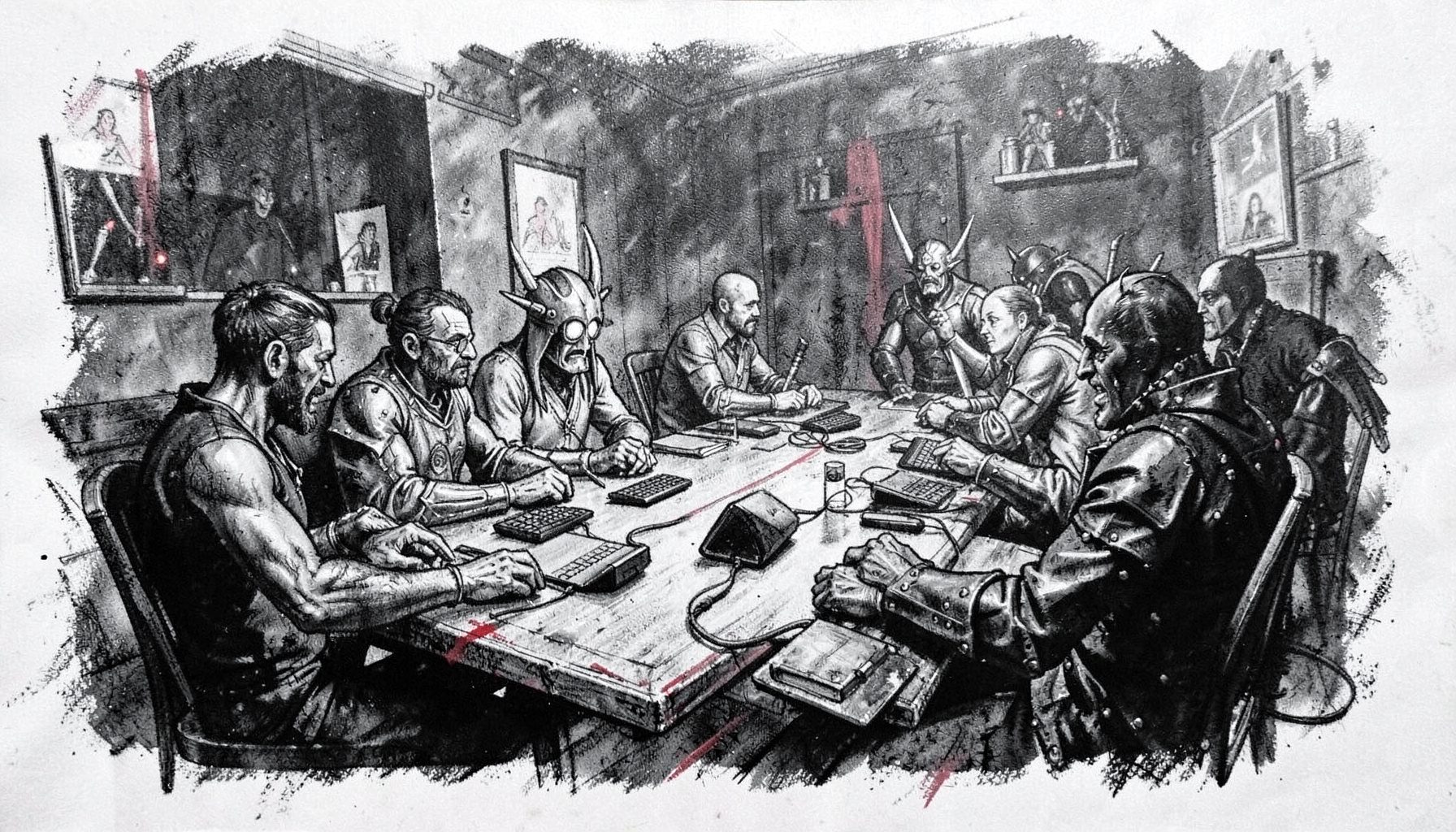
The Showboat Hotel’s Mardi Gras decor as an accidental game setting
At first glance, the Showboat Hotel’s Mardi Gras decor might seem like a themed backdrop rather than a role-playing environment. At High Level Games Convention in 2018, however, the Atlantic City hotel placed that decoration beside tabletop sessions, live-action role-play, panels, workshops, an exhibitor hall and escape rooms. The result showed how a familiar public space can acquire a second life when game-makers start noticing the details around them.
For Australian readers, the idea travels well. Conventions in Sydney, Melbourne and Brisbane often occupy hotels, community venues or convention centres, spaces with their own signage, lighting and foot traffic. A team can ask what stories those features suggest, then use the answers to create play that feels grounded in the venue rather than pasted onto it.
Casino luxury and carnival intrigue
The Showboat’s mixture of casino glamour and carnival imagery offered several immediate visual cues. Mardi Gras colours, masks, metallic finishes and theatrical displays could signal mystery, rivalry or celebration without requiring an illustrated backdrop. In a tabletop campaign, a masked figure might conceal an allegiance, while a bead necklace or feather could become evidence at a negotiation table.
An accidental setting becomes useful when a group assigns spaces clear purposes. The lobby could serve as a crowded neutral ground, the gaming areas as places where rumours circulate, and the decorated corridors as thresholds between competing factions. These are design possibilities rather than claims about an official High Level Games Convention layout, and that distinction matters: the hotel supplied atmosphere, while the players supplied narrative logic.
The setting also depended on people rather than scenery alone. Volunteers at High Level Games Convention guided attendees, supported activities and helped the convention feel welcoming; a volunteer team spotlight shows the care behind that visible role. For designers, the lesson is that décor becomes convincing when participants can move through it with clear guidance and support.
Visual details can drive play
Decor is most valuable when it affects decisions instead of merely looking attractive. A colour-coded objective card might direct players towards purple, green or gold stations, with each area offering a different kind of clue. A mask could mark a character as belonging to an envoy, a thief or a festival marshal, giving role-play a prompt while keeping the rules lightweight.
Physical details also help live-action games manage movement and encounters. Groups can designate one prop as safe to touch, another as evidence that must be observed but not moved, and another as a risk requiring a character check. This simple three-tier system turns a busy hotel into a playable environment without damaging shared property or confusing guests who are not part of the event.
Adapting the idea for Australian conventions
Australian conventions have their own practical texture. In Sydney and Melbourne, many attendees reach a venue by train, tram or bus, often tapping an Opal, Myki or go card as they travel; in Brisbane, heat and summer storms can shape how an outdoor activity is scheduled. Those familiar habits can become scenario details. A chase might depend on a missed connection, a secret exchange might occur in a station-side café, or a heatwave might force an indoor bargain.
The local games market also shapes what a scenario can use. Many clubs source games from specialist Australian retailers, while online imports may add GST, postage and a longer lead time. Before running a game with restricted content, organisers should check the Australian Classification Board labels. MA15+ material requires an adult present for under-15s, M18+ is unsuitable for under-18s, and R18+ can only be supplied to adults, so age checks must be built into admission procedures rather than treated as an afterthought.
For live-action play, state and territory workplace health and safety duties, public liability insurance and emergency plans matter alongside the fiction. Organisers should also follow the Privacy Act and the Australian Privacy Principles when collecting attendee details, publish a photography notice, and make participation in recorded scenes optional. Consent is particularly important when players wear elaborate costumes or perform in public areas of a hotel.
Staging scenarios in a shared hotel
A busy hotel requires scenario rules that respect noise, spectators, fire exits and ordinary guests. Short scenes work better than elaborate searches that block a corridor; encounters should have a clear finish, and props should never obstruct an exit. If the hotel supplies tables or chairs, organisers need permission before using them, while loose costume pieces should be light enough for safe movement and quick removal.
Inclusion also determines whether the décor enriches or excludes play. Avoid puzzles that require a particular height, vision, hearing or motor ability when a paper or verbal alternative will work. Brief role-play boundaries, clear language for stopping an action, and neutral options for costume pieces let people participate without being singled out. These are practical design choices, and they help the lively atmosphere remain collaborative rather than coercive.
Practical ways to develop the decor
Writing about the experience afterwards can preserve those design lessons. A convention recap guide is useful for turning event impressions into clear notes about what worked, what players remembered and which venue features shaped the game.
The following recommendations suit both a one-off convention encounter and a longer campaign:
- Give every prominent colour or object a specific rule function, so visual interest also creates decisions.
- Map three nearby spaces to distinct factions, services or hazards, then define how characters can move between them.
- Use low-cost consumables, such as ribbon markers or printed clue cards, to mark objectives without tying the scenario to expensive set dressing.
- Prepare a nonphysical alternative for every physical challenge, allowing players to participate without climbing, running or handling unfamiliar props.
- Run a short debrief after play to record which details felt purposeful and which were merely decorative.
The strongest test is whether players can explain why a feature mattered. If they remember the hotel’s masks because they concealed allegiance, tracked a clue or altered the route between encounters, the setting has done genuine work.
The setting worth carrying forward
A game setting gains depth when atmosphere, people and rules work together. The Showboat could supply visual richness, but participants needed welcoming guidance and scenarios that respected the shared hotel. That combination turned borrowed decoration into collaborative play rather than an isolated display.
The Showboat Hotel’s Mardi Gras decor worked as an accidental game setting because it supplied vivid prompts without dictating a single story. The detail worth carrying forward is simple: a convincing setting need not begin with a new building or a large budget; it can begin by noticing what the place already tells players.