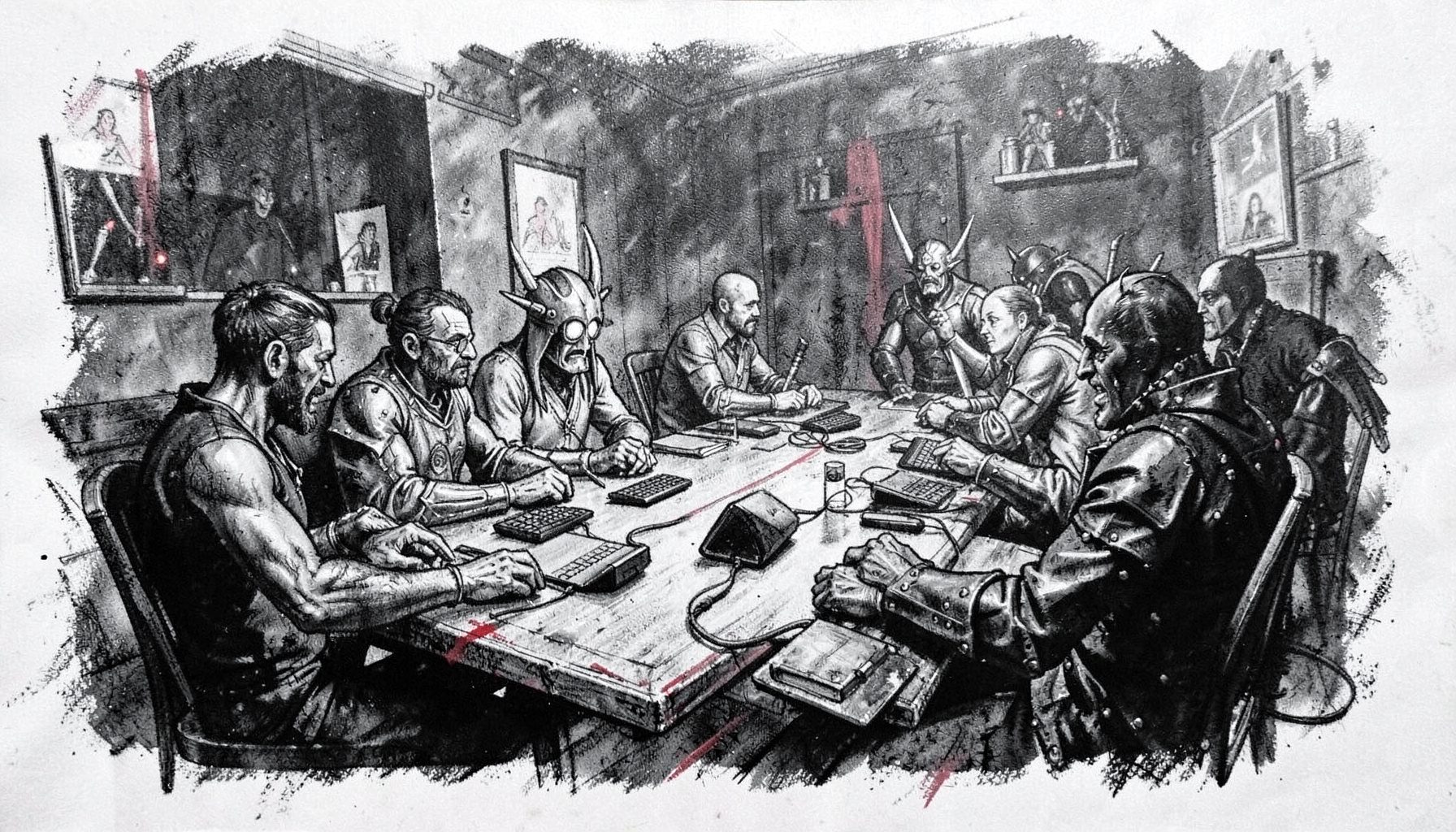
How to host a LARP for 20+ people in a hotel ballroom
Hosting a LARP for 20+ people in a hotel ballroom is less about filling a room than managing a compact live production. The cast needs character goals, safe interaction rules, clear routes through the venue, and enough facilitators to keep story and physical activity under control. A successful live-action role-play (LARP) should feel immersive without making players improvise basic logistics or guess what the game requires.
The balance is easier when the event is designed for an ensemble rather than treated like a private theatre performance. Players move among scenes, share clues and make decisions that affect the wider group, while game masters turn cues into action. The format can suit birthdays, convention games, community events and corporate programmes, provided organisers reserve time for registration, briefing, breaks and debrief.
Choose a live-action format that fits the group
Choose a story engine that twenty or more characters can enter without excessive waiting. HLGCon’s 2018 gathering at Atlantic City’s Showboat Hotel brought together tabletop role-players, live-action roleplayers, game designers, artists, publishers and vendors, showing how many styles can coexist. The popular HLGCon system review offers useful context when deciding how much structure players need.
- A branching conspiracy in which factions exchange information and compete for influence.
- A mystery with parallel investigations, physical clues and a shared final assembly.
- A cooperative quest divided into missions that reward timing and coordination.
- A social investigation centred on negotiations, rumour, role-playing and changing alliances.
- A rotating festival of short scenes, each revealing another part of a larger mystery.
The format should drive decisions rather than serve as decoration. If players must talk to every other character, keep the cast small or stage interactions in rounds. If the event promises constant movement, assign destinations and time limits so nobody spends the game waiting.
- Cast size: confirm the numbers of players, NPCs and staff separately.
- Session length: allow 45 minutes for arrival, briefing and safety notes.
- Character complexity: give every player a clear objective and useful knowledge.
- Interaction level: define expected contact, movement, deception and conflict.
- Success condition: state what players collectively achieve, discover or prevent.
Write these choices into a one-page production brief and test them with the lead facilitator. A three-hour game with 20-plus players may need fewer rules than a six-hour campaign, but it still needs exact scene triggers, escalation points and a plan for late arrivals.
Design simple rules and a strong shared story
Keep the rules visible and physical. Players should know how to strike safely, how to opt out of an interaction, and how to summon a facilitator without embarrassing their character. Establish consent tools, a stop signal, limits on contact and a way to report an injury. Tabletop role-playing conventions can supply mechanics, but live action needs direct supervision.
Build scenes around choices rather than constant speech. A timed clue exchange, suspicious delivery or locked-room problem gives players something concrete to solve. The guide on story-led escape-room design shows how a puzzle can reveal character motives rather than act as a generic lock-and-key detour.
Give facilitators authority to pause, edit and redirect. Keep consequential outcomes in the shared rules, and let players know which actions bring immediate consequences, which create later complications and which remain purely theatrical.
Turn the ballroom into distinct play spaces
Treat the ballroom as several play spaces sharing one controlled entrance. Ask the hotel for an approved floor plan, the legal occupancy and the locations of fire exits, service doors and accessible toilets. Leave a continuous evacuation route and avoid dividing players with fixed scenery. A wheelchair-accessible route, seating for players who need it and a quiet room should be included before the floor plan is finalised.
Use the centre for public missions, the edges for private conversations and a side room for downtime or first aid. Mark zones with table runners or freestanding signs rather than adhesive tape on carpet, and weight every marker to prevent trips. Test sightlines from the facilitator desk, because a speaker who cannot see half the cast will struggle to time entrances.
Prepare every player before the game begins
Registration is where the production becomes manageable. Collect character sheets, pronouns, accessibility requirements and dietary needs well beforehand, then send the rules, arrival time, dress code and map to everyone. Keep administrative questions off the game desk, and issue wristbands or name cards that identify players, NPCs and staff without revealing secret roles.
Build an inclusive pre-game briefing around consent, contact and the right to pause. Explain how conflicts are resolved, what happens after a safety concern and where help can be found. In Australia’s diverse cities, a culturally respectful scenario should be checked with knowledgeable people, especially when using stories connected to a specific community.
Organise staffing, safety and supplies
For 20-plus participants, one game master is rarely enough. A practical staffing model is one lead game master, a facilitator for every five or six players, two safety marshals for physical or combat scenes, one trained first aider and any actors needed for the plot. Adjust the ratio to the venue, age range and intensity rather than treating it as a fixed formula.
Stock consumables and spares before moving in: printing, pens, batteries, tape, safety scissors, water, basic first-aid supplies and spare costume pieces. Approach local game stores, prop makers and costume designers directly. The convention’s sponsor information can also show how organisers, sponsors and vendors divide responsibilities before an event.
Walk the venue with the hotel’s event manager and agree on emergency access, lost-child procedures, incident reporting and the Australian emergency number, 000. If the hotel has a licensed bar, keep glassware and alcohol out of play areas and use a clearly marked check-in point so arriving guests do not cross the cast during a scene.
Run the session so every character matters
Allow three to four hours for the full experience: 45 minutes for check-in and character review, 20 minutes for safety and story briefings, 90 minutes of play, a 20-minute break, then the final scene and debrief. Schedule scene changes around fixed meal times and keep a neutral announcement channel for hotel staff, so routine updates do not sound like part of the fiction.
Keep the narrative moving with clear prompts, rehearsed NPC entrances and one visible clock for timed missions. Rotate downtime, give minor characters information only they can deliver and provide a fair route for every participant to affect the ending. After play, allow ten minutes for practical feedback and a separate decompression moment for players who need to step away from the performance.
Budget for an Australian hotel event
Budget in Australian dollars and price the whole package: ballroom hire, furniture, audiovisual equipment, insurance, printing, costumes, props, food, facilitators and cleaning. GST is 10% in Australia, although input tax credits depend on the business’s registration and circumstances. Obtain the GST treatment in writing, and retain a 10 to 15 per cent contingency for extra stock, overtime and last-minute room changes.
Hotel pricing varies sharply across Sydney, Melbourne and Brisbane. Weekdays or fringe dates can reduce the rate, while major conventions and school holidays push it up. Ask about minimum spend, audiovisual hire, cancellation terms and access to loading docks. For arrivals, include taxi, rideshare and public transport options in the player briefing, and appoint one volunteer to coordinate coaches rather than relying on street parking.
The practical takeaway is to lock the rules, room plan and safety roster before selling tickets, then rehearse the entire player flow inside the ballroom before the first performance begins.