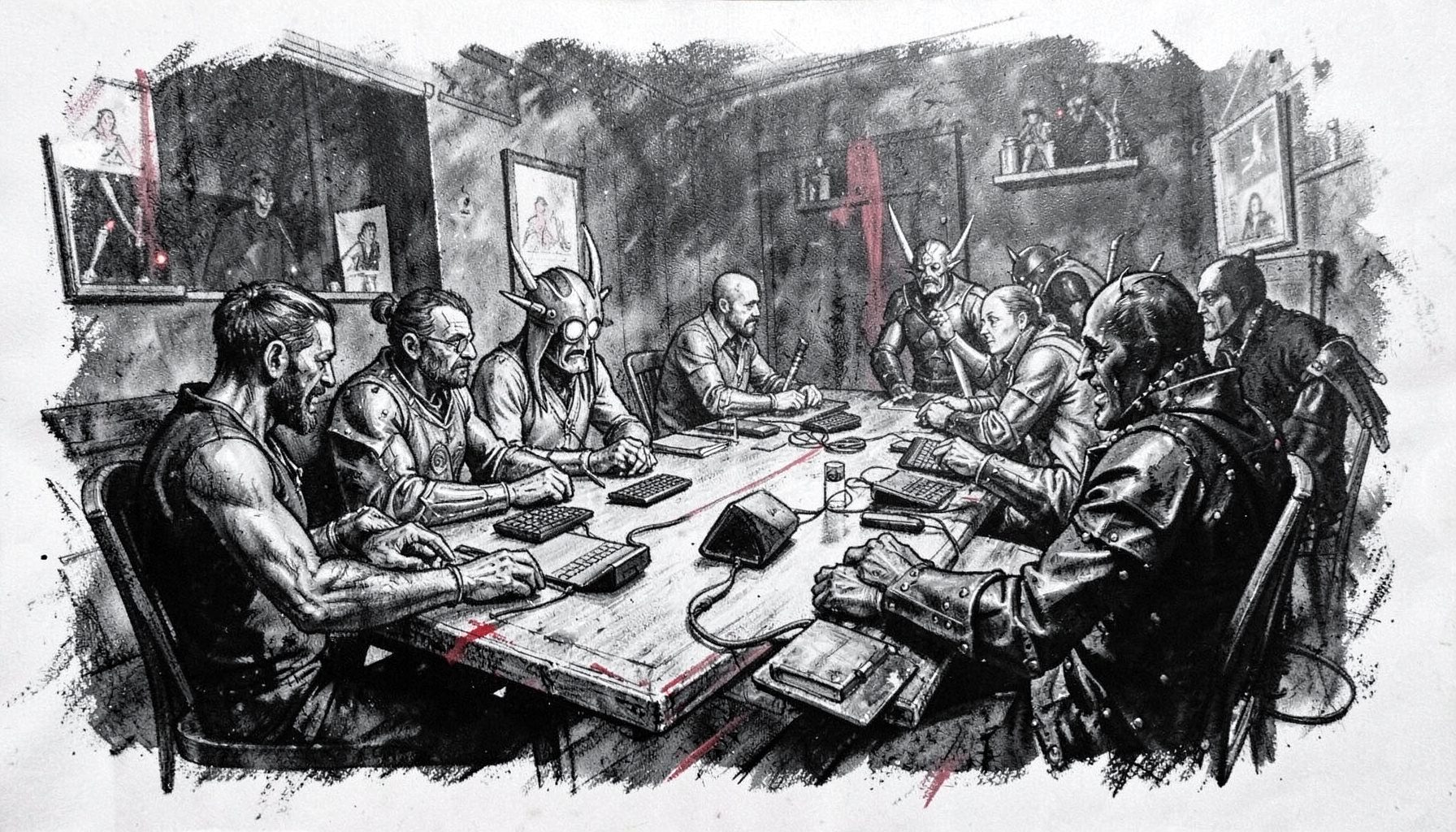
A Review Of Popular TTRPG Systems At HLGCon
High Level Games Convention brought a broad tabletop role-playing audience to Atlantic City in 2018, alongside live-action role-play, panels, workshops, designers, artists, publishers and vendors. Its programme reflected the way modern conventions mix familiar fantasy campaigns with experimental one-shots, social play and immersive storytelling. For background on the event and its community focus, the HLGCon archive provides useful context.
A review of the systems associated with HLGCon needs to look beyond sales figures or online popularity. Convention play favours games that teach quickly, support varied group sizes and produce a memorable session within a few hours. A familiar ruleset can fill tables efficiently, while a more specialised game may attract a smaller but intensely enthusiastic audience.
That balance is familiar to Australian players. At events such as PAX Aus in Melbourne, CanCon in Canberra and local club conventions in Sydney or Brisbane, Dungeons & Dragons often acts as the gateway game, while independent systems create a strong secondary scene. Australian groups also contend with imported book prices, smaller retail ranges and long travel distances, making flexible, well-supported rules especially valuable.
Dungeons & Dragons Remained The Convention Anchor
Dungeons & Dragons Fifth Edition was the clearest all-purpose choice for a convention such as HLGCon. Its character classes are recognisable, its fantasy vocabulary is accessible and its core mechanic is easy to explain at the table. A player can arrive with little preparation, choose a pre-generated character and understand the basic rhythm of ability checks, combat and roleplay within minutes.
That accessibility matters when tables include people from different gaming backgrounds. A veteran can focus on character choices and tactical decisions, while a newcomer can contribute through straightforward actions such as persuading an NPC, scouting a room or protecting an ally. The system also handles the short, self-contained adventures common at conventions better than its long campaign reputation might suggest.
Its main weakness is familiarity. A standard dungeon crawl or tavern mystery can feel predictable when several sessions use the same adventure structure. Strong HLGCon-style play therefore depends heavily on the game master’s presentation: unusual premises, vivid non-player characters and meaningful choices do more to distinguish a session than another elaborate combat encounter.
For Australian groups, D&D’s popularity is supported by a large online community and a growing network of game stores, although books and accessories can cost noticeably more after shipping and currency conversion. That makes the free basic rules and digital tools particularly useful for players who want to join a game before investing in a full library.
Pathfinder Offered Depth For Experienced Groups
Pathfinder appealed to players who wanted a denser fantasy ruleset and greater control over character construction. Its reputation for detailed feats, spells and tactical options made it a strong fit for gamers who enjoy planning a build over several levels. At a convention, that depth can create satisfying moments when a carefully chosen ability changes the outcome of a difficult encounter.
The trade-off is a steeper learning curve. A first-time player may find the number of modifiers, actions and character options intimidating, especially when a session begins in the middle of an ongoing story. Experienced organisers can solve much of this problem with simplified character sheets, pre-generated heroes and a short rules briefing before play begins.
Pathfinder also rewards a group that enjoys tactical cooperation. Positioning, conditions and resource management tend to matter more than in a highly improvisational narrative game. The system can therefore feel especially engaging for players who treat a convention table as a puzzle to solve together rather than simply a stage for character performance.
Its popularity among organised play communities gives it another advantage. A player from Melbourne, Perth or Newcastle can often recognise the structure of a Pathfinder event and find a familiar style of table elsewhere. That continuity is valuable in Australia, where regional groups may be separated by hours of driving or an expensive domestic flight.
Horror And Narrative Games Changed The Pace
Call of Cthulhu and similar investigative horror games provided a sharp contrast to heroic fantasy. Their appeal lies in atmosphere, uncertainty and flawed protagonists rather than steadily increasing combat power. A convention session can become memorable through a disturbing clue, a tense interview or the gradual realisation that the characters have misunderstood the threat.
The system works best when the keeper manages information carefully. Players need enough evidence to make meaningful deductions, but not so much that the mystery becomes a checklist. Sanity mechanics can reinforce the tone, although they should be used thoughtfully and with clear table expectations. Horror is more effective when everyone understands the boundaries before the fiction becomes intense.
Narrative-focused games such as Fate or Powered by the Apocalypse titles offered another kind of flexibility. Their mechanics encourage players to define relationships, complications and dramatic intentions instead of waiting for the game master to supply every detail. This supports collaborative storytelling, a natural match for HLGCon’s emphasis on participation and creative exchange.
The same principles help live-action role-players. Someone preparing for a weekend event can benefit from practical advice such as this first LARP character guide, especially when deciding how much costume, backstory and mechanical detail is genuinely useful. For an Australian attendee travelling to an interstate convention, a portable character concept and modest costume can be more practical than carrying a complete wardrobe.
Genre Variety Made The Event Feel Broader
Savage Worlds occupied a useful middle ground between traditional tactical roleplay and cinematic action. It can support pulp adventure, westerns, science fiction, horror and fantasy without requiring a wholly new approach to basic resolution. Its fast-moving combat and emphasis on dramatic extras make it well suited to a crowded convention schedule where a session needs visible energy.
Shadowrun and other science-fiction or cyberpunk games appealed to players seeking a more distinctive setting. The combination of technology, social inequality, magic and criminal enterprise creates stories that feel very different from medieval fantasy. These systems can be harder to run smoothly because they combine several subsystems, but a confident game master can turn that complexity into a memorable feature.
Indie games also benefit from convention conditions. A focused ruleset can demonstrate its central idea in a single session, whether that idea is shared world-building, emotional character drama, resource scarcity or surreal problem-solving. Players may leave without learning every rule, yet still understand why the game exists and what kind of story it wants to tell.
This variety was important to HLGCon’s identity. The event was not simply a place to find the most commercially visible role-playing game. It connected tabletop campaigns with LARP, escape-room-style activities, workshops and the exhibitor hall, allowing visitors to move between passive observation and active participation. A system’s ability to invite that movement was part of its practical value.
Choosing A System For Convention Play
Popularity at a convention is best measured by usefulness rather than by a strict ranking. D&D can bring a table together quickly, Pathfinder rewards mastery, horror games create atmosphere, and narrative systems offer collaborative freedom. The strongest choice depends on the session length, the experience of the players and the kind of story the organiser wants to deliver.
Australian organisers should also consider local realities. A game that relies on several expensive supplements may be difficult for casual players to access, while a rules-light title can travel easily between community halls, university clubs and home groups. Clear online resources matter when participants are joining from different cities or playing across Australian time zones.
Useful priorities for selecting a convention system include:
- Choose rules that can be explained clearly within the first fifteen minutes.
- Provide pre-generated characters with readable abilities and a simple summary of the core mechanic.
- Match the system’s tone to the advertised experience, especially for horror, romance or intense LARP-adjacent themes.
- Use a game with enough flexibility to accommodate different levels of role-playing confidence.
- Check whether essential books, dice and digital resources are affordable and available in Australia.
- Build a complete one-shot with a strong opening, a meaningful choice and a satisfying final scene.
- Brief players on safety tools, content boundaries and table expectations before the action begins.
The most popular tabletop role-playing systems at HLGCon succeeded for different reasons. D&D offered immediate recognition, Pathfinder supplied mechanical depth, horror games shaped powerful moods, and flexible narrative systems encouraged shared authorship. Together, they showed that a successful convention programme does not depend on a single dominant ruleset. For a practical choice, select the system that teaches quickly, suits the intended tone and gives every player a clear way to matter during the session.