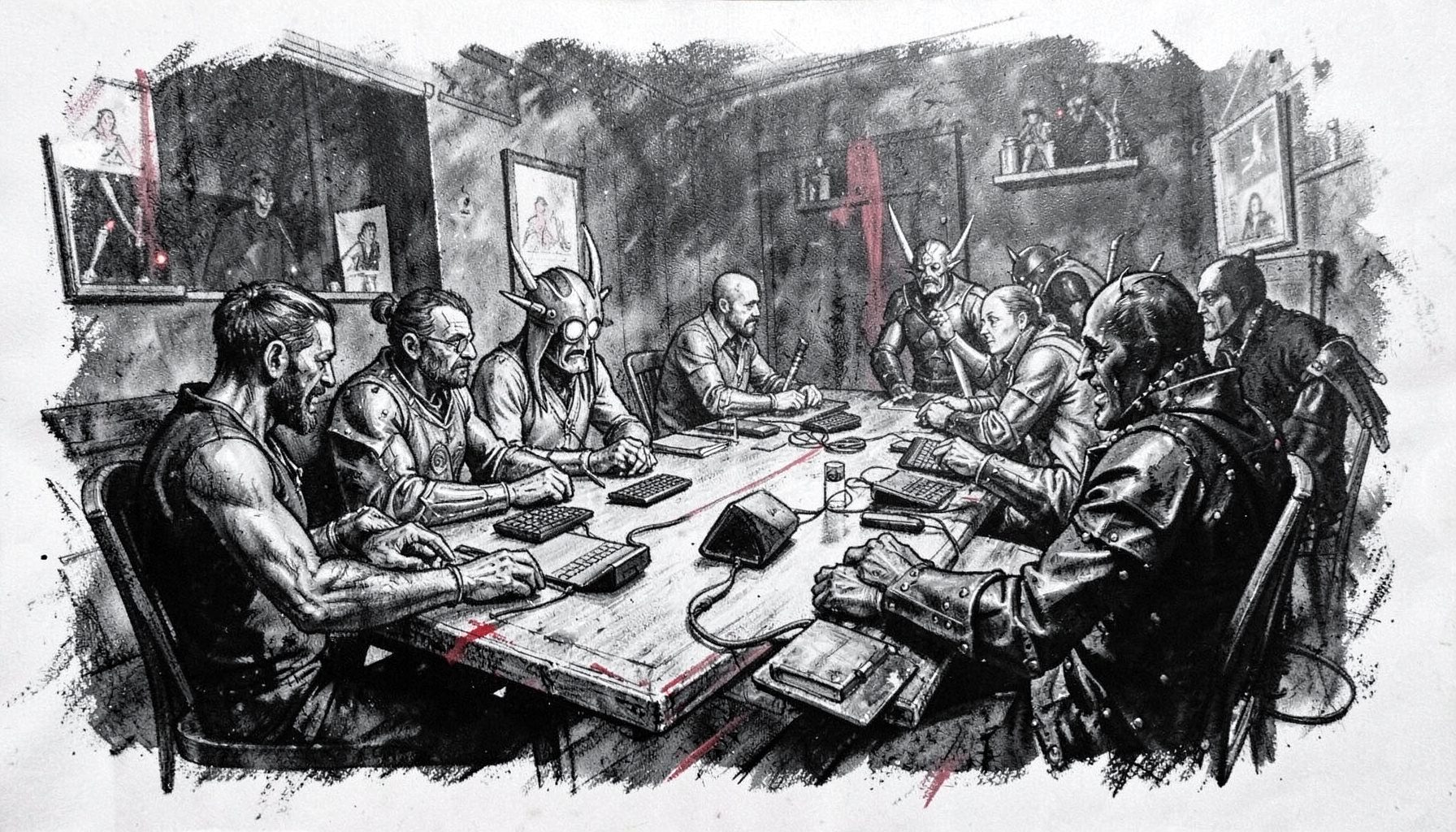
Running a game design panel that actually lands at a convention
Running a panel on game design at a convention is one of the most visible things you can do as a creator. A good panel introduces your work, sharpens your thinking, and builds a small but loyal audience. A weak one leaves the room with the lingering taste of wasted time. The difference comes down to preparation, format, and the small decisions about how you treat the people in front of you.
If you are based in Australia, the local convention scene is busier than most outsiders expect. Melbourne International Games Week pulls in designers from across the country, PAX Australia anchors the calendar in October, and Brisbane's Supanova events draw consistent crowds. Australian audiences tend to be direct without being aggressive, generous with questions, and quick to clock anything that feels rehearsed. Planning around those habits will make your panel feel like it belongs to the room rather than a script carried in from elsewhere.
Game design panels also carry a particular responsibility. Unlike a talk about lore or a how-to-play demo, a panel can shape what newcomers think the craft looks like. HLG Con's broader approach to collaborative storytelling in RPGs showed how much a convention can do when it treats panels as a shared creative act, not a lecture. The same spirit can guide a design panel, especially if you want it to do more than recap your latest release.
Choosing a topic sharper than "Game Design"
A panel topic like "Game Design" will die before it starts. The subject is too wide, the time too short, and the audience too varied. Stronger panels pick a single working question and stick to it. "Designing failure states in cooperative RPGs" is a topic. "How we built the boss fights in our latest campaign" is a topic. Both give a panelist somewhere to land and an audience a reason to stay.
Australian conventions tend to reward specificity. Freeplay in Melbourne and the tabletop rooms at PAX Aus are full of attendees who already follow indie creators, so a broad overview will feel padded. Look at your own design notebook. Find the question you have argued about for months and turn that into your panel title. The audience will pick up the energy of a real argument more readily than a polished summary.
It also helps to anchor the talk in a concrete artefact. Bring printed encounter cards, prototype boards, or a hand-out. Convention halls are distracting, and a physical object gives the room a place to rest. Designers from studios like League of Geeks in Melbourne have shown how a single prototype piece can anchor a whole presentation, even when the surrounding technology is still rough.
Building a panel that isn't just you and a microphone
Most design panels work best with three voices. One solo voice rarely holds a room for sixty minutes, and a five-person panel collapses into cross-talk. Three panelists let you cover a real spread of opinion without splintering the conversation. Aim for one person with design credits, one with publishing or production experience, and one whose background is in player communities or education.
If you are running your panel at a venue that supports it, sponsor your production early so the room, the AV, and the recording are sorted before you start worrying about the script. Sponsorship at a convention is often misunderstood as a marketing line item, but for a panel it is closer to a logistics partner. Even a small backing can cover travel for a remote panelist from Sydney or Perth, which immediately lifts the quality of the discussion.
Brief your co-panelists like collaborators, not guests. Send a one-page outline with three talking points each, an opening question, and a closing one. Ask them to flag any topic they would rather not cover on stage. Australian panelists in particular tend to be relaxed about saying yes first and regretting it later, so giving them permission to push back early saves the panel from an awkward reshuffle the morning of the show.
A useful pre-panel checklist for a design moderator looks like this:
- Three talking points written out as questions, not statements
- Two printable artefacts the audience can take home
- A moderator script with hard time markers every ten minutes
- A backup panelist who can step in if someone drops out
- A pre-agreed signal for moving the conversation along
Structuring the hour so nothing drags
A panel is not a talk with extra people on stage. A talk has a single arc. A panel has multiple arcs that need to share a clock. Plan the hour in four clean segments. Open for ten minutes with each panelist introducing their point of view, not their résumé. Run a focused discussion for twenty-five minutes, with a moderator question every five minutes to keep things moving. Hold audience questions for twenty minutes. Close with a tight five-minute wrap where each panelist names one thing they would change about their own game.
Time discipline matters more in Australian rooms than people credit. Sessions at conventions like Canberra's Gryphon Games Con often run back-to-back, and an over-running panel is felt by the next group waiting in the wings. Keep a visible clock at the front of the stage, agree on hard cut-off times in advance, and never assume a question from the floor will only take a minute. It will not.
Build in one planned interruption. A live demo, a printed handout, or a two-minute audience poll breaks the rhythm and wakes the room up. Designers running LARP or escape-room components often borrow this idea straight from immersive events. The themed escape room that tied into the convention programme worked because the activity itself became the panel's anchor. You can borrow the same idea without running a full room, simply by handing out a worksheet tied to your design question.
Running the room without sounding like a host
The most common failure on stage is treating the audience as decoration. Stand in the front, make eye contact with the back row, and pick the first question from someone who is not already waving. That small choice resets the social temperature of the room and signals that the panel is not just for the loudest regulars.
When a question is off-topic, redirect with credit, not correction. "That is a real question and worth its own panel, and here is the closest I can get in a minute" works better than a flat "we can't cover that." Australian audiences especially dislike being shut down, because the wider culture prizes a fair go and a generous conversation. Hold that line even when the question is hostile or loaded; a calm, specific answer lands harder than a sharp one.
Keep your moderator's voice neutral. You are the shape of the conversation, not the star of it. When panelists talk over each other, name the pattern gently and hand the floor back. When the energy drops, ask a question that requires an example, not a definition. Examples travel across the room. Definitions bounce off the back wall.
After the last mic check
A panel is also a marketing moment, and most designers waste it. Within twenty-four hours, post a one-page recap, a short video clip if the convention recorded it, and a single call to action tied to your game. Link to a playtest, a Kickstarter, a backer portal, or a community Discord. Australian convention audiences often follow up later, sometimes weeks after the event, so leave a clean trail to follow.
Different ways to extend a panel's life after the convention work better for different goals, and matching the follow-up to the outcome saves a lot of effort:
| Follow-up | Best for | Time required |
|---|---|---|
| Written recap post | Blog readers, slow burn | 2–3 hours |
| Short video clips | Social media reach | 1–2 hours |
| Private community thread | Dedicated fans | 30 minutes |
| Newsletter follow-up | Sales, crowdfunding | 1 hour |
A short post-panel checklist can keep you honest:
- Send a thank-you note to your co-panelists within a day
- Save every question you were asked into a single document
- Tag the convention and your co-panelists in any follow-up posts
- Add the panel recording to your portfolio page
- Reach out privately to two attendees who asked sharp questions
- Note one thing you would change next time, in writing
A simple retrospective document, shared with your co-panelists, is also a low-cost habit that pays off. Designers who run multiple panels a year, including those on the Freeplay and PAX Aus circuit, treat each panel as a small production with its own debrief. The third panel of the year is always better than the first, and the only reason is that the second one got reviewed.
The next concrete step is small but useful: book a thirty-minute call with one of your would-be co-panelists this week, and decide on a single question the panel will spend the hour trying to answer.