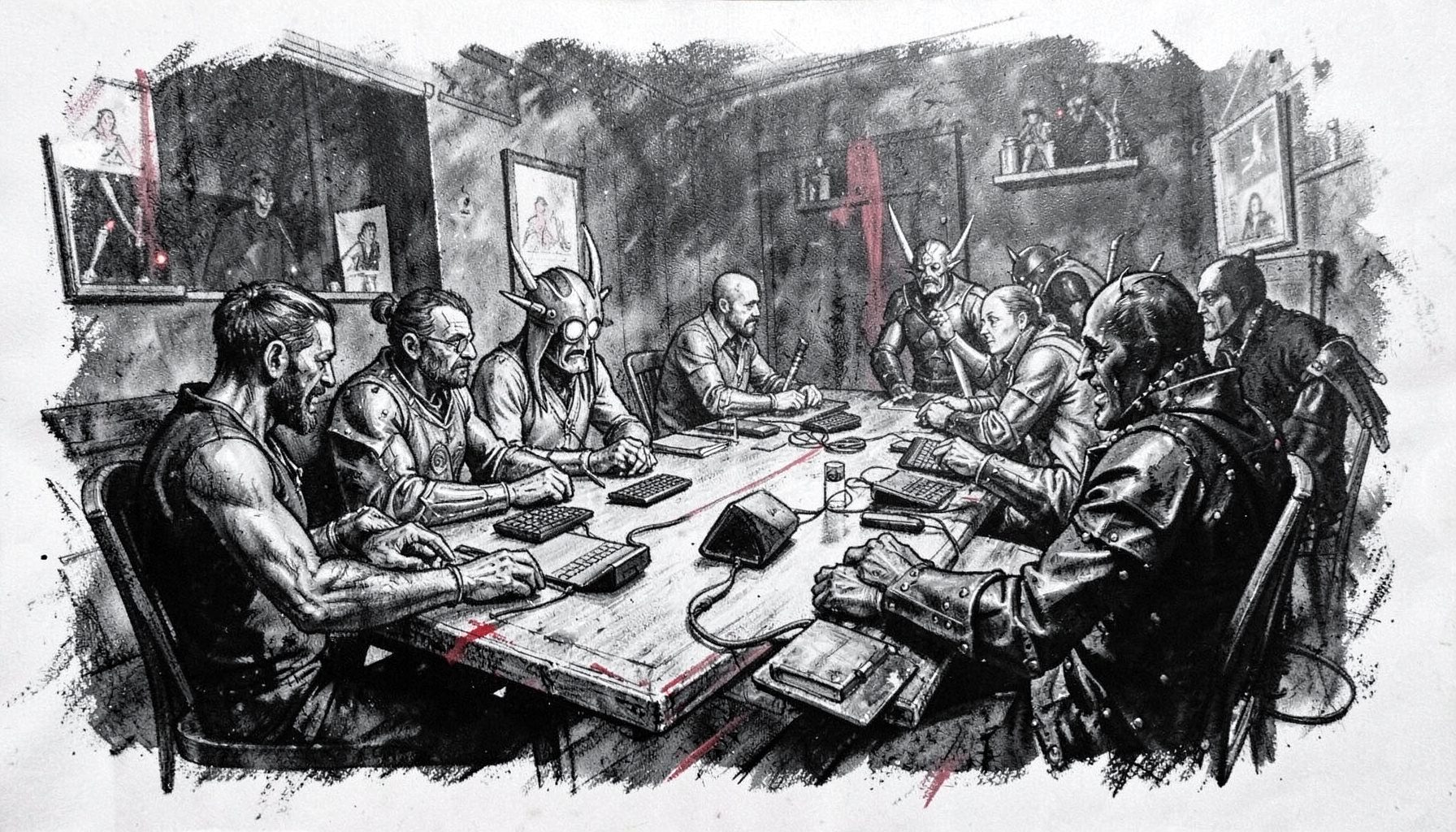
Safe word systems in LARP and escape rooms
When a player raises a hand, calls out a word, or taps a shoulder in the middle of a live-action scene, that small action halts the fiction and protects the person experiencing it. Safety tools, particularly safe word systems, have moved from niche role-playing circles into the mainstream of immersive entertainment. The High Level Games Convention gathered designers, performers, and hobbyists who recognised that shared safety language is as essential to collaborative storytelling as character sheets or rulebooks.
Communities across Australia have watched this shift with interest. Local escape room operators in Melbourne and Sydney now post their safety protocols online, and grassroots LARP groups in regional Victoria and Queensland train new members in the same consent-based vocabulary. The momentum is not about restricting play. It is about building trust so that participants can take creative risks without fear.
What a safe word actually does
A safe word is a pre-agreed signal that pauses, slows, or ends an activity. The concept became widely known through kink communities, where words like "red" and "yellow" signal stop and slow-down respectively. Gaming adopted similar structures because the mechanics serve the same goal: one participant asking for a change and others respecting it instantly.
In LARP and escape rooms, a safe word might be a spoken phrase, a gesture, or even a physical object such as a held-up card. The format is less important than the principle. Everyone present must know what the signal means, how to respond when it appears, and that invoking it carries no penalty or story consequence. Some events use layered systems where a "pause" word separates a request for a bathroom break from a request to stop a difficult scene entirely.
The vocabulary should be chosen so it cannot be confused with in-game dialogue. A generic term like "stop" is risky in a combat scene where actors may shout "stop him!" A phrase such as "banana peel" or "broken ankle" works because it sounds out of place. The goal is clarity under stress.
Why LARP needs strong safety frameworks
Live-action role-play blurs the line between performer and participant in ways tabletop games rarely do. Players may be tackled, grabbed, or hit with padded weapons during a skirmish. Scenes sometimes involve simulated interrogation, isolation, or psychological pressure. Without clear signals, a participant who becomes uncomfortable has no graceful way to step back.
Australian LARP organisers have responded to this with written safety briefings distributed before events. Groups such as those around the Illawarra and Brisbane scenes include safety officers who walk the play area carrying high-visibility vests. Participants can approach any of them at any time. This physical presence matters because it turns an abstract policy into a visible commitment.
A second layer of protection comes from calibrating intensity during character creation. Players flag topics they want to avoid, such as claustrophobia, phobias, or personal history with violence. Game masters then adjust scenes accordingly. When that preparation is paired with a reliable safe word, the result is a game that can lean into dramatic tension without crossing personal boundaries. Reflections on standout immersive moments, like the highlighted LARP experiences from past gatherings, often credit well-run safety briefings as the reason players felt comfortable enough to commit fully.
Communication standards inside escape rooms
Escape rooms present a different challenge. Players are usually locked in a space for a fixed period, surrounded by actors or automated effects designed to startle and disorient. A participant who feels genuine distress may struggle to express it because every surface, prop, and wall is part of the puzzle narrative.
The best Australian operators address this with multiple channels. Most rooms offer a monitored call button that opens a direct line to a game master outside the space. Some also post printed safe word cards on a wall so players can hold one up if speaking feels impossible. Others train their actors to read body language and check in at scripted intervals.
Because escape rooms are paid experiences with commercial pressures, the stakes around player comfort are unusually high. A guest who leaves mid-game expecting a refund should be able to do so without negotiation. Posting the safe word and the exit process in the booking confirmation removes ambiguity before guests even arrive. Melbourne's densest cluster of escape venues has become a quiet testing ground for these standards, and several chains now publish their protocols publicly as a selling point.
Side-by-side: LARP and escape room safety
Although both formats rely on shared vocabulary, the structures that hold them up differ in important ways. LARP tends to distribute responsibility across many participants because anyone can run a scene. Escape rooms centralise authority because the space is controlled and the operators hold the keys.
| Element | LARP implementation | Escape room implementation |
|---|---|---|
| Trigger | Spoken word, gesture, or held card | Spoken word, button press, or held card |
| Response time | Immediate pause, scene resets | Game master enters or unlocks door |
| Pre-event briefing | Written content guidelines, opt-out list | Booking confirmation, on-site walkthrough |
| Trained staff | Safety officers in high-vis vests | Operators on camera or behind one-way glass |
| Post-event support | Debrief circle, follow-up contact | Exit survey, optional refund discussion |
| Who holds responsibility | Game master and safety officer | Operator and venue staff |
Both approaches succeed when players know who to approach and trust that the response will be quick. A venue that lists a safety officer by name and a contact number by phone tends to receive calmer feedback than one that promises only "we'll handle it." Specifics matter because they turn policy into practice.
Welcoming newcomers and managing anxiety
Many first-time attendees hesitate to join LARP or escape rooms because they worry about losing control of the experience. That anxiety is reasonable, and it grows when safety information is buried in jargon or handed over too quickly. Veteran players at conventions often share practical advice for newcomers, and collected tips on first convention guidance reflect years of watching shy players become confident ones.
Simple steps help. Arrive early enough to read the safety briefing without rushing. Identify the safety officer or game master by sight before play begins. Practise saying the safe word out loud once, even if it feels silly, so the muscle memory exists under pressure. Australian conventions such as those held in Adelaide and Hobart have started offering pre-event orientation sessions where newcomers can meet staff and ask questions in a low-pressure setting.
Anxiety does not disappear once someone knows the rules, but it shrinks when the rules feel real. Holding up a card and watching everyone pause is often the moment a hesitant player realises the space belongs to them as much as to anyone else.
Training facilitators and building better events
Strong safety systems require trained people behind them. Game masters, actors, and operators need to practise responses before they face a real distress call. Dry runs, role-play drills, and post-incident reviews all build that muscle. Conventions play a key role here because they gather practitioners in one place to share what works, and the convention schedule typically lists workshops on consent mechanics, panels on accessibility, and roundtables where experienced organisers compare notes. Attending one of these sessions is often the cheapest way for a new event runner to upgrade their safety infrastructure. Pairing the training with peer observation at live games helps translate theory into habit.
The broader Australian events industry has noticed. Escape room franchises now cite facilitator training in their marketing, and LARP organisers advertise their safety credentials when recruiting new members. The shift is measurable: venues that invest in preparation see fewer mid-game dropouts and stronger word-of-mouth.
Change rarely arrives through grand gestures. It usually shows up in small habits adopted by a few people who care enough to model them. Mentioning a safe word during the pre-game chat, printing a one-page summary for new players, or volunteering to be the visible safety officer at a small LARP event all count. Each of these nudges shifts the culture in a direction that rewards vulnerability rather than punishing it.
Anyone organising an upcoming session can act on this today by writing down the exact safe word their next event will use, where it will be posted, and who will handle the response. Sharing those three details with one other person before the event begins is the smallest concrete next step, and it sets a tone that the rest of the room tends to follow.