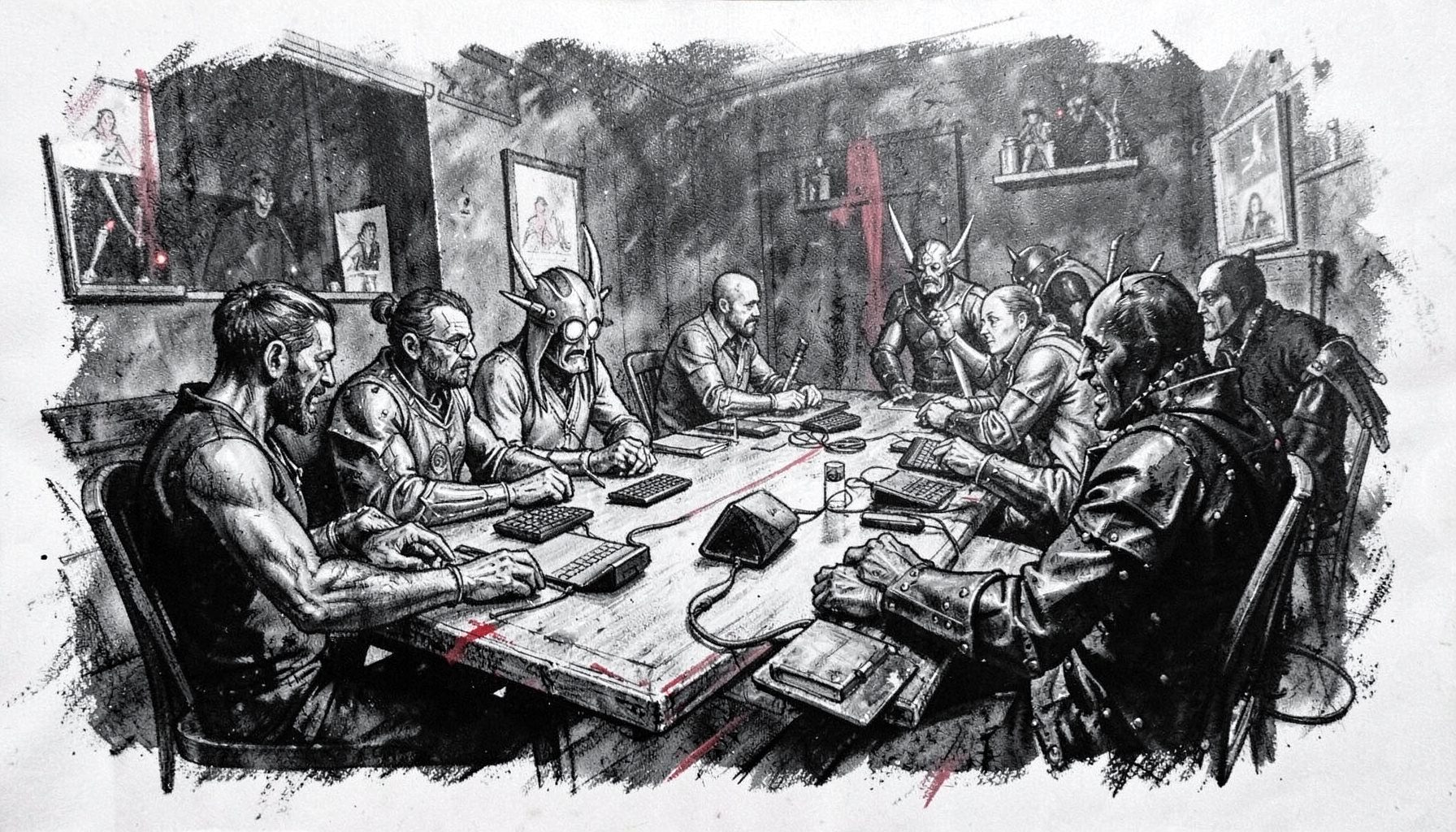
HLGCon 2018’s Missed Live-Action Adventures
The phrase “Top 10 LARP Experiences You Missed at HLGCon 2018” captures more than a list of costumes and character sheets. High Level Games Convention brought live-action role-playing into the same creative ecosystem as tabletop gaming, game design, performance, publishing and collaborative storytelling. Held at the Showboat Hotel in Atlantic City, the 2018 event offered several ways to step into a fictional world rather than simply observe one.
For Australian players, the appeal is easy to recognise. A weekend LARP can feel like a combination of theatre rehearsal, board-game campaign, improvised mystery and social club. It rewards preparation, yet leaves room for unexpected alliances, dramatic reversals and memorable failure. HLGCon’s programme made that kind of participation accessible to people who may not have attended a dedicated LARP festival before.
The experiences below focus on the event’s immersive possibilities: interactive scenarios, escape-room pressure, character creation, workshops and the informal storytelling that happens between scheduled sessions. They also show why the convention remains relevant to players in Sydney, Melbourne, Brisbane and smaller Australian communities looking for affordable, welcoming ways to play.
Why HLGCon’s live play felt different
HLGCon placed LARP beside tabletop sessions, panels and an exhibitor hall, giving participants several entry points into role-playing. Someone could spend the morning learning about game design, join a live-action scenario after lunch and then discuss costume construction with an artist or publisher in the evening. That variety made the convention feel less like a single game and more like a creative playground.
The Showboat Hotel also supported a useful sense of scale. A convention venue allows performers to move between dedicated rooms, corridors, social spaces and scheduled activities without needing the extensive outdoor site preparation required by many campaign LARPs. The result is a compact form of immersion: the fictional world exists for a defined period, but the surrounding convention keeps feeding it new ideas.
The published event schedule is especially valuable for understanding how these experiences fitted together. Sessions, workshops and social activities created a rhythm in which a player could shift from audience member to participant several times across one weekend.
Five scenarios that rewarded full participation
HLGCon’s live-action offerings can be remembered through the types of experiences they made possible. Each asked players to contribute physically, socially or creatively, rather than waiting for a game master to deliver every important moment.
- Character-led LARP scenarios: Players entered with motives, relationships and secrets, then allowed conversations and decisions to shape the story.
- Immersive escape-room challenges: Teams combined observation, communication and time management while solving puzzles under theatrical pressure.
- Faction and alliance play: Groups pursued competing objectives, making negotiation and betrayal as important as combat or clue-finding.
- Workshop-to-game experiences: Advice about acting, costume, props or rules could be applied almost immediately in a live scenario.
- Drop-in collaborative scenes: Players with limited convention time could still join a contained story and make a meaningful contribution.
The strongest feature of these formats was their shared authorship. A player did not need to deliver a perfect performance or understand every rule to matter. A suspicious question, a badly timed confession or a decision to protect an untrusted ally could create a new direction for everyone in the room.
That approach also suited newcomers. Australian conventions often attract people who have played Dungeons & Dragons or board games but have never tried live-action role-play. A contained convention scenario removes some of the barriers associated with joining a long-running campaign, such as buying a complete costume, travelling to a rural site or learning months of backstory.
The social stories between scheduled sessions
Some of the most memorable LARP moments happen outside the formal scenario. A player explains a prop in the hallway, an organiser helps repair a costume, or two strangers compare character concepts over coffee before returning to the fiction. HLGCon’s combination of panels, vendors and gaming rooms encouraged these informal exchanges.
That community dimension matters in Australia, where geography can make regular play difficult. A participant from Melbourne may have limited access to the same LARP groups as someone in Brisbane, while a player in Perth faces a much longer trip to many east-coast events. A convention compresses those networks into one weekend and lets people meet designers, performers and organisers they might otherwise know only through social media.
The atmosphere also supported different levels of commitment. One visitor might spend most of the day in the exhibitor hall, another might attend every live session, and a third might use panels to learn how to run games locally. All three still become part of the same creative community, which is an important strength of inclusive convention design.
Building a character for one intense weekend
A convention LARP character needs enough definition to make decisions quickly, but not so much backstory that the player becomes trapped by it. A clear want, one useful relationship and a reason to distrust or support another faction can provide more play than several pages of private history.
Costume is part of that communication. A colour, badge, improvised accessory or distinctive silhouette can tell other players where a character belongs before the first conversation begins. Australian players are accustomed to practical costume choices because heat, sudden rain and long travel distances can make elaborate outfits uncomfortable. Breathable fabrics, secure footwear and layers are often more useful than screen-accurate details.
Players preparing for their first event can use this guide to build a LARP character. The central lesson is to create hooks other people can use. A character who needs information, owes a favour or carries a disputed object gives fellow participants an immediate reason to start a scene.
Five more immersive moments worth remembering
The convention’s wider programme expanded what “LARP experience” could mean. Not every memorable moment required a formal combat system or a large cast; some depended on performance, atmosphere, problem-solving or the feeling that the venue had briefly become somewhere else.
- Entering a themed environment: Room dressing, music, signage and staff performance helped establish a shared fictional frame.
- Performing under pressure: Players had to make choices while being watched, interrupted or challenged by other characters.
- Following a live mystery: Clues gained through conversation could send participants across the venue in search of answers.
- Learning from experienced organisers: Panels and workshops revealed how rules, safety tools and pacing support better play.
- Sharing the post-game debrief: Discussing motives, missed clues and surprising choices turned a short scenario into a lasting memory.
These moments show why LARP is more than costume theatre. The most effective design gives participants meaningful agency while protecting the social safety of the room. Clear boundaries, accessible rules and respectful behaviour allow intensity without making the game hostile.
That principle is relevant to Australian organisers working with mixed-age groups and diverse communities. Event policies should account for consent, photography, accessibility and alcohol separately rather than assuming that a general code of conduct covers every situation. A well-run convention makes those expectations visible before play begins.
What Australian players should keep in mind
Recreating a convention LARP in Australia involves practical decisions that may not be obvious from an overseas event report. Travel, venue rules, insurance, equipment costs and local law all influence the final experience.
- Budget in Australian dollars: Airfares from Sydney, Melbourne or Brisbane can cost more than the ticket itself, so local one-day trials may be a sensible first step.
- Plan for weather: Heat in Brisbane, sudden rain in Melbourne and long summer days in Sydney affect costume comfort, makeup and outdoor scenes.
- Check state weapons rules: Foam or replica weapons still need careful handling, especially when transporting them through public areas or across state borders.
- Separate alcohol from play: Venues may require responsible-service procedures and liquor licensing, while some scenarios work better as alcohol-free spaces.
- Use appropriate child-safety policies: Events involving under-18s should consider Working With Children Check requirements, supervision and clear reporting processes.
- Work with the local market: Australian LARP groups often rely on volunteer organisers, small makers and community halls rather than large commercial production budgets.
The legal details vary between New South Wales, Victoria, Queensland and other jurisdictions, so organisers need to check the rules applying to their venue and activities. Public parks may require permits, private venues may impose stricter prop restrictions, and insurance providers may set additional conditions. Good preparation protects both the game and the people making it happen.
There is also a distinctly Australian opportunity in adapting the format to local conditions. A scenario set around a coastal research station, a remote roadhouse or a fictional city council can feel more immediate than borrowing every aesthetic from medieval Europe or American gothic horror. Local references, practical costumes and shorter travel distances can make participation easier without reducing the drama.
Why the missed experiences still matter
HLGCon 2018 demonstrated that a convention does not need to be exclusively devoted to LARP to support powerful live storytelling. Its value came from the connections between activities: a design panel could improve a player’s next scenario, an artist could inspire a costume, and an escape-room challenge could teach a group how to communicate under pressure.
For Australian players, that model offers a realistic path into the hobby. Start with a two-hour scenario at a local game convention, test a character in clothes already in the wardrobe, and learn which parts of the experience are genuinely enjoyable before investing in specialist gear. Participation can grow gradually from player to volunteer, writer, organiser or costume maker.
The most important lesson from those missed HLGCon experiences is that immersion is built collectively. It comes from a prepared venue, clear expectations, generous fellow players and enough freedom for an unexpected choice to matter. To carry that spirit into a local event, choose one nearby convention or community hall session and register for a beginner-friendly LARP this month.