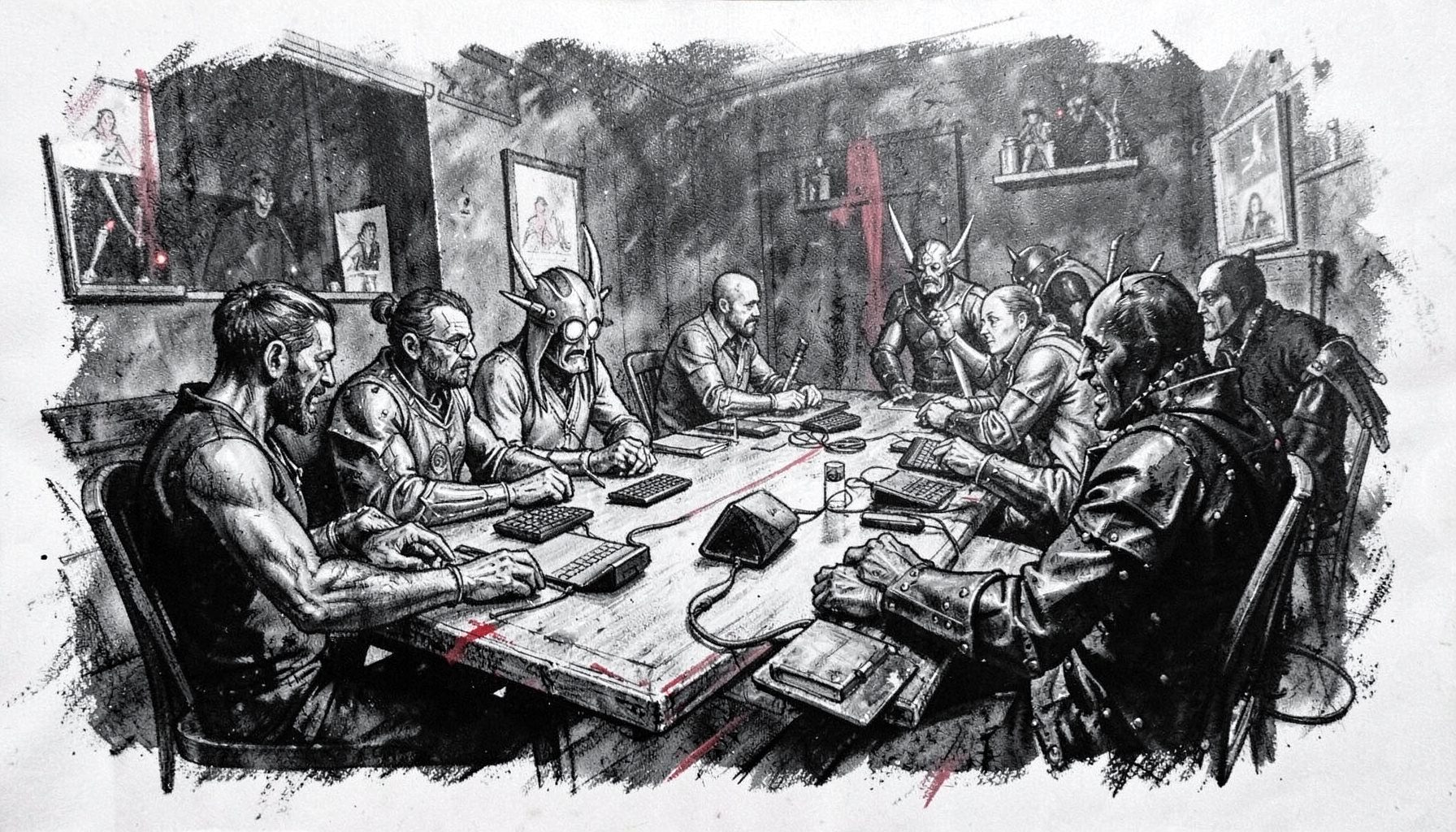
Forty-eight hours at HLGCon from a tabletop diarist's notebook
The flight from Sydney had a transfer in Los Angeles and my carry-on smelled like dice bags and instant coffee by the time we hit the gate. I had packed a notebook, a battered copy of Blades in the Dark, and the quiet hope that I would actually get a seat at one of the marquee LARP games at the Showboat Hotel. Forty-eight hours later, I walked back through the same sliding doors in Atlantic City with pages full of scribbled notes, a few new contacts, and the kind of tiredness that only a convention floor can give you.
This is a diary, not a review, which means the chronology wobbles. I have stitched the entries together in a way that hopefully gives a sense of how the event actually felt. HLGCon billed itself as a gathering for tabletop role-players, live-action groups, designers, artists, publishers, and vendors, and the schedule was stacked accordingly. What I was not prepared for was how much of the weekend would be spent talking to strangers in corridors, swapping recommendations, and recognising that the local scene back home in Melbourne had more in common with this New Jersey crowd than I had assumed.
Touching down in Atlantic City with a backpack full of dice
I rolled into the Showboat just after lunch, dragging a backpack that had started the journey in Brisbane with about three kilos of unnecessary stuff in it. The hotel lobby was already full of people in partial costume, and a guy at reception was trying to check in while balancing a foam sword on his shoulder. The lift to my floor stopped on every level, and each time the doors opened another cluster of players poured out clutching character sheets, cans of soft drink, and small plastic treasure chests.
The first surprise was the bar. Australian convention veterans know the drill: a quiet pub at the end of the night where people argue about whether Blades in the Dark or Burning Wheel is the better heist engine. HLGCon had set up something similar in the hotel lounge, and an hour later I had a flat white in one hand and a printed session proposal in the other. I scribbled down a list of must-do events and underlined the LARP pickup games because I knew those would fill up fast.
My pre-con packing list looked something like this:
- A refillable water bottle, because New Jersey in spring is warmer than Hobart in February
- A printout of my home campaign, which I trade like business cards
- A small torch for reading dice results in dimmed halls
- A folding dice tray that flattens in a side pocket
- A notebook with perforated pages I can tear out for handouts
- A spare set of batteries for the wireless mic in the LARP room
That list is partly aspirational, because I forgot the torch.
Stepping into a LARP that blurred the floorboards
Saturday morning started with a LARP titled "The Quiet Council", set in a fictional seaside town where every player held a small political office. The immersive team had turned a corner of the convention space into a council chamber with borrowed furniture, a chalkboard, and a printed map of the town. I have run boffer LARPs at home in Parramatta, but I had never played in a hotel conference room where the rule of "stay in character" felt genuinely enforced.
The pacing was deliberate. Scenes opened with a public address, then split into small negotiations in the corridors. A player from Philadelphia played the harbour master with the calm of someone who has done this for years, and a younger player from a US college circuit ran the town clerk with surprising ruthlessness. I spent most of the second scene trying to keep my character from being outmanoeuvred over a shipping contract, and I lost, badly, on a contested roll.
What struck me was the costume craft. People took the aesthetic seriously, mixing modern tailored coats with found objects like brass keys and weathered notebooks. The organisers had explicitly designed the experience so that newcomers could step in without preparation, and the safety mechanics were explained at the top of every scene. I left the room hoarse, buzzing, and late for my next session.
Tabletop marathons and the magic of meeting designers
The afternoon belonged to tabletop. I drifted between rooms hosting one-shots of Mothership, Mörk Borg, and an Australian import called The Wretched, which I had last played at PAX Australia in Melbourne. The designers were often sitting at the back of their own tables, watching the games run and taking notes. This is something I have seen at smaller Australian conventions like ConQuest in Adelaide, but never with this many simultaneous rooms.
At one point I sat in on a playtest of a card game by a New York-based studio that had brought along a handful of prototypes. The designer kept saying things like "this will change by next year" and "tell me if this feels bad", which I found honest. I scribbled down a few rules tweaks in the margin of my notebook, swapped contact details, and promised to send a playtest report when I was back home with my regular group in Fitzroy.
What I came to value was the unspoken agreement that designers and players were on the same side of the table. Nobody was selling anything aggressively in the rooms; the commercial side happened in the exhibitor hall. That boundary made it easier to ask blunt questions about mechanics, balance, and production.
Workshops, escape rooms, and the practical craft of immersion
Sunday opened with a workshop on escape room design run by the HLGCon immersive team. They had built a series of short, themed puzzles in a corner of the building, and the session walked participants through how a single clue was engineered from the initial pitch to the final reset procedure. The hosts talked about prop wear, hint card design, and how to manage a mixed-ability group without making anyone feel singled out.
For anyone thinking about building their own scenarios, whether for a home campaign or a community event, the write-up the team published afterwards is well worth reading. Their puzzle design breakdown covers everything from budget constraints to debrief structure, and it translates neatly to a tabletop mystery. I read it on the plane home and started planning a one-shot for my Sydney group using their framework for layered clue reveal.
The escape room itself was small, charming, and slightly under-cranked on time, which the team openly admitted. We escaped with about four minutes to spare, mostly because one of the players had been a puzzle setter at a local bar in Brisbane and spotted the misdirection immediately.
The exhibitor hall, indie presses, and the smell of fresh zines
The exhibitor hall at HLGCon was small enough to walk through in twenty minutes, but dense enough to spend three hours in. Publishers sat behind tables stacked with newly printed zines, dice sets, and hand-painted minis. I spent far too long chatting to an artist from Perth who had driven a hire van across the country to be there, and far too little time with the bigger booths, which felt like the right trade.
There was a quiet corner dedicated to Australian publishers, and seeing a stack of recent zines from studios I knew about was a small but real thrill. I picked up a few physical copies of titles I had only read as PDFs, including a solo journaling game from a designer based in Brunswick. The artist running the table told me that a growing number of Australian creators were treating HLGCon as a US launch pad, partly because the audience skews serious about craft.
A few practical observations from the hall:
- Cash still rules at smaller booths, so bring small notes
- Indie zines often come with a free handout PDF if you ask
- Many designers will sign a print if you bring your own copy
- Demo copies of new card games tend to appear on the last morning, when publishers want to reduce packing weight
- Asking about a game's print run tends to get you a discount and a story
- The convention badge holder is wide enough for a folded zine, which I exploited shamelessly
Community, collaboration, and what I carried home
The thing I keep returning to in my notebook is not any single session, but how the event was stitched together. HLGCon had a public commitment to making the space feel safe for newcomers, and the policy showed up in small acts: pronouns on lanyards, quiet rooms for breaks, and a hard cap on any table that turned hostile. The convention's own post-event reflection on community participation captures the intent better than I can, and it is the piece I have sent to my home group as a starting point for our own discussion.
I came back to Melbourne with a clear sense of what I want to build next. My regular group meets in a community hall in Brunswick, and we have been talking for years about running a one-day convention. The diary from this weekend is now the planning document for that event, and the first thing on the list is a public safety policy that does not feel like an afterthought.