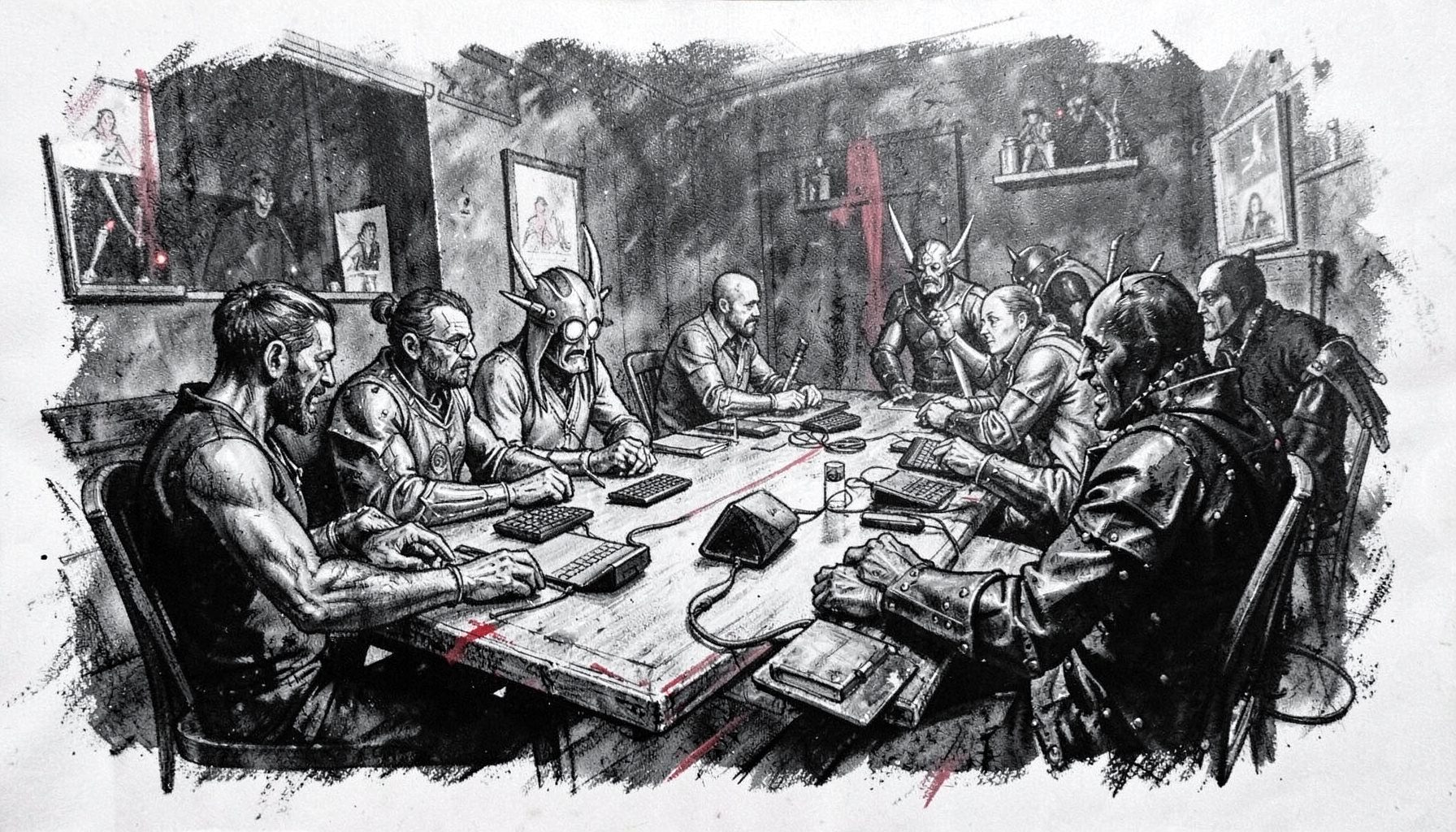
Building Better Escape Rooms Through Collaborative Storytelling
Escape rooms sit at the meeting point of theatre, puzzle design, game mastering and venue management. The strongest experiences give players a clear reason to act, make every discovery feel meaningful and allow a group to create its own story. That combination was central to the spirit of High Level Games Convention, held at the Showboat Hotel in Atlantic City in 2018.
The event brought tabletop role-players, LARPers, designers, artists, publishers and vendors into the same social space. Its immersive activities, workshops and collaborative games offer useful principles for anyone developing a room-length adventure, a pop-up mystery or a convention-based puzzle experience. Escape Room Design: Lessons from the HLGCon Immersive Team begins with the idea that immersion is a group achievement rather than a collection of expensive props.
Start With A Story Players Can Enter
A room needs a dramatic situation before it needs a lock, cipher or hidden compartment. Players should understand what has happened, what is at risk and why their characters are the people capable of changing the outcome. The premise can be simple: a laboratory has lost power, a theatre’s final performance is cursed, or a stranded research crew has one hour to restore communications.
The HLGCon model points towards collaborative storytelling rather than a rigid performance delivered at players. Convention visitors moved between tabletop sessions, LARP activities, panels and social encounters, so the experience had to welcome different levels of confidence and familiarity. An escape room can apply the same principle by offering a clear entry point, a strong theme and several ways to contribute.
A useful story brief contains four elements: the fictional problem, the player objective, the visible evidence of progress and the consequence of failure. These elements should be understandable within the first few minutes. If a group spends its opening time trying to work out what the game is about, the designer has created confusion rather than mystery.
The event’s guest programme also reflects the value of varied creative voices. Designers, performers and artists notice different kinds of detail, and a mixed development team can test whether a room works as narrative, game and physical environment.
Make Every Puzzle Serve The Fiction
A puzzle should answer a story question, not merely occupy a table. If players need a four-digit code, the code might open a secure archive containing evidence about the missing scientist. If they assemble a map, it should reveal a route, identify a danger or change their understanding of the setting. The mechanical action becomes memorable when it creates a fictional consequence.
Good puzzle flow alternates between discovery, interpretation and action. Players find an object, decide what it means, then use that insight to alter the environment. This rhythm supports different thinking styles: one person may notice a visual clue, another may recognise a pattern, and someone else may confidently test the team’s theory.
The immersive team’s greatest lesson is likely to be restraint. A room does not need a dozen independent riddles. Too many simultaneous mechanisms create noise, especially for groups with mixed experience. A compact chain of connected challenges allows the story to build momentum while giving the game master useful points for observation and intervention.
Playtesting should record more than completion time. Watch for silence, duplicated effort, abandoned clues and moments when one player dominates the room. The tabletop library associated with the convention provides a useful reminder that strong games create decisions, conversation and shared attention rather than simply presenting content.
Treat The Venue As Part Of The Game
The Showboat Hotel setting matters because a convention room is never an empty box. Corridors, queues, neighbouring events, hotel noise and changing foot traffic all affect immersion. Designers working in an Australian hotel, arts venue or community hall face similar conditions. A room in Melbourne may need to coexist with a busy laneway, while a pop-up in Sydney or Brisbane may have to manage public transport arrivals and narrow access routes.
Sound is often more important than scenic decoration. A timed announcement, distant machinery or changing lighting state can signal progress without adding another puzzle. However, every effect needs a manual fallback. If a speaker fails or a sensor misreads an action, staff should be able to preserve the fiction with a verbal cue or physical prop.
Operational design must be planned alongside narrative design. Staff need a reset procedure, a method for tracking missing pieces and a clear escalation process when a player becomes distressed or a device stops working. A good reset should restore the room without revealing solutions, while a good briefing should establish boundaries without sounding like a legal lecture.
Australian operators also need to consider state and territory Work Health and Safety requirements, venue occupancy limits and local fire procedures. The exact rules vary between jurisdictions, and councils or venue owners may require specific approvals. A candle effect, smoke machine, locked door or low-light passage should be assessed as a safety issue before it is treated as atmosphere.
Design For Groups, Access And Belonging
Inclusive participation is more than inviting a broad audience. It means checking whether the game assumes hearing, sight, mobility, literacy, fluent English, physical strength or comfort with darkness. Important information should not exist in only one form. A spoken clue can have a written equivalent, and a visual signal can be paired with audio or tactile information.
The Disability Discrimination Act 1992 applies across Australia, while accessible design also depends on the venue, state requirements and practical consultation. Designers should ask whether a wheelchair user can reach every essential station, whether a player with limited dexterity can operate the controls and whether a support person can participate without being treated as an observer.
Group psychology deserves equal attention. Some players enjoy acting in character, while others prefer solving quietly. Some arrive as experienced role-players; others may be attending their first event with friends. Briefings should explain that every contribution is valid, and the game should distribute clues across the space so that cooperation is necessary without making anyone feel forced into performance.
LARP techniques can help here. A facilitator can offer optional character prompts, in-world language and small choices that deepen involvement without requiring costumes or theatrical confidence. The best room feels responsive to its players while retaining a reliable structure underneath.
Build For The Australian Market
The Australian escape-room market includes permanent commercial venues, travelling puzzle installations, museum programmes, festivals and corporate events. A designer deciding between a premium permanent build and a modular touring experience should consider transport, storage, staffing, insurance and replacement costs. A beautiful prop that cannot survive a trip from Adelaide to Perth may be less useful than a durable system with interchangeable skins.
Pricing also needs local realism. Australian players are accustomed to comparing entertainment against cinema tickets, live events, board-game cafés and weekend outings. A room aimed at families may need daytime sessions, clear age guidance and accessible pricing, while a corporate audience may value reliable scheduling, catering partnerships and post-game discussion more than elaborate lore.
Everyday habits can shape the experience. Groups may arrive after work, carry phones and backpacks, or travel in from suburbs rather than staying near the venue. Provide a secure place for belongings, communicate public transport and parking information, and allow a practical buffer between sessions. In hot weather, air conditioning and water access are part of hospitality, not optional extras.
Marketing should describe the tone accurately. Words such as “horror”, “family-friendly”, “role-play” and “competitive” create strong expectations. Clear content warnings are especially important for darkness, confined spaces, flashing lights, loud audio and themes involving death or threat. Honest communication builds trust before the first clue is found.
Shape A Repeatable Development Process
A convention-based immersive experience benefits from a disciplined production cycle. Begin with the player journey, then create a paper version of each puzzle before commissioning scenery or electronics. Test the logic with people who have no prior knowledge of the concept. Their misunderstandings are valuable design evidence, not failures to be dismissed.
Use a simple measurement framework: time spent per stage, number of hints, points of player disagreement, reset duration and reported emotional intensity. Combine these observations with debrief comments. A puzzle that is technically solvable may still be poor if it causes long stretches of inactivity or makes players feel foolish.
The following practices keep the project focused:
- Write a one-page story brief before designing individual puzzles.
- Give each challenge a clear narrative purpose and a visible consequence.
- Test with beginners, experienced players and people with different access needs.
- Prepare analogue backups for electronics, audio and timed effects.
- Document reset, safety, consent and emergency procedures for every staff member.
- Schedule regular review sessions using player feedback rather than designer preference.
A published event schedule shows why timing matters in a convention environment. Sessions compete for attention, and players need confidence that they can arrive, participate and move on without losing the wider programme. The same principle applies to a commercial venue: punctual starts, realistic turnover times and accurate duration claims protect the quality of the whole experience.
Carry The Story Beyond The Final Lock
The ending should resolve more than the mechanism. Players should understand what their actions changed, even if they failed to escape within the allotted time. A short debrief can explain the hidden connections, celebrate clever teamwork and give the group a satisfying emotional release. It also lets staff gather better feedback than a single rating score.
HLGCon’s emphasis on shared participation suggests that the room can be a gateway to a wider play culture. A mystery might point players towards a tabletop scenario, a live-action sequel, a designer talk or an informal post-game gathering. This creates continuity without requiring the escape room to carry every piece of world-building alone.
The practical next step is to write a one-page brief for a 60-minute Australian escape experience, including its premise, player objective, accessibility provisions, safety controls and three linked puzzles.