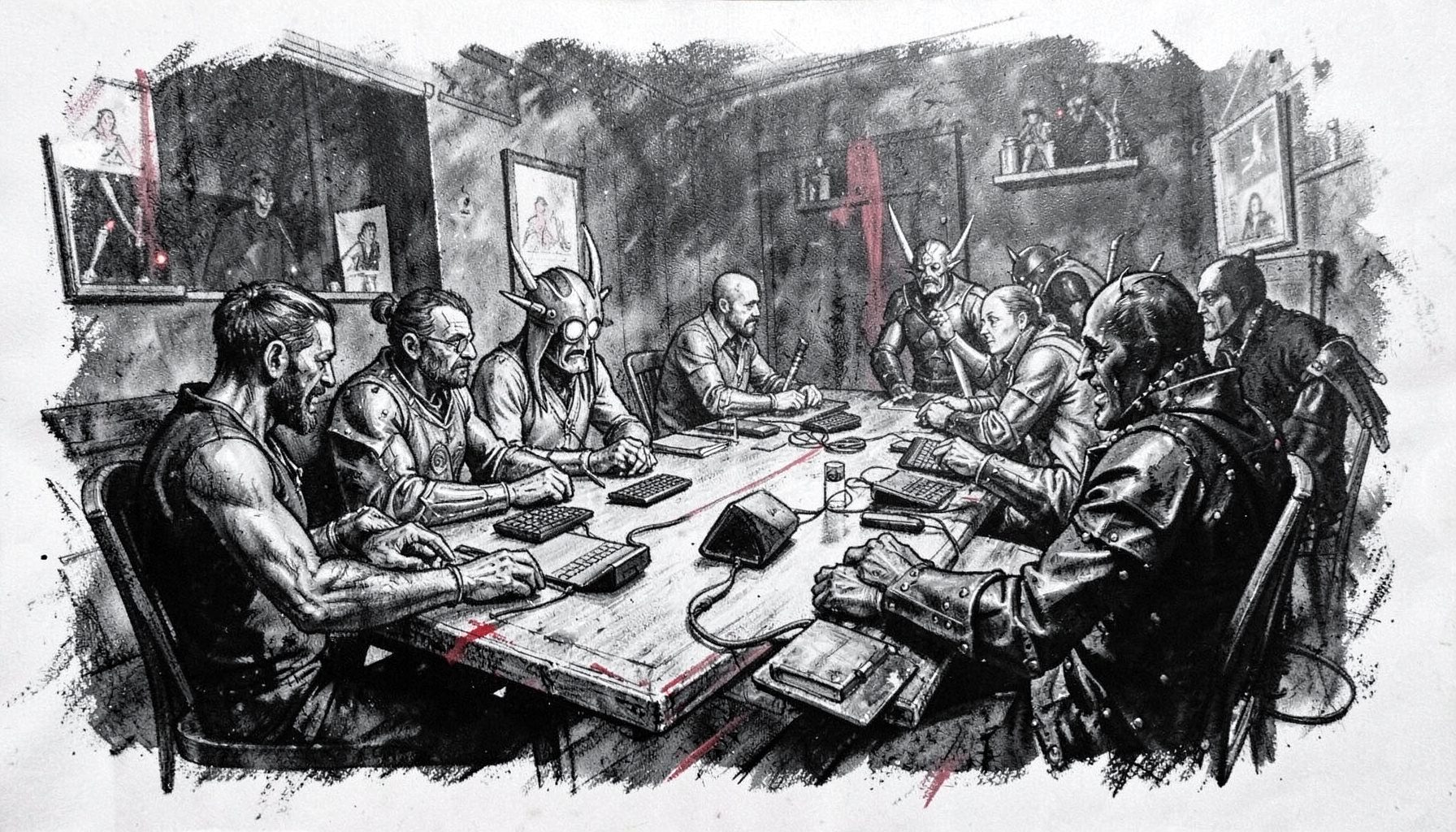
Five tabletop treasures worth pulling from the HLGCon 2018 library
Convention game libraries often hide in plain sight. Tucked behind a packed dealer hall or beside a folding table covered in character sheets, they sit there patiently waiting for someone to wander over and crack open a fresh rulebook. The High Level Games Convention that ran at Atlantic City's Showboat Hotel in 2018 had one of the friendliest such collections around, full of indie RPGs, design experiments, and a few heavyweight strategy titles that had come along for the ride. Anyone who wandered past the LARP staging area and into the tabletop wing would have found stacks of softcovers, demo copies, and hand-marked favourites that regulars were eager to teach.
For an Australian reader, the appeal of dipping into a borrowed library copy at a convention is doing without the shipping drama. Board games and RPG books ordered from American distributors often arrive with freight charges that rival the cover price, and the Australian Classification Board has tightened how some illustrated content is rated over the past few years. Borrowing, browsing, and playing before buying is the smart move. The five titles below represent the kind of games that kept HLGCon's library in constant rotation, and they remain easy to track down through Australian retailers or local game cafés from Melbourne to Brisbane.
What follows is less a ranked list and more a sampler platter. Some lean narrative, some lean mechanical, and a couple are best played late at night with the windows open and the kettle on. If you missed the convention itself, the spirit of those sessions is still very much alive in garages, share houses, and dedicated venues like Sydney's Good Games storefronts or Perth's Gameologi meet-ups.
Blades in the Dark: industrial heists with heart
John Harper's Forged in the Dark engine transformed how groups think about planning criminal operations. Blades in the Dark drops players into Doskvol, a haunted industrial city where scoundrels take on Spirit Wardens, rival gangs, and the leviathan-blood trade that powers the lamps. The flashback mechanic, where players narrate how they prepared before the score even starts, removes the usual planning bottleneck and keeps the action moving. At HLGCon 2018, several tables kept late hours with this game, and it was common to see newcomers fold after a single session and immediately ask where they could buy the book.
For Australians running short campaigns on weeknights, the fit is excellent. The rules encourage two-hour arcs rather than six-hour marathons, which suits anyone balancing shifts at a Melbourne hospital or a Brisbane construction site. Sydney-based designer Hârnic Almăjan has spoken at local meet-ups about how the stress and trauma mechanics translate surprisingly well to the kind of lean, character-driven games Australian groups tend to prefer. Many Australian retailers stock the hardcover, and the system has spawned a healthy local community of hacks set in outback ghost towns and colonial Sydney coves.
Monsterhearts 2: teenage monsters and tender drama
Avery Alder designed Monsterhearts 2 around a simple, devastating premise: what if every Buffy the Vampire Slayer character was also the lead of a different, conflicting teen drama. Players take on the roles of vampires, ghosts, werewolves, witches, and the Mortal whose job is to stay alive long enough to graduate. The Powered by the Apocalypse engine means every roll pushes the story forward, and the strings mechanic lets characters pull on each other's flaws in ways that feel uncomfortably intimate.
The game's handling of identity, desire, and messy relationships struck a chord at HLGCon 2018, where several panels focused on inclusive storytelling. The Monsterhearts sessions were often the noisiest in the library corner, full of laughter and the kind of squirming that means something real is happening at the table. The Australian publisher Monster Care Crew released a print run locally, which has made it easier to find in stores from Adelaide to Hobart without resorting to back-order imports. Many Australian educators have adopted excerpts to teach consent and character motivation in drama programs, a quiet legacy the convention library helped seed.
The game's design was celebrated in a later Spotlight on Indie Game Designers Who Debuted at HLGCon feature, which highlighted several creators whose work first reached wider audiences through convention play rather than traditional publishing.
The Quiet Year: mapping a community on the edge
Avery Alder again, but a different beast entirely. The Quiet Year is a map-drawing game about a community trying to rebuild after some unnamed catastrophe, played across fifty-two cards that represent the weeks of a single year. There is no Game Master. Players take turns laying down locations, projects, and conflicts on a shared piece of paper, and the deck slowly introduces pressures like bandits, illness, and the discovery of old ruins. The session ends when someone plays the final card, leaving the map as both story and artefact.
It is the kind of game that resonates with Australian readers who know drought maps and fire-season forecasts too well. Playing it on a rainy Sunday in a Sydney share house or a Perth community hall turns abstract prompts into unexpectedly personal conversations about scarcity and hope. The original zine release sold out at HLGCon 2018 according to multiple attendees, and the library kept a couple of photocopied copies behind the counter for anyone curious. It has since been picked up by Loot Tabletop, an Australian distributor that handles many indie titles, so finding a copy locally is easier than it used to be.
Torchbearer: torchlit crawls with real stakes
Thor Olavsrud and Ben Rolph's Torchbearer strips dungeon crawling down to its bones and then puts weight back on every piece. Characters carry torches that burn down during exploration, manage rations, and live with the consequences of their failures long after the session ends. The grind is the point. Resources matter, light matters, and a torched-out character stumbling through a wet corridor feels genuinely desperate.
For Australian groups who like their fantasy with grit, Torchbearer rewards the kind of careful planning that fits well with the slower cadence of regional meet-ups. A table in Geelong or Cairns can sustain a multi-session campaign because the rules naturally limit what characters can attempt before needing to return to town. The game's emphasis on mapping ties neatly into the cartographic habits of Australian players, who often draw regions inspired by local terrain. Library copies at HLGCon 2018 were dog-eared within hours, and many attendees went home to order the second edition directly from local distributors once they returned to Australia.
Players interested in scheduling a long-form campaign can browse the con's full schedule for archived block timings that show how library sessions were slotted around LARP blocks and panel discussions.
Fiasco: forty minutes of catastrophe
Jason Morningstar's Fiasco asks players to build a Coen Brothers movie together, then watch it fall apart. There are no dice in the traditional sense. Players pull from a deck of playsets, establish relationships and locations in a setup phase, and then let scenes resolve on the strength of narrative choices. The Tilt mechanic forces escalation until the inevitable, glorious disaster at the end.
Fiasco became a HLGCon 2018 favourite for groups who wanted something self-contained and loud. A single session takes between ninety minutes and two hours, which made it perfect for convention play and easy to teach. Australian readers may recognise the appeal from home groups who gather for Friday night sessions between footy practice and weekend camping trips. The playset design lends itself to local adaptations, and Australian fans have put out homebrew sets inspired by outback pubs, mining towns, and the chaotic energy of a Sunday market stall. Several copies lived in the convention library, and the design has influenced a wave of GM-less one-shots now common at Australian gaming days.
Anyone hosting their own home game after reading this list should familiarise themselves with the convention's policies around content warnings, player safety, and table etiquette, since the same standards translate well to Australian living rooms.
A good next step is to pull one of these titles, say Blades in the Dark, into your regular group this month and let one player run the first score. See how the flashback structure reshapes the way your table plans, fails, and recovers. From there, the rest of the library will start to make sense.