Writing a LARP Letter in Your Character’s Voice
A LARP letter is more than a prop with handwriting on it. It is a performance: the character chooses what to reveal, what to conceal and how another person should feel while reading. A convincing example sounds unlike an explanation written for players and more like evidence passed between people inside the fictional world. The writer’s task is to preserve a viewpoint, not display literary polish.
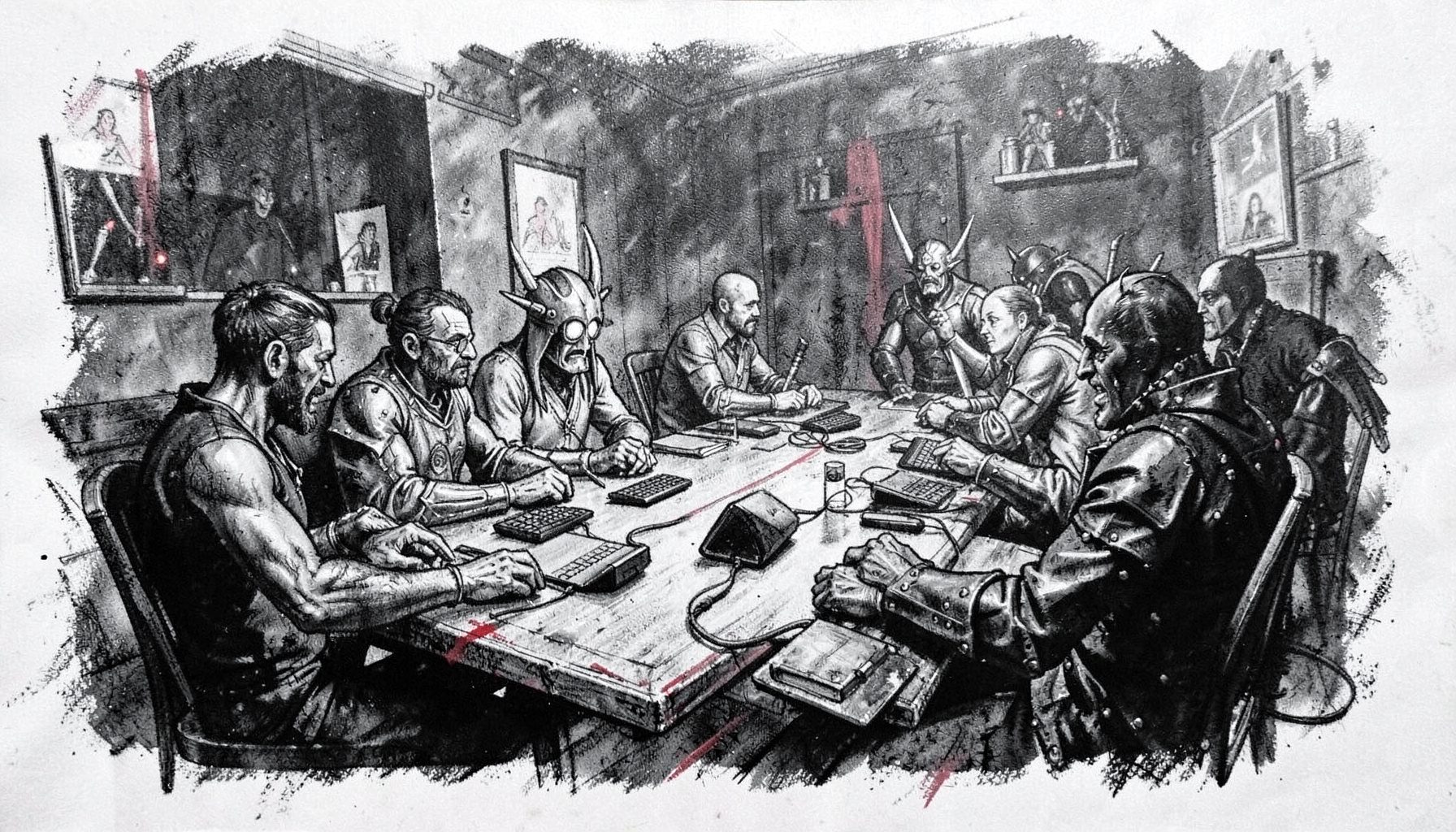
At the 2018 High Level Games Convention at the Showboat Hotel in Atlantic City, LARP experiences sat alongside tabletop sessions, panels, workshops and escape rooms. That range makes a character-written letter especially useful: it can be read aloud, handed over as evidence or used to cue another scene. Before choosing a style, decide who will read the page, what the character wants from them and what makes silence costly. The closer the letter stays to that character’s private purpose, the easier it is for players to believe and use.
Find the character’s private purpose
Start with the letter’s dramatic purpose, then adjust its tone. A confession should feel costly; a warning should create pressure; a farewell should leave residue rather than neatly resolve everything.
| Dramatic purpose | Voice to favour | Useful physical clue | Common failure |
|---|---|---|---|
| Confession | Vulnerable and uneven | A memory avoided | A perfect apology |
| Request | Practical and constrained | A repeated demand | Endless backstory |
| Warning | Tense and compressed | A broken seal | Flat exposition |
| Farewell | Reflective and sensory | Folded corners | Sentimental summary |
Choose one primary intention and one hidden counter-intention. The first gives the letter direction; the second creates tension. A courier claiming only to deliver a map, for instance, may also be warning the receiver about the sender. Creases, missing corners and borrowed envelopes can imply action more efficiently than explanation. Looking through the archived exhibitor list from High Level Games Convention 2018 can also prompt practical questions about the publishers, artists and prop makers who helped make the materials believable.
Build a voice the character can sustain
Character voice is a pattern rather than a gimmick. Build it from vocabulary, sentence length, confidence, education, humour and the concerns the character returns to. An educated official may write in complete sentences but conceal meaning in formal courtesies; a nervous witness may jump between practical details and half-finished memories. Deliberate mistakes work only when they reveal character, rather than merely signal rough writing.
Read every draft aloud. If a sentence sounds like the game designer explaining a plot point, replace it with something the character would actually notice or say. Specificity also strengthens the voice: worn glove powder on a fingerprint, blue dye transferred from a uniform or the taste of cheap tea can communicate circumstances more cleanly than a paragraph of background.
For Australian settings, draw on the language people actually use without turning it into a caricature. A shopkeeper might answer a warning with “no worries”, call afternoon “arvo” and describe persistence as “giving it a burl”. Understatement and dry humour often carry more force than grand declarations. Colloquialisms reveal attitude, but they should match the character’s age, community and circumstances rather than appear merely because the scene is Australian.
Make the letter change what happens next
Define the recipient before refining the prose. The relationship determines whether the character sounds affectionate, evasive, deferential or threatening. A letter to an old friend can contain jokes that a stranger would misunderstand, while a message to an enemy may use courtesy as a weapon. Ask what the recipient already knows, what the sender fears they know and what the sender is willing to risk saying.
The letter must also work physically as well as verbally. Consider the envelope, seal, handwriting, fold, ink and method of delivery. A sealed note creates ceremony but delays the reading; a page carried for weeks may have dirty edges and repeated creases. The convention’s full event schedule shows how LARP encounters were placed among tabletop games, panels and workshops, a useful reminder that a prop should support a busy event’s pace rather than demand a lecture.
Give the page one primary revelation and one deliberate omission. The revelation should give the recipient something to act upon, while the omission creates a question for the next scene. Avoid hiding every essential detail behind vague phrases such as “you know what happened”. A good letter invites collaboration: another player can recognise the truth, challenge the account or choose a course of action because the character has left a usable thread.
Prepare the prop for Australian live play
Australian live events add practical and cultural realities. Many conventions are organised by volunteer-run gaming communities, while artists, publishers, costume makers and prop suppliers occupy small paid stalls. Melbourne’s laneway venues suit intimate LARP nights but require planning around late-running trams; Sydney’s harbour-edge weather can bring wind and sudden rain; Brisbane’s summer brings heat and thunderstorms. Characters who travel need weather-appropriate clothing, believable travel times and belongings that survive damp grass, sandy venues or crowded public transport.
Local English also matters, though it should fit the fictional period: “organise”, “colour” and “favour” place a modern Australian document, while a historical character might spell differently. An identity can begin before the page is opened. The HLGCon article on badge design ideas shows how worn badges and visible identifiers can seed a character’s role, faction and relationships before the first word is spoken.
- Fix the recipient, delivery route and reading moment before deciding on a tone.
- Draft in the character’s vocabulary, using their concerns and natural sentence rhythm.
- Include one concrete memory that proves the character witnessed what they claim.
- Reveal one actionable truth while concealing one fact that could increase the stakes.
- Build the prop around one physical imperfection, such as a stain, tear or hurried fold.
- Read the letter aloud at normal speed, then revise any line that needs another player to explain it.
Edit for character truth and playable impact
Editing should remove the writer, not the character. Cut sentences that sound like modern exposition, generic threats or polished summaries of emotion. Avoid stacking invented archaic words onto modern logic, since a curious phrase can quickly pull players out of the scene. Keep an unusual turn of phrase when it exposes the character’s priorities, education, prejudice or particular way of seeing the world.
Stage-test the finished letter. Ask the recipient to read it aloud as though discovering its contents for the first time, then watch whether the reader understands its immediate stakes. A letter can be mysterious, but it should still contain an action, a warning, an offer or a clue. If another player needs the game master to translate it, the writing has probably hidden too much; if it explains every motive, it has probably revealed too much.
Keep the letter’s existence consistent with the fiction. If the sender could plausibly destroy it, the recipient might never read it; if it is too precious to destroy, the stakes are weak. That decision belongs to the character and should shape the prop before the next scene begins. The concrete next step is to write the first 150 words of the letter tonight without leaving the character’s point of view.