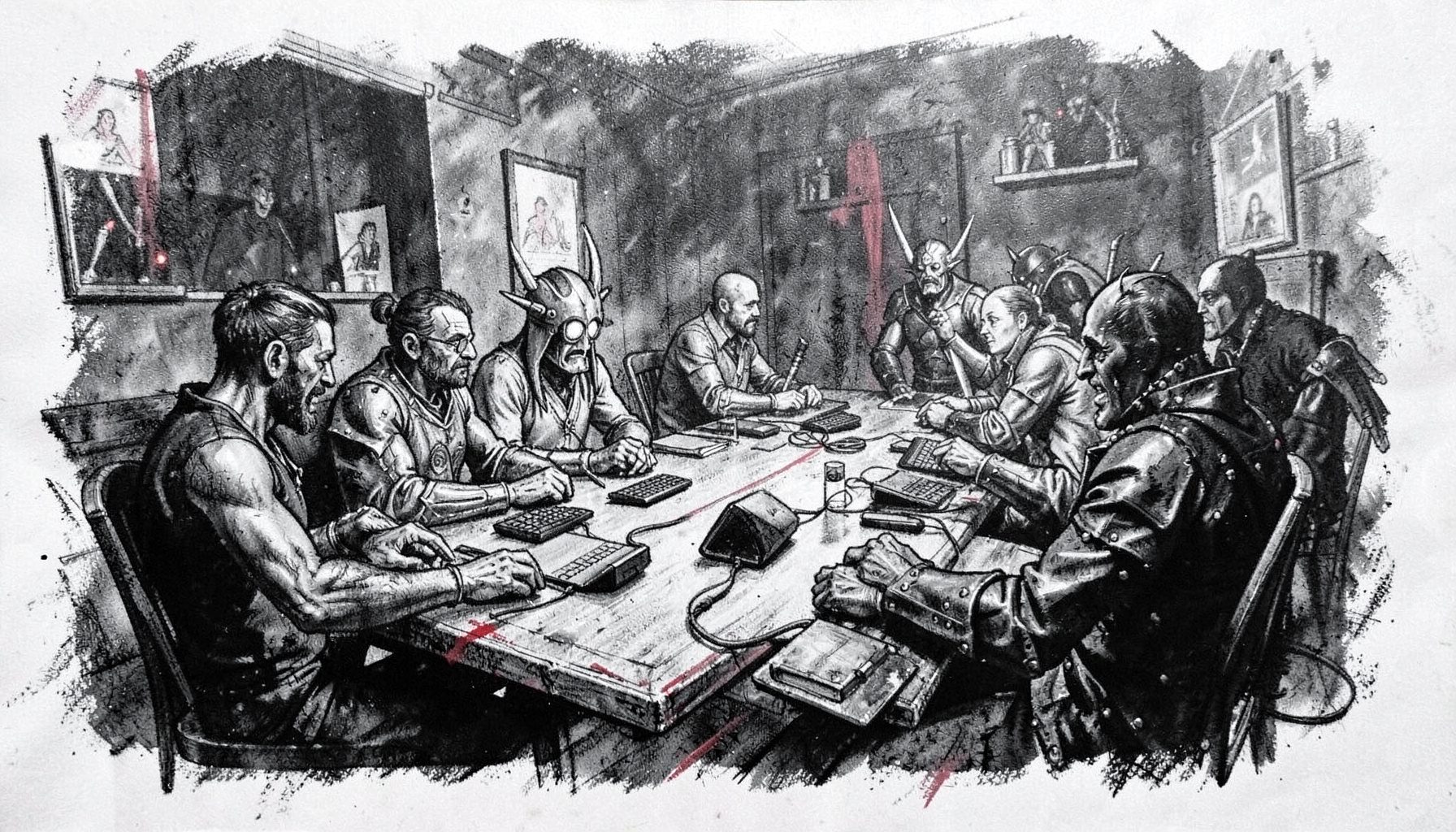
A Reporter’s Look at the HLGCon Artist Alley
At the 2018 High Level Games Convention, the Showboat Hotel in Atlantic City became more than a venue for scheduled panels and LARP encounters. Its public spaces formed a busy passage between registration, gaming rooms and the exhibitor hall, and Artist Alley occupied that passage with sketches, character portraits, small press runs, dice and handmade objects. The result felt closer to a temporary creative district than a neat line of trade stalls.
I visited the alley as a reporter, looking past attendance numbers and recording how people were recruited into games. That meant watching invitations at the tables, listening for explanations of rules, and noting which activities welcomed a newcomer without requiring a particular level of knowledge. The collaborative tone was practical: make a story together, explain the entry point, then let the person join.
Inside the Showboat’s Creative Corridor
Unlike a conventional trade show, Artist Alley mixed selling with demonstration. Some displays offered finished prints, while others showed work in progress and invited visitors to compare several versions of a creature, spell or character. Tables were small enough to encourage conversation, so a browser looking at a comic could end up hearing the artist’s account of the world behind it.
The mix also revealed how broad gaming had become. There were role-playing aids and accessories beside original art, while nearby activity rooms offered live-action experiences and escape-room scenarios. The Pandaemonium programme page provided another glimpse of the convention’s participatory side, reinforcing how the alley led naturally into immersive play.
Where Rules Meet Storytelling
Tabletop games supplied the clearest rhythm in the corridor. At the tables, the game master or facilitator often did less talking than the group, pausing while players tested a choice and then letting the consequences carry the scene forward. The popular HLGCon TTRPG systems review is useful context for that emphasis: it records the systems that drew the most attention and helps explain why certain mechanics became conversation starters in the first place.
The best demonstrations made complexity feel manageable. A facilitator could introduce a core decision, offer a simple example and then pass control to the players. That approach suited people who wanted collaborative storytelling without an extended rules briefing, and it also gave experienced attendees a chance to compare how systems handled uncertainty, character and shared narrative.
Inclusion was visible in design choices rather than slogans alone. Instructions were generally broken into small steps, and space was made for players with different levels of familiarity. The surrounding panels and workshops reinforced the same message: participation mattered more than performing expertise, while the shared aim was to build a believable story through collective decisions.
The Business Behind the Artist Tables
Behind every display was a small business with practical concerns: pricing, payment methods, stock, freight and time away from other work. The official exhibitor directory shows how varied the offering was, from independent artists and publishers to accessory makers, specialist retailers and organisations built around a particular kind of play. A booth may have looked informal, but the people behind it were balancing audience enthusiasm with production costs.
For Australian readers, that matters because the local market has its own structure. Melbourne and Sydney are established centres for conventions, specialist game shops and collector communities, while Brisbane has a smaller but active scene supporting travelling publishers, creators and local play groups. Australian exhibitors often describe conventions as “cons”, ask what game someone is “running”, and use “GM” for the person guiding a tabletop session. That shorthand is casual, but it signals familiarity with the culture.
Currency and distribution create another layer. Australian customers think in dollars including GST, while a United States event may calculate prices before sales tax and quote them in US dollars. Exchange-rate movement, card fees and international freight can change the final cost of a book, boxed set or hand-painted miniature. Some Australian sellers reach customers through local distributors and game stores; others sell directly at cons or online, accepting slower cash flow in exchange for control of the product and its presentation.
Planning for an Australian Audience
Visitors from Australia should treat the convention as both a cultural stop and a purchasing decision. The physical layout makes browsing easy, but carrying stock across a long trip needs more thought than the booth conversation suggests. Currency, collection arrangements and the value of specialist stock should be settled before departure.
A second point is to understand how the American event handles payments and taxes. Card use is common, yet keeping a small reserve in US currency can prevent awkward delays. Buying at the venue may also produce different obligations from ordering from an Australian online shop, where GST and domestic return rights usually apply.
- Set a spending limit before seeing the exhibitor hall, then reserve part of it for commissions or small pieces that cannot be shipped.
- Check whether an artist accepts international card payments, PayPal or another method before committing to a bulky order.
- Ask about shipping, insurance and the maker’s dispatch window; obtain a written estimate for framed art or oversized parcels.
- Confirm the exchange rate and card fee, especially when a table price looks more attractive after conversion.
- Bring dice, a notebook and a downloaded character sheet to make joining a spontaneous session easier.
- Credit the artist or designer when sharing photographs, and agree on commission terms before work begins.
None of these steps turns a convention visit into an ordinary retail trip. They simply protect time and money while preserving the direct relationship that makes an artist’s table valuable.
What the Notebook Will Keep
The strongest impression from HLGCon Artist Alley was not a single product or crowded aisle. It was the visible chain from an image on a table to a story shared around it. Original art attracted attention, facilitators opened a door into play, and participants supplied the choices that gave the world momentum. That chain also connected LARP, tabletop systems, escape rooms and panels, making the alley feel like a practical expression of the convention’s collaborative spirit.
My next concrete step is to turn the notebook into a verified artist index and send it to the HLGCon team for factual checking.