What Makes a Good Convention Demo Game?
The first thing you notice at a gaming convention is the noise. At High Level Games Convention 2018, held in the Showboat Hotel on the Atlantic City boardwalk in New Jersey, that noise came in layers: a live-action skirmish moving through the lobby, an escape room company arguing about a lost time clue, and the low roar of an exhibitor hall where publishers, illustrators and small studios were hawking everything from screen-printed dice to leather-bound rulebooks.
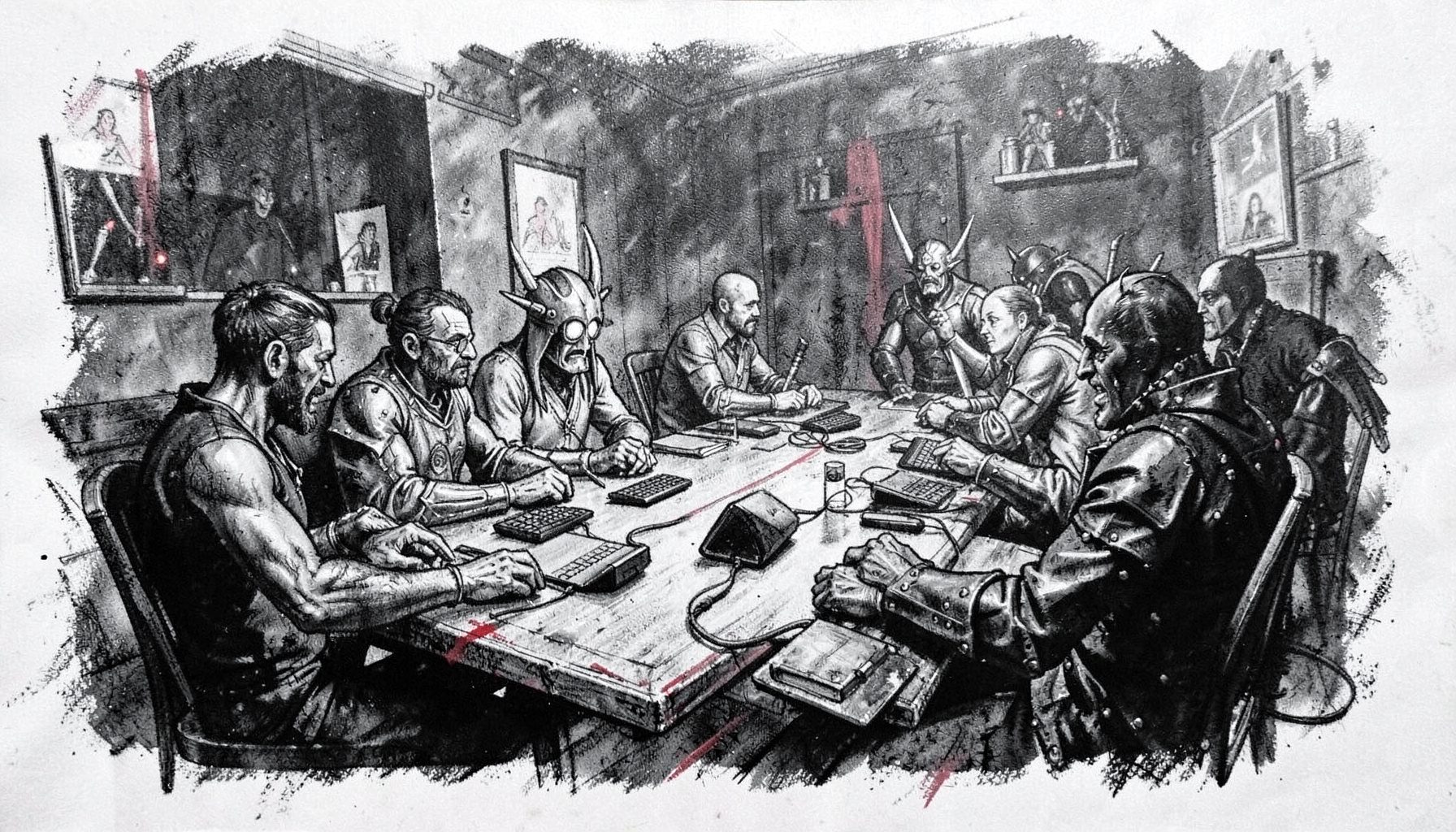
That is the environment a demo game lives in. A demo is not a full campaign; it is a short proof of concept, a single scene built to convince a room of strangers to want the whole thing. Whether it is a tabletop RPG system, a card game, a skirmish game with plastic minis or a live-action scenario, the demo table is where an idea becomes a product in someone's head. Get it right and a passer-by leaves telling their mates about it. Get it wrong and they drift back to the merchandise stall for a keychain.
A Demo Is Played by Strangers, Not Friends
Your regular group already knows how to play. They own the rulebooks, they have made the mistakes, and they will cover for a slow start with an inside joke about the last time somebody rolled a natural 1. A convention demo has none of that. The five people at your table are strangers who wandered in because the table looked interesting, and the person running it is usually a designer with one volunteer assistant and a stopwatch.
That changes what good looks like. At home, a game that takes ten minutes to explain is a failure of pacing. On a convention floor, a demo that takes ten minutes to explain has already lost half the room. Australian convention crowds sharpen the point. At Supanova in Sydney and Melbourne, PAX Aus at the Melbourne Convention and Exhibition Centre, or Big Con in Canberra, volunteers are generous — they will learn your system so you don't have to — but they are also blunt. Australians tend to say what they mean, so if a demo confuses people, somebody will ask why it confuses them, in front of everyone. A demo that cannot survive that question will not survive a regular game night either.
Timing is cultural too. Friday arvo sessions skew towards families and younger players, while Friday night sessions attract shift workers who knock off at five and want something playable by six. That evening rush is where your volunteers look best, because they actually chose to be there. Build the demo for the committed crowd and write the sign, the pitch and the price for everybody else.
Cutting a Rulebook Down to Its Fun
Most demo disasters start with a rulebook written for the hundredth play rather than the first. A good demo is an exercise in ruthless subsetting: keep the decisions, drop the reference material. Pre-generated characters with visible stats, one meaningful choice per turn, dice or cards already counted into trays, a map that can be read from a standing position. Nothing that sends a player flipping through appendices, and nothing with chained modifiers that needs a spreadsheet.
Three beats is usually enough. A hook that shows the fiction and the stakes, a complication that proves the system does something interesting under pressure, and a resolution that leaves people talking. Compressed like that, a 200-page RPG can be shown in half an hour and a card game in fifteen minutes. If you cannot cut a beat, you are probably carrying three demos' worth of ideas in your head, and a convention weekend is the wrong place to discover which one works.
Improvisation needs boundaries as well. A demo with strangers is a space where somebody may say or do something the rest of the table did not expect. Conventions handle this with published safety tools and codes of conduct, and reading them before you run anything is worth the minutes it costs — HLGCon's attendee policies is a useful example of how clearly those expectations can be set out before a single person sits down. Say the lines and veils at the top, point to the safety card, and let the player set the pace. Good hospitality is part of good demo design.
The Demo Table Is a Shopfront
A demo table is a shopfront, and shopfronts have one job: turning interest into intent. In the vendor hall of the Showboat Hotel, publishers and small studios found the lesson was consistent. A demo rarely needs to be the product, but it has to sell the product. The notes from the vendor hall lessons are worth reading if you are taking a stall, because running the demo and making the sale are two different jobs, and mixing them wastes a Saturday.
Keep the money visible. Price on the table, what is included, when it ships, and a takeaway card with a QR code pointing at a page that actually loads on a phone with one bar of reception in the exhibition hall. For Australian sellers that means more than copy: freight between Melbourne, Brisbane and Sydney eats into margin, GST on imported stock and a dollar that shifts week to week narrow it further. A flat price that includes postage wins arguments at the table.
The Australian convention market runs on volunteer energy. Community-run events and clubs like Big Con in Canberra or the Supanova network handle most of the logistics, and exhibitors get used to a Saturday morning rush, a lunch lull, and a final hour where buyers spend whatever is left in their budget. Design the demo so a volunteer can run it three times a day without getting the wording wrong, because that volunteer is the face of the product.
Reading a Demo Table in Sixty Seconds
You can tell how a session is going from across the aisle. Watch the hands, the noise and the feet: are people leaning in, are they looking at their phones, is anybody still hovering at the edge hoping for a seat? Those signals arrive long before anybody explains what went wrong.
Signs the demo is working:
- Players argue about what their characters would do, not about what the rules permit.
- The rules keep being taught in the same breath as they are used.
- Somebody who came to watch is asking to take a turn.
- The table is loud enough that strangers are leaning closer to hear it.
Signs the demo is stalling:
- A player is flipping through a rulebook to find a rule they have just used.
- The facilitator keeps saying the idea is one thing because the idea has not landed yet.
- Half the characters sit idle while one player drives the scene.
- Every question about the rules is answered with it depends on your group.
Building Your Next Demo
What worked at the Showboat Hotel in Atlantic City was rarely the most complicated. The strongest tables were legible: a visible hook, a system that could be learned in minutes, a facilitator who read the room, and enough slack in the scenario for players to make a mess with it. HLGCon leaned into collaborative storytelling and inclusive participation, and the demos that drew queues were the ones that invited a stranger in and handed them something to decide.
The same rules apply down here. Australian convention culture rewards hospitality and honesty in equal measure. Offer the seat, explain the rules quickly, ask the player what they would have done differently, and take the feedback without defending the design. A good table at Supanova, PAX Aus or a Tuesday night in a local pub works on exactly the same principle: the game is an excuse for people to make a decision together and then argue about it afterwards.
So run your next demo as a short, complete thing. Three beats, pre-generated characters, one printed sheet a player can follow without help, a safety line stated up front, a hard finish and a card showing the price and where to buy it. Then ask each player one question — what would you have done, what confused you, would you play this again — and write the answers down before you change a single word. That handful of notes is the cheapest and fastest way to make the next table better than the last.