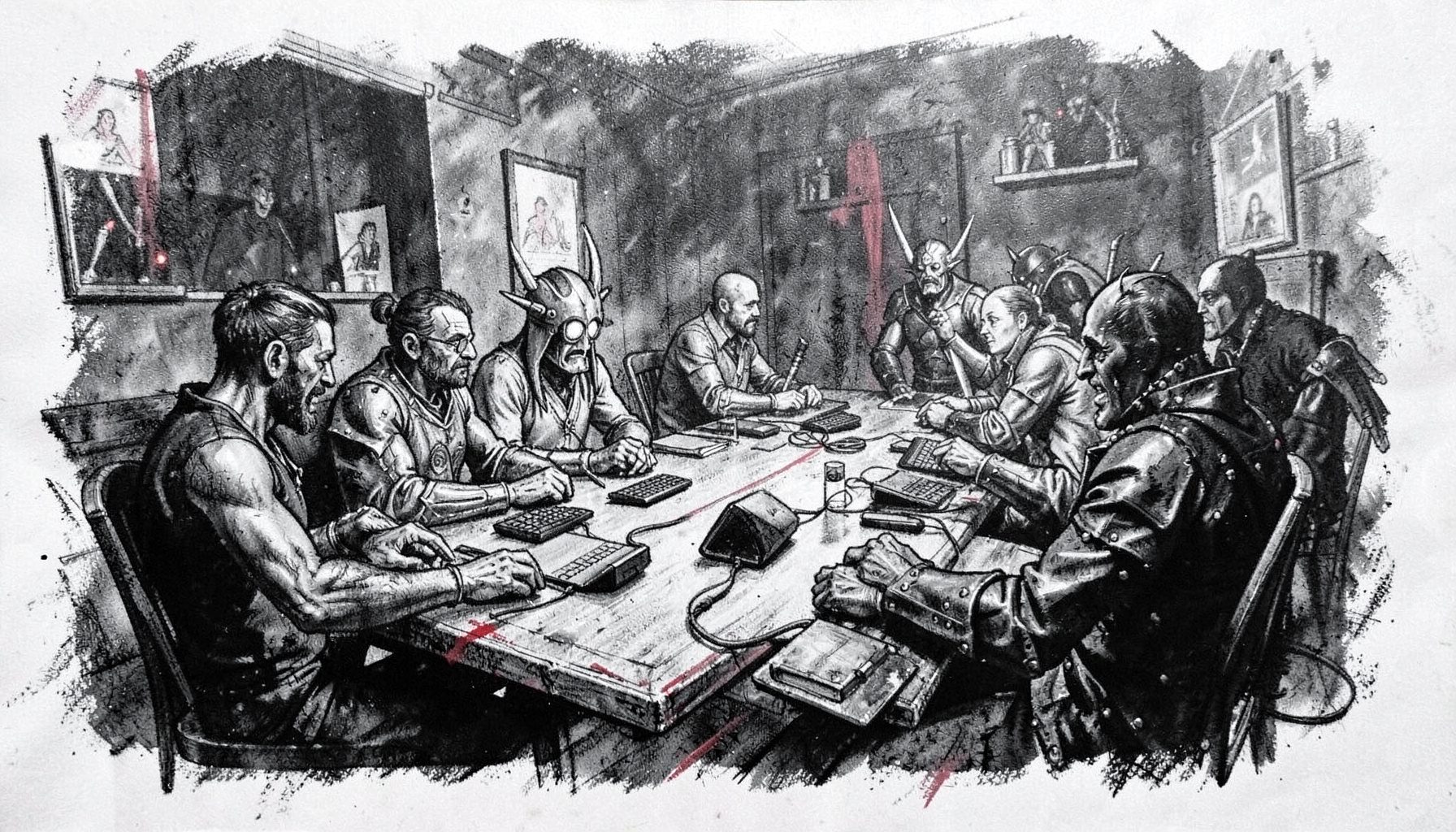
Five lessons from the HLGCon vendor hall floor
In 2018, High Level Games Convention filled part of the Showboat Hotel in Atlantic City, New Jersey, with tabletop players, live-action role-players, designers, artists, publishers and vendors. The programme mixed LARP experiences, tabletop sessions, panels, workshops, an exhibitor hall and escape-room activities. That mix mattered: the hall was not a quiet showroom between sessions, but a place where stories were tested, compared and improved in public.
On the HLGCon vendor hall floor, the strongest booths treated products as invitations rather than trophies. A visitor could learn a rule, handle a component, imagine a character or compare scenarios before deciding whether to buy. This suited HLGCon’s emphasis on inclusive community participation and collaborative storytelling while offering a clear lesson for Australian game shops, clubs, publishers and market stalls.
Australian audiences bring useful directness to that conversation. A plainly explained price, a candid demonstration and a quick “no worries” after a small misunderstanding can do more than elaborate sales language. At the same time, distance, freight costs and a fragmented retail landscape mean a convincing booth must connect local play with a workable route to purchase. These details shape which lessons from the convention floor can travel well to Australia.
Pitch the experience, not the object
A useful pitch began with an experience rather than a catalogue. The best displays invited visitors to make a choice, draw a route, assemble a character or solve a tiny problem. That turned product features into evidence: the weight of a card, the readability of a board and the pace of a scenario became easier to judge when they formed part of play.
This approach works beyond Atlantic City. At a crowded hall in the Melbourne Convention and Exhibition Centre or the Brisbane Convention and Exhibition Centre, attendees often have limited time and many competing tables. Give them a compact demonstration with a clear start, a visible result and enough detail to picture a full session. Knowledgeable staff should then ask what kind of play the visitor enjoys, which is more useful than reciting every component in the box.
Make expectations visible before play
Clarity was a selling feature. Experienced role-players know that an unclear premise, disputed boundary or surprise twist can ruin a demonstration. HLGCon’s no-spoilers style guide gives vendors a sound model for revealing interest without stripping a game of its surprises. A short pitch can state the premise, tone and player experience while leaving discoveries intact.
That discipline also supports inclusion. Signs can identify physical demands, intense themes, required reading and age guidance, while staff explain consent tools and opt-in mechanics in ordinary language. Australian directness is helpful here, but “no worries” should not replace specifics. If a session involves chase scenes, sensory effects or difficult themes, say so before anyone joins. People are far more likely to try unfamiliar play when they know what to expect.
Let visitors test the game
Hands-on time produced better conversations than polished images alone. Visitors needed to touch the game, not merely watch it. The HLGCon review of handouts and maps reinforces how reference material can guide a session without doing all the thinking for players. A vendor can demonstrate the same principle by providing a concise reference sheet, a sample character or one playable scenario, then stepping back so the attendee can make decisions.
The booth therefore became a small laboratory. Staff could observe which rules caused hesitation, which artwork pulled attention and where a scenario lost momentum. That knowledge was useful after the event because notes about playtests, repeated questions and confusing components could shape later print runs or revised instructions. Local role-playing clubs could become partners in this process, giving designers access to regular groups without expecting every attendee to become an immediate customer.
Design for different needs and budgets
A broad hall contains different budgets, attention spans and accessibility needs. Some visitors wanted a quick look; others planned an hour of discussion; some needed to sit, read carefully or avoid a noisy demonstration. Seating, clear aisle widths, readable signs and a quieter sample station help the booth serve all of them. Staff should offer routes into the display rather than forcing every visitor through the same scripted pitch.
Commercial details need the same care. For Australian shoppers, show the consumer price in Australian dollars and make clear that 10% GST is included; for trade buyers, explain wholesale terms separately. Shipping across a country the size of Australia can turn an impulse purchase into a doubtful one, so publishers and online retailers should state delivery estimates, tracked postage and the availability of local stock. Regional buyers should not have to guess whether an item can arrive before the next club night.
That practical transparency fitted HLGCon’s community spirit. A vendor who explained why a product was expensive, which groups could stretch the budget or where an accessible edition existed built more trust than one who only promised discounts. The same honesty matters at a local game night, a convention in Adelaide or an online store serving customers in Darwin.
Turn conversations into pathways
Every meaningful conversation deserved a next step, but that step did not have to be a sale. Some visitors were gathering ideas for a group, some were seeking artists, and others wanted advice on running their first campaign. A vendor who had studied the full schedule could point visitors towards relevant panels, demonstrations or creators. Useful referrals expanded the convention’s value and made the booth part of the wider community.
The same principle is essential in Australia, where customer journeys often cross specialist distributors, online stores, local hobby shops and volunteer-run clubs. Capture consent-based contact details, record the exact interest rather than a vague “maybe”, and specify a follow-up: a mailed quote, a demonstration date, a wholesale sample or a club visit. Digital sign-up can support this process, but a physical card with a web link remains handy when someone wants to remember the stand after carrying gear through a crowded hall.
A vendor playbook for Australian events
Before packing a booth, turn the floor lessons into a short operating plan. Decide what visitors should understand, try and take away, then assign each job to a staff member. The plan should work with the local event’s rhythm, whether that means a steady trade morning, a surge after a panel or a family-oriented Sunday session.
- Give each product one playable ten-minute demonstration with a defined finish.
- Display consumer prices in Australian dollars, including GST, and separate wholesale options.
- Explain audience, difficulty, setup time, content boundaries and accessibility needs before play.
- Supply one useful takeaway, such as a quick-reference sheet, sample map or club contact card.
- Offer an immediate purchase route, tracked shipping quote or dated preorder.
- Train staff to answer candidly, respect boundaries and follow up within a stated period.
Run the demonstration before doors open, watch it with fresh eyes and remove any step that needs a hidden explanation. Keep stock, pricing and payment options current, and have a named person responsible for the promised follow-up. The aim is a booth that functions as a reliable small business rather than a one-day burst of attention.
The practical takeaway is to design one complete customer journey: understand the offer in thirty seconds, try it in a few minutes and leave with a clear next step. A booth that delivers that journey on a busy Australian convention floor can carry the same promise into a local club, a hobby shop and an online campaign.