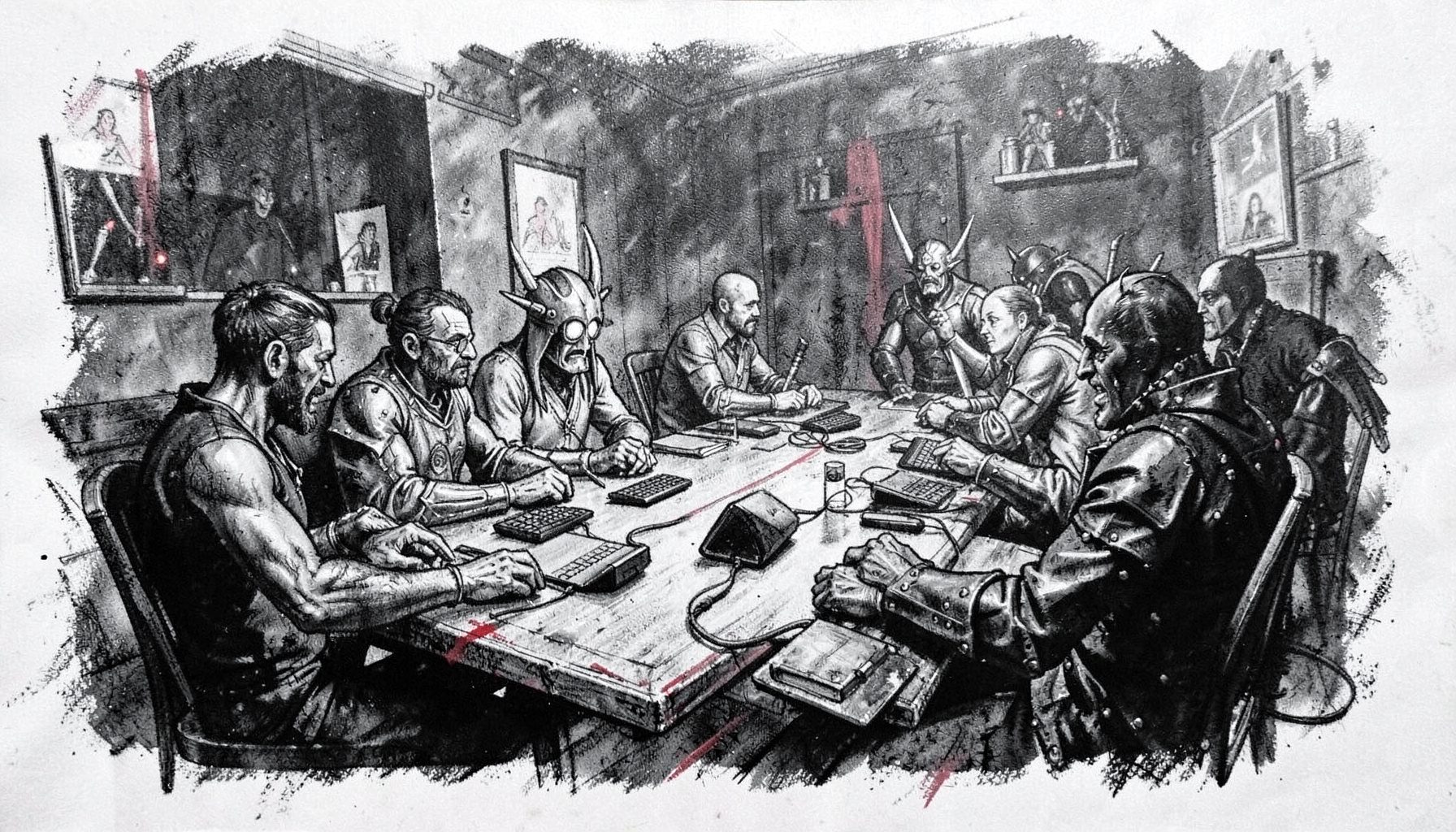
Handouts and maps for memorable role-playing sessions
The 2018 High Level Games Convention brought tabletop role-players, live-action performers, designers, artists, publishers and vendors together at the Showboat Hotel in Atlantic City, New Jersey. LARP experiences, panels, workshops, escape rooms and an exhibitor hall shared an emphasis on collaborative storytelling and inclusive participation.
Within that mix, a TTRPG session depends on people agreeing on what is happening, what matters and who can act. Handouts and maps turn the game master's spoken ideas into a shared reference. They can reveal connections, clarify a location or preserve details that players might otherwise miss. Used well, they support choice rather than replacing it.
That approach travels easily to Australian tables. Players gather at events such as Melbourne GameFest and Perth's Freeplay, or at smaller sessions in suburban lounges, community halls and licensed venues. The local market mixes volunteer-led groups, independent designers, artists and established publishers. A convention handout should also work when photocopied at home and passed around after tea.
The role of handouts and maps in a successful TTRPG session is more than visual flavour. It is about controlling attention, making information usable and leaving room for improvisation. The best materials do not dictate how players should feel or act. They establish a clear situation, then give the table something meaningful to interrogate, reinterpret and remember.
Make the map a decision-making tool
A map should answer practical questions before play starts: where are we, who can be reached, and what lies between the party and its objective? Show the relationships that affect travel rather than every street. A harbour, locked bridge or crowded market can matter; the colour of an unused lane cannot.
Keep the game master's view legible with clear labels, a compass and a simple scale. Distances need only be consistent enough for decisions. Give crossing times plainly, even for a room next door. Players should not have to measure pixels to learn whether an action is risky.
Use layers deliberately. A public map can show the tavern, market and guards' patrol, while hidden notes hold ambushes or secret passages. Give each player only what their character would know. A map exposing every twist removes suspense; an unreadable diagram leaves the group waiting for explanation.
Give every handout a clear job
A handout earns its place by doing a specific job. A character sheet carries abilities and conditions; an NPC dossier carries voice, motives and relationships; a location card carries tactical details; a rules reference settles a disputed action. Avoid combining these into a dense document, because a quest paper burdened with combat statistics becomes difficult to use.
Write for quick scanning. Short paragraphs, distinct headings and generous white space make a page easier to use under imperfect lighting. Use readable type, plain language and strong contrast, and never make colour the only way to distinguish an ally from an enemy. Large-print and shared digital copies can meet different access needs without singling anyone out.
Test the handout with someone who has not seen it. If they cannot identify its purpose in a few seconds, the heading or layout needs work. Props can add atmosphere, but a note written on an old receipt should still preserve the crucial fact. If the table cannot read it when it matters, it is decoration, not support.
Carry a one-shot into a longer story
One-shot games often gain energy from contained goals, yet players may become curious about characters, factions or consequences. Handouts can plant durable questions without announcing a sequel. A sealed letter, unexplained symbol or missing name gives the table something to discuss after the objective is resolved. The convention's guide to developing a longer campaign is useful here: a temporary scenario can leave a personal thread rather than a mechanical one.
Build the thread into material the group can act on. A rumour mentioned on a faction sheet should reappear in a street scene or on another player's map. Repetition creates continuity, provided the second appearance changes the context. The same crest on a guild hall and a smuggler's ledger should invite questions, not simply confirm that both objects are red.
Keep three layers separate: information needed now, a choice offered now, and a mystery intended for later. A note can do two jobs, but it should not hide a rules-critical fact beneath an elaborate riddle. Record unresolved details after the session so the next game master can continue them accurately rather than inventing a contradiction.
Build the session around local knowledge
Australian groups might call an afternoon session an arvo game, ask whether everyone is keen, and say no worries when someone needs a rules clarification. That friendly rhythm can guide pacing. Keep visible rules summaries available so a question does not become a confrontation. Invite correction without turning every uncertainty into a vote, which preserves confidence in the facilitator's choices.
Local geography can make a fictional location more immediate. A Melbourne laneway, a regional footy oval or Adelaide's parklands gives players a familiar anchor. This does not require a simulation of the real place. It means using recognisable shapes and social cues so the group can imagine the space before the first die is rolled.
Australia's distances also affect preparation. A party travelling between towns may need a clear route and time scale, while a remote venue may rely more on a shared digital map for a large table. Local materials should remain robust: A4 pages, familiar spellings, standard dice and simple black-and-white copies matter more than elaborate production values.
Keep guidance readable and quick
Put rules reminders on a single reference sheet, not across several pages. Players should be able to find the relevant answer without reading the whole document aloud. Use consistent terms, explain any house rule once, and mark optional variations. A cue card for a common action can sit beside the map and shorten the gap between a decision and its result.
Even High Level Games Convention's coverage of practical gaming tips for jackpot pokies reflects a wider culture of helping players understand a game before committing. The tabletop parallel is straightforward: state the available choices, immediate costs and likely outcomes in plain language. Preserve uncertainty about the story without making basic mechanics obscure.
Practise the handoff. Read one handout as if seeing it for the first time, then place it beside the map and explain which detail changes a decision. If the game master must narrate everything before anyone acts, the materials are doing too little. If the group can act immediately, they are doing enough.
A collaborative materials checklist
A brief collaborative check catches problems while they are cheap to fix. Run it with the people who will use the material, including players who need larger print or a digital copy. Divide the work between the map and handouts, then compare them as one set of instructions.
- Mark the starting location, destination, exits and any route that takes meaningful time.
- Label each map symbol and check that every label has a matching description.
- Confirm that the scale supports travel, pursuit and time-pressure decisions.
- Remove details the players cannot see or use, especially clues reserved for the game master.
- Check the page orientation, print size and legibility under table lighting.
The handout check follows the same principle: usefulness before atmosphere, and clarity before volume. Ask a first-time reader to identify each page's purpose and the line they would consult during play. Keep references beside the map rather than in a separate pile to search during an important choice.
- Give each handout one clear purpose and an unmistakable heading.
- Use short sections, readable type and sufficient contrast.
- Include only the information the current player is meant to know.
- Add alternative text to digital images and provide a readable digital version.
- Test whether the page still works when printed in black and white.
Finally, run the game for ten minutes. Use the map and handout in a short scene, not a summary, and watch where players hesitate. They may be confused by the material, uncertain about a rule, or uninterested in the choice. Those are different problems and deserve different fixes.
Prepare the next session
Good materials leave a trace after the table is packed away. They should make the players' choices easier to recall, reveal which details mattered and give the game master a dependable record for the next session. Keep the final copy with the campaign notes so a clue, route or relationship does not disappear into a player's memory.
Before the next session, place the player's handout beside the map, circle the first decision point, and time how long it takes a new reader to understand both.