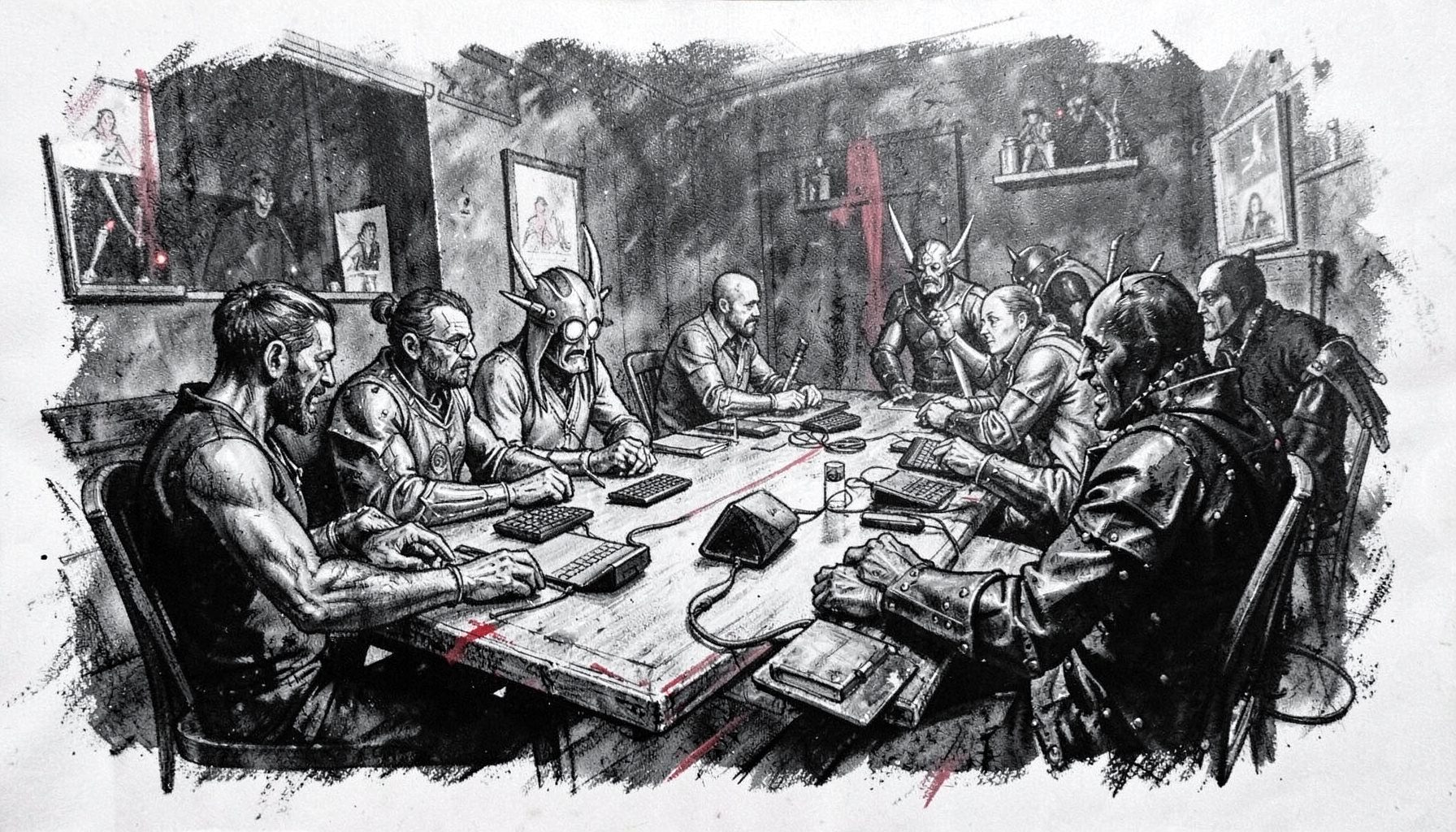
How to Turn a One-Shot RPG into a Full Campaign
Tabletop role-playing games thrive on momentum. A well-run one-shot can pack an entire emotional arc into three or four hours, and players often walk away wishing the story had more room to breathe. The leap from a single session to a sprawling campaign is one of the most rewarding challenges a game master can take on, but it requires more than simply stringing extra sessions together. It means recognising what made that first night memorable, then deliberately scaffolding the world, the characters, and the mechanics to support many more evenings of play.
Australian gaming groups know this pattern well. The tyranny of distance means players in Perth often struggle to find regular groups, so when a one-shot lands it tends to spark ambitious plans. Stores in Melbourne's laneways and Sydney's Inner West regularly host demo nights where a successful scenario becomes the seed for a months-long home campaign. The same lessons apply to live-action events like the detention breakout scenario, where a contained premise can grow into an ongoing narrative.
Finding the heart of the one-shot
Before adding anything, work out what gave the one-shot its punch. Was it a tight, high-stakes premise, a specific tone, or a villain the players loved to hate? Sit down after the session and write a short list of the two or three elements you would protect at all costs. Those become the pillars of the full campaign.
A common trap is to assume the entire one-shot is worth expanding. In practice, a single memorable scene often outweighs the rest. If the party's encounter with a corrupted lighthouse keeper produced the best role-playing of the night, that relationship can become the spine of a longer story. A coastal town under ghostly siege, with the keeper as a tragic recurring figure, gives you a place to return to across many sessions and lets you onboard new players without losing what made the original run special.
Expanding the world without losing focus
Once the core is identified, the world can grow around it. A one-shot typically presents a single location or a tight chain of scenes. A campaign needs somewhere to travel, reasons to travel, and a sense that the world is reacting to the characters. Start by sketching the immediate region around the one-shot's setting, then add a second region, a third, and a handful of factions that operate across them. Avoid building an entire continent before the first follow-up session; the world fills in as the players explore it.
This is where Australian game masters often lean on local flavour. A campaign rooted in a fictionalised version of the Blue Mountains, the Daintree, or a coastal town in Tasmania can feel instantly grounded, and players will recognise landmarks and slang without needing a lore dump. If the one-shot involved a corporate conspiracy, set the wider intrigue across state borders. If it leaned folk horror, the quiet isolation of outback towns offers a natural expansion. The map grows at the same pace as the story, not before it.
Carrying characters forward
Players invest deeply in characters during a one-shot, and that investment is the most valuable resource a campaign has. The easiest way to lose it is to reset the characters between sessions, strip away items, or shift the tone so drastically that the originals no longer feel like the same people. Keep the same sheets, quirks, and relationships. Growth should feel like a continuation, not a new game.
Pre-generated characters sometimes need a small mechanical nudge to survive long-term play. If a character peaked at level 3 in a four-hour adventure, plan the first few campaign sessions around that level and let advancement happen through milestones rather than experience points. Encourage players to write a short sentence about what their character wants now that the immediate crisis has passed. Those wants become personal hooks the campaign can pull on for months, keeping the table invested when the main plot slows down.
Layering mechanics for the long haul
One-shots usually compress mechanics: simple combat, minimal downtime, a short list of abilities. Campaigns reward systems that breathe. Long rest rules, crafting, faction reputation, and downtime activities all give players something to think about between encounters. If the one-shot was rules-light, consider what one or two mechanical additions would give it legs. If it was heavy on combat, introduce social or exploration pillars to balance the table.
Many Australian groups now run Blades in the Dark, Pathfinder 2e, or Free League titles like Vaesen, and each offers a slightly different answer. Blades' crew mechanics naturally push a one-shot heist into a multi-session criminal enterprise. Pathfinder's exploration mode gives structure to journeys between set-pieces. The point is not to graft a system on for the sake of it, but to pick the mechanical tools that match the kind of long-form story you want to tell. Home campaigns in Brisbane and Adelaide often begin as a system swap after a single satisfying demo.
Planting hooks for future sessions
A one-shot ends when the story is told. A campaign ends when the table runs out of sessions, which is rarely. The difference is hook density. Every session of a full campaign should leave at least one thread dangling: a name mentioned in passing, a debt unpaid, a stranger watching from a doorway. Players should walk out of each session with at least one thing they want to follow up on, and the game master should keep a private list of those threads so none get lost.
This approach also makes the world feel alive. If the one-shot featured a quiet village, give that village a festival two sessions later. If a faction offered the party a job, have a different member of that faction react to how the job was handled. Hooks do not need to be elaborate; a single sentence scribbled on a note card is enough. The cumulative effect over six or twelve months is a world that feels like it is moving whether the players are watching or not, which is exactly the texture a one-shot cannot achieve on its own.
Scheduling and the realities of long play
The biggest threat to a converted campaign is not a weak story but a fading schedule. Australian groups regularly grapple with the tyranny of distance when members live in different states, and even within a single city, FIFO rosters and family life can break a weekly rhythm. Build the campaign with this in mind. A monthly cadence with a clear session zero, mid-session check-ins, and a planned ending arc is often more sustainable than a weekly grind that collapses after two months.
Tools help. Shared notebooks, Discord channels, and group chats keep the campaign alive between sessions. A short recap at the start of every game, written by a rotating player, doubles as a memory aid and a way to keep quieter voices engaged. The panel recap on inclusion explores how groups sustain themselves through good communication, and many of those ideas apply directly to keeping a converted campaign healthy for the long term.
Sustaining momentum across the whole arc
Long campaigns lose energy when the players forget why they started. Keep early artefacts from the one-shot visible throughout. A scar, a keepsake, a recurring NPC, or a location revisited can anchor the story in the moment that sparked the whole thing. When the campaign finally reaches its climax, those callbacks pay off in ways a fresh story cannot match. The way vendors and publishers describe how a single demo leads to a full product line, captured in exhibitor hall stories, mirrors what many game masters already know: the best big things start small and stay connected to their origins.
A campaign born from a one-shot also has a built-in advantage: a known group that already trusts each other. Lean into that. Run a session zero to talk about boundaries, expectations, and what kind of story the table actually wants, and revisit that conversation every few months. The more the campaign grows, the more important it becomes that the people around the table feel heard, because the mechanics and the world only matter when the group is still turning up, week after month, eager to find out what happens next.
The simplest measure of a successful conversion is whether, six months in, someone at the table still mentions the night of the original one-shot. If the characters are still recognisably themselves, the world still feels like an expansion of that first map, and the players are still bringing new ideas to the table, the campaign is doing its job. The next step is to schedule the first follow-up session before the current one ends, so the momentum never quite has time to fade. A four-hour adventure can become a year of shared storytelling, and the only difference between the two is a deliberate decision to keep turning up.