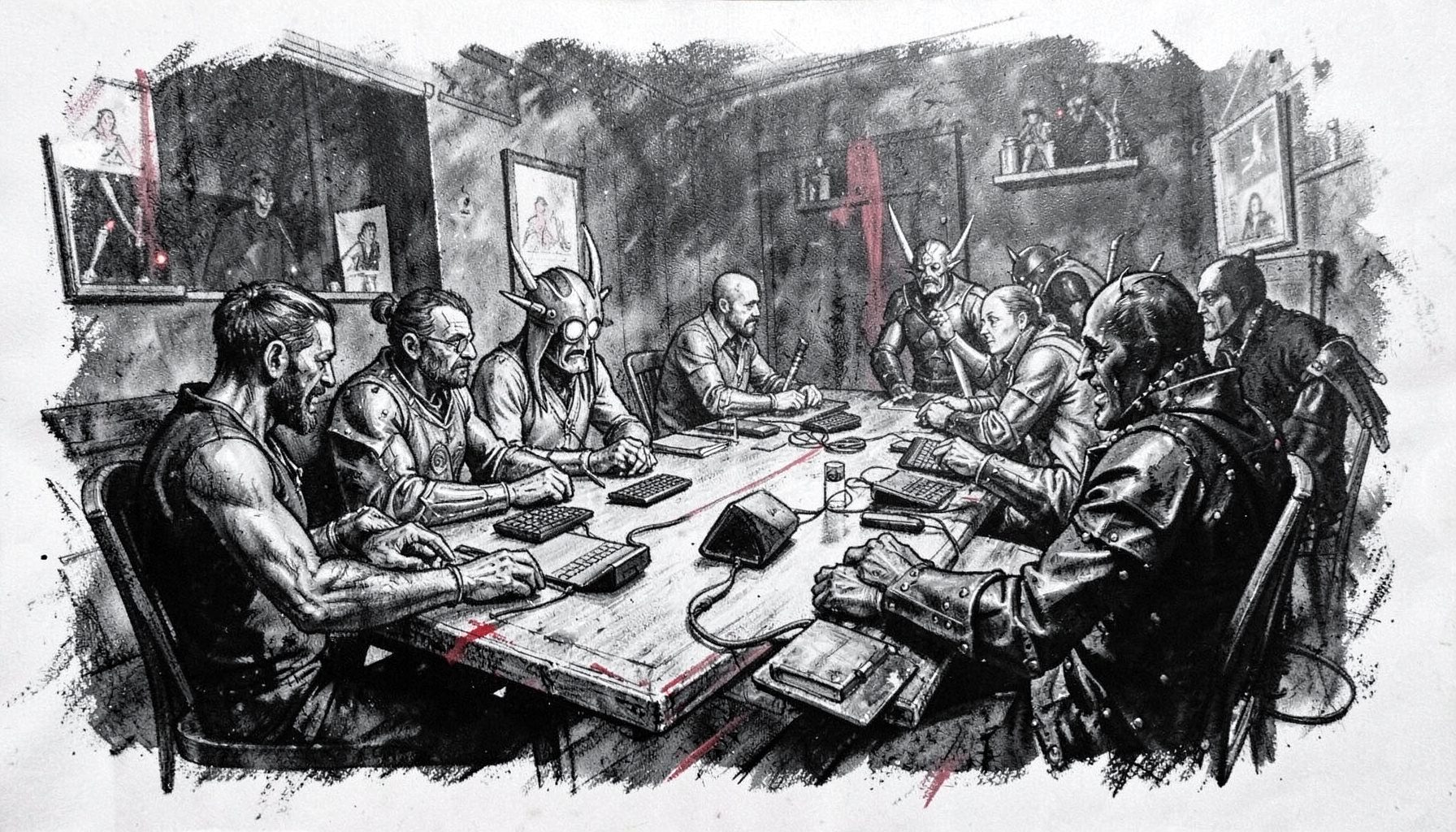
Building belonging at the gaming table
The panel on diversity and inclusion in gaming communities at High Level Games Convention explored a question that reaches far beyond any single session: who gets to feel welcome when a group gathers around a table, enters a LARP scene, or walks into an exhibitor hall? Held at the Showboat Hotel in Atlantic City in 2018, the convention brought together tabletop role-players, live-action gamers, designers, artists, publishers and vendors with a shared interest in collaborative storytelling.
The discussion treated inclusion as a practical part of game culture rather than a decorative value. A welcoming community is shaped by its language, its safety expectations, its approach to access needs and the kinds of stories it considers worth telling. Those choices affect whether a newcomer returns for another session or decides that gaming is not for them.
For Australian players, the themes remain recognisable. Whether the setting is PAX Aus in Melbourne, a small games shop in Brisbane, a university club in Canberra or a weekend LARP outside Sydney, communities grow when people can participate without having to justify their identity, experience level or way of engaging with the hobby.
Inclusion begins before the dice hit the table
One of the panel’s central ideas was that belonging starts well before a game begins. It can be influenced by the wording of an event listing, the images used in promotion, the registration process and the way organisers describe expected behaviour. A session advertised as friendly to beginners sends a different message from one that assumes everyone knows the rules, the jargon and the social customs.
This matters at conventions, where many people arrive alone or with only a loose connection to the wider hobby. Clear descriptions of game length, tone, content warnings, player numbers and accessibility can remove much of the uncertainty. A short explanation of what happens during a session may be enough to help someone decide that they can comfortably join.
The beginner-focused guidance in this RPG guide reflects that same principle: new players benefit when the threshold for entry is made visible and manageable. Friendly facilitation is not about lowering the quality of play; it gives more people a fair chance to discover why the hobby matters.
Language can open the door or close it
Gaming communities often develop specialised language quickly. Terms about systems, character builds, safety tools and play styles can be useful shorthand for experienced participants, yet they may sound like a test to someone attending their first session. The panel encouraged experienced gamers to explain rather than assume, especially when a new player pauses or asks for clarification.
Gatekeeping can also appear in apparently harmless behaviour. Correcting someone’s pronunciation, dismissing a rules question or treating popular games as less serious can establish an informal hierarchy. Even comments intended as jokes may tell women, LGBTQIA+ players, people of colour, disabled gamers or younger participants that they are visitors in a space built for somebody else.
A healthier table makes room for different kinds of expertise. A player might know a system deeply, bring superb character acting, create imaginative props or simply help quieter people enter the conversation. Treating those contributions as valuable creates a culture where participation is broader than winning arguments about rules.
Representation shapes the stories people can enter
The panel also connected inclusion with representation in games and community leadership. When published settings, player characters and convention guests reflect a wider range of cultures, bodies, genders and life experiences, more participants can see possibilities for themselves. Representation does not need to be perfect to be meaningful, but it should avoid reducing people to stereotypes or using identity as a plot device.
Game designers and facilitators have influence here. They choose which histories are borrowed, who is portrayed as heroic, whose accent is treated as comic and which communities are imagined as dangerous or exotic. Responsible preparation includes research, sensitivity readers where appropriate and a willingness to change material that relies on lazy assumptions.
Australian gaming spaces have their own responsibilities. Stories involving First Nations cultures should not be treated as a costume or a source of mystical flavour, and organisers should recognise that local communities are diverse across cities, regional areas and remote locations. A setting that feels familiar to a player in Melbourne may not reflect the lived reality of someone in Darwin or a small Tasmanian town.
Access is part of good event design
Physical and sensory access is often discussed as a special accommodation, yet the panel framed it as sound event planning. Seating, lighting, noise levels, bathroom access, rest areas and the clarity of venue maps all influence who can stay engaged. A convention may have exciting content on the schedule, but that content is not genuinely available if a participant cannot reach the room or cope with its conditions.
The same applies to communication access. Large-print schedules, readable online forms, microphones, captions and advance information about stairs or crowded spaces can reduce stress. For people managing chronic illness, anxiety or fatigue, knowing where a quiet place is located may make the difference between attending one activity and enjoying a full day.
Australian organisers also have to account for distance and cost. A participant travelling from regional New South Wales to Sydney, or from interstate to Melbourne, may face expensive accommodation and transport before buying a convention ticket. Affordable day passes, practical travel information and hybrid options can widen participation, while a venue near reliable public transport is especially important in sprawling cities.
Safety works best when it is visible
A code of conduct is most effective when attendees can find it, understand it and trust that it will be applied. The panel highlighted the need for clear reporting routes, trained staff and consequences that do not depend on a target of harassment making a public scene. People should know whom to approach if a boundary is crossed, a player is being bullied or a facilitator is behaving inappropriately.
Safety tools also belong inside the play experience. Lines and veils, the X-card, check-ins and the ability to pause or leave a scene give players practical control over difficult material. These tools are especially valuable in horror games, intense drama and LARP, where the emotional or physical immersion can be stronger than in a conventional board game.
Good moderation is not about removing every challenging idea. It is about separating meaningful fictional conflict from real-world hostility and ensuring that consent remains ongoing. A player agreeing to fantasy combat has not automatically agreed to slurs, unwanted physical contact or personal interrogation.
Organisers set the tone through small decisions
Inclusion is reinforced by the ordinary decisions made by staff, volunteers and game masters. Who receives the microphone? Are first-time presenters supported? Do vendors display a broad range of art and games? Are late arrivals welcomed without embarrassment? These details communicate whether the community values people as participants or sees them only as customers.
The event submission process is one place where those priorities can become concrete. A well-designed form can ask about accessibility, content warnings, player experience, safety tools and the support a presenter may need. Organisers can use those answers to build a balanced programme rather than leaving inclusion to chance; the event submission form shows how programming begins before the doors open.
For Australian conventions and local clubs, the same approach works on a smaller scale. A volunteer-run games day in Adelaide may not have a large operations team, but it can still publish expectations, brief table hosts and provide a named contact for concerns. Clear roles make it easier for people to act early instead of waiting for a problem to become a crisis.
Community care continues after the convention
A panel can influence attitudes, but lasting change depends on what happens between major events. Regular groups can rotate facilitators, invite feedback and check whether the same people always handle emotional labour. Organisers should also notice who is absent. A room may appear friendly while still excluding people through scheduling, cost, transport, language or unspoken social rules.
Local networks offer strong opportunities for practical progress. A games shop in Perth might host an introductory night with pre-generated characters. A LARP group near the Gold Coast could run a low-contact session for people unsure about physical play. A university club might pair new members with buddies rather than expecting them to enter an established friendship circle unaided.
The panel’s lasting message was that inclusion is collaborative storytelling in its broadest sense. Everyone helps create the social world around a game, whether they are writing rules, running a session, designing art, selling books or making room at the table. When that shared world is built with care, difference becomes part of the community’s creative strength rather than a reason for exclusion.
Gaming communities become more welcoming through repeated, visible choices: explain the jargon, plan for access, represent people responsibly, protect boundaries and listen when participants describe their experiences. The point to remember is simple: belonging is not something a community claims; it is something its members build together every time they invite someone in and make room for them to stay.