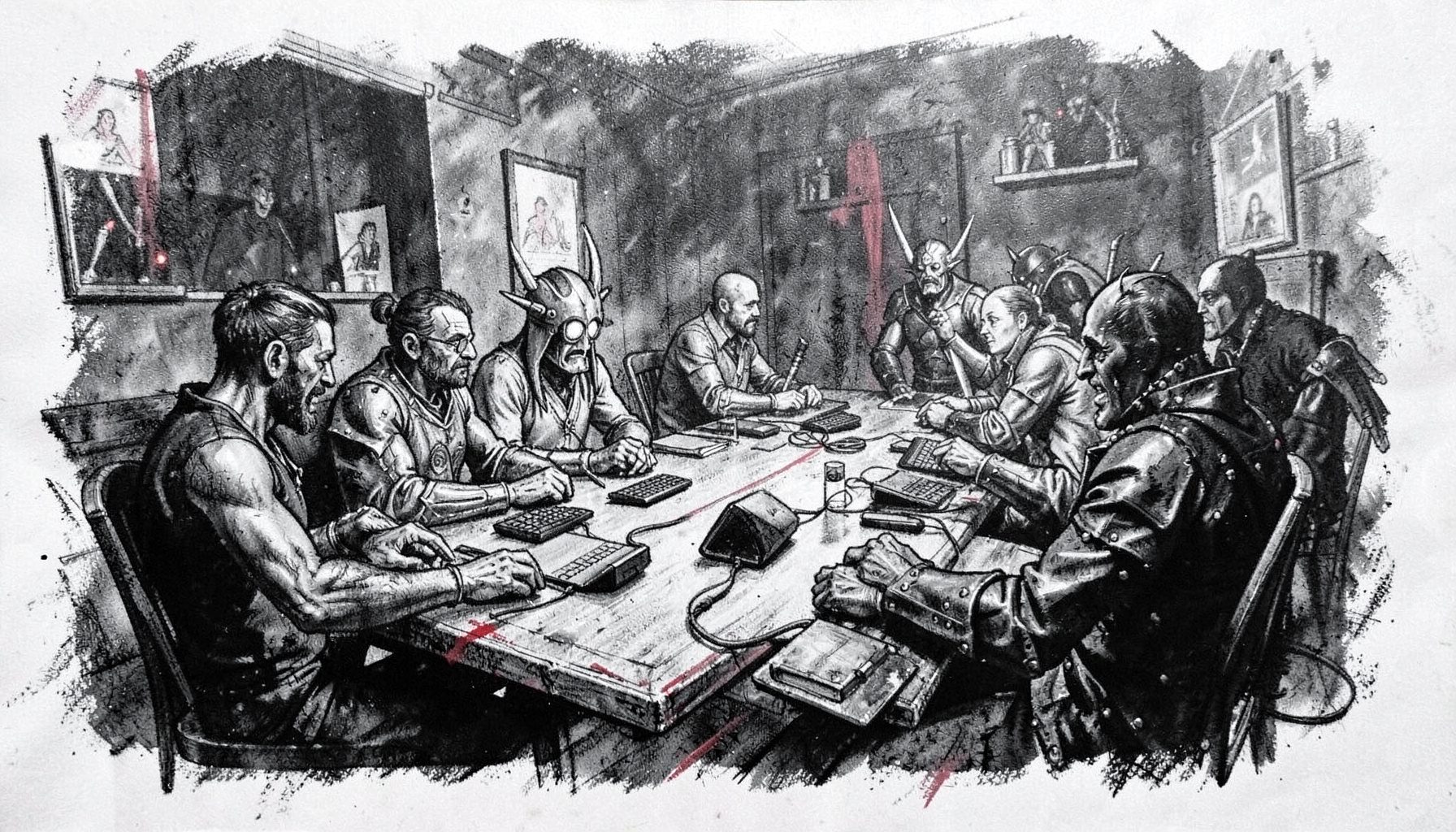
The pros and cons of running a LARP indoors
Live-action role-playing can transform a plain room into a haunted manor, starship, courtroom or enchanted forest. Indoor venues give organisers control over sound, lighting, weather and access, making them attractive for a convention programme or regular local campaign. A hotel function room in Sydney, a community hall in Brisbane or a warehouse space in Melbourne can all become convincing play environments with the right preparation.
The same control can create new limits. Walls restrict movement, nearby events compete for sound, and venue rules may affect costumes, props, food and dramatic scenes. For Australian organisers, the decision also involves summer heat, hire costs, transport patterns, insurance and state-based workplace safety obligations.
Why indoor spaces suit live-action role-play
An enclosed venue provides reliable shelter during Melbourne rain, Brisbane humidity or a hot Sydney weekend. Players can arrive knowing that the game will not be cancelled because of wind, smoke or a sudden storm. Air conditioning and heating also help participants stay in costume for several hours, although the system must be tested before the event.
Indoor rooms make it easier to control atmosphere. Blackout curtains, practical lamps, music and projected scenery can quickly establish a setting. A venue with several connected rooms can separate factions, create secret areas and support quieter scenes away from the main action. An escape-room style experience can be especially effective when its puzzles, props and performer entrances are planned together, as shown in these escape room design notes.
A controlled environment also improves accessibility. Smooth floors, nearby toilets, seating areas and predictable routes can be more suitable for players with mobility, sensory or medical needs than uneven outdoor terrain. Clear information about stairs, lighting, noise and room temperature lets participants decide what they can comfortably join.
The atmosphere can become too contained
Indoor LARP often relies on a limited footprint. A chase that would feel exciting across a park may become unsafe or awkward in a corridor. Players might hear conversations intended to remain secret, while a crowded room can make combat, dancing or elaborate gestures difficult. The organiser must design scenes around the available square metres rather than trying to imitate a much larger outdoor adventure.
Sound is another common problem. A function room may sit beside a wedding reception, gaming tournament or hotel bar. Air-conditioning units, lifts and traffic can weaken dramatic dialogue, while amplified music can disturb other guests. Quiet role-play requires acoustic planning, room dividers and a timetable that avoids the loudest activities happening at once.
The visual setting can also feel artificial if every scene takes place under fluorescent lights. A small budget may produce better results through selective detail than through covering every wall. One convincing desk, banner, map or prop can communicate a location more effectively than a crowded collection of decorations.
Planning movement, characters and props
A good indoor scenario begins with a floor plan. Mark entrances, exits, staff-only areas, accessible routes, toilets, storage and any place where players may gather. Then assign each room a purpose: public negotiation, private conversation, combat, puzzle solving or quiet recovery. This prevents the whole cast from clustering in one central space.
Character design should support short, clear interactions. Players may need to understand their goals while standing in a noisy foyer, waiting for a scene or moving between rooms. A compact handout with relationships, secrets, abilities and safety information is more useful than several pages of background. Guidance on one-shot character sheets can help organisers keep preparation manageable.
Props need equal attention. Foam weapons, fake food, furniture and costumes should be checked for sharp edges, trip hazards and heat retention. In an Australian hotel or hired hall, tape, smoke effects, candles and adhesives may be restricted. Ask for written venue rules before buying materials, and prepare a prop-free version of every essential scene in case an item is refused.
Comparing indoor and outdoor play
The best location depends on the game’s physical, emotional and logistical demands. An indoor venue is often the stronger choice for an investigation, political drama or puzzle-heavy one-shot. Outdoor space may better support travel, survival, large battles or a setting built around natural terrain.
| Consideration | Indoor LARP | Outdoor LARP |
|---|---|---|
| Weather | Highly predictable, with heating or cooling available | Exposed to heat, rain, wind and smoke |
| Atmosphere | Strong control over sound, light and set dressing | Natural scenery and greater environmental scale |
| Movement | Limited by rooms, furniture and venue capacity | Supports travel, pursuit and larger formations |
| Accessibility | Easier to provide toilets, seating and smooth routes | Terrain may create mobility and sensory barriers |
| Noise | Can disturb neighbouring rooms or businesses | Sound disperses, but local residents may be affected |
| Cost | Hire, cleaning, security and damage fees can be high | Land permits, transport and equipment may add cost |
| Safety | Clear boundaries, exits and staff supervision are possible | Hazards include uneven ground, weather and isolation |
Indoor play does not automatically mean lower risk. A crowded hall with cables, darkened rooms and hurried prop changes may be more hazardous than a carefully managed park. The venue’s layout and the game’s rules matter more than the label of the location.
For Australian groups, travel is part of the comparison. A central venue near a train station may be easier for players in Sydney or Melbourne, while a regional event may require car travel and parking. Weekend public transport timetables, late-night safety and the availability of affordable accommodation should be included in the planning decision.
Costs and the local event market
Venue hire is usually the largest fixed expense. Organisers may pay by the hour, day or weekend, with separate charges for security, cleaning, furniture, equipment and early access. Hotel and convention spaces can offer professional staff and useful facilities, but their rates may be difficult for a small community group. Community centres, scout halls and arts spaces often provide better value, though they may have stricter closing times.
Australia’s LARP market is active but relatively specialised. A large city can support several gaming communities, while a regional campaign may depend on a smaller pool of repeat participants. This makes ticket pricing important: a high fee can cover a premium venue but reduce attendance, while a cheap ticket may leave organisers personally covering insurance and damage costs.
Everyday habits affect the budget as well. Players may expect a coffee run, bring reusable water bottles and prefer a venue near takeaway food or a supermarket. A clear policy on outside catering, alcohol and food allergies avoids conflict with venue management. For long sessions, inexpensive snacks and refill stations can improve stamina without turning the event into a full catering operation.
Safety, accessibility and legal duties
Risk management should cover both ordinary venue hazards and game-specific behaviour. Mark wet floors, cables, low ceilings, locked doors and restricted areas. Use a check-in desk, visible staff identifiers and a process for reporting harassment or injury. Brief players on contact rules, safe words, consent, photography and what to do when a scene becomes uncomfortable.
Australian work health and safety requirements are administered through state and territory systems, so organisers in New South Wales, Victoria and Queensland may encounter different guidance and terminology. A commercial venue will usually have its own emergency plan, but the event organiser still needs to understand evacuation routes, occupancy limits and first-aid arrangements. Public liability insurance may be required by the venue even when the activity is volunteer-run.
Accessibility needs to be practical rather than symbolic. Offer seated roles, written instructions, quiet spaces and alternatives to running or physical contact. Avoid making a player disclose a diagnosis to receive an adjustment. Costumes should permit safe movement, and staff should know how to respond if someone needs medication, a break or assistance leaving the room.
Making the session work on the day
A strong run sheet gives every activity a beginning, middle and reset period. Allow time for registration, safety briefing, costume adjustments and late arrivals before the first major scene. Build short breaks into the schedule, particularly in warm weather or when players wear heavy clothing. A delayed scene is easier to recover from when the programme includes visible buffers.
Staff roles should be distinct. A game master can manage story decisions, while a floor marshal watches movement and hazards. A front-of-house volunteer can handle sign-in and questions, leaving performers free to stay in character. For a convention setting, a dedicated welfare or safety contact gives players somewhere to raise concerns without interrupting the fiction.
Test the game with a small group in the actual room. Check whether instructions can be heard, whether players naturally block doorways and whether the planned dramatic reveal is visible from the back. This rehearsal often identifies problems that are impossible to see on a written map.
Practical recommendations for an indoor campaign
Indoor LARP is most successful when the space, rules and story reinforce one another. A mystery with private rooms benefits from walls and controlled access; a battle-focused game may need a larger hall or an outdoor supplement. Treat the venue as part of the design rather than a neutral container.
Keep the experience welcoming for newcomers. Explain the etiquette of role-play, identify staff clearly and avoid assuming that every participant owns specialist costume pieces. A simple dress code, loan props and concise character information can make a first event feel approachable.
- Choose a venue with clear exits, accessible toilets and a separate quiet area.
- Visit the space at the same time of day as the planned event to assess heat, noise and lighting.
- Confirm hire conditions for props, food, smoke effects, alcohol, cleaning and overtime.
- Design scenes that can work without running, physical contact or fragile equipment.
- Publish transport, parking, accessibility and emergency information before ticket sales.
- Run a short rehearsal with staff and representative players before opening the doors.
Turning a venue into a playable world
The central advantage of an indoor LARP is dependable control: organisers can shape the sound, lighting, boundaries and pace of the experience. The central disadvantage is that every restriction becomes visible when the room is overcrowded, noisy or poorly matched to the story. Good planning turns those limits into creative rules rather than surprises.
For an Australian event, begin with the venue’s actual conditions, the audience’s travel needs and the relevant state safety requirements. Then write the scenario around what the location can do well. The next concrete step is to visit two possible venues with a floor plan, measure their usable play areas, and record the hire conditions before choosing one.