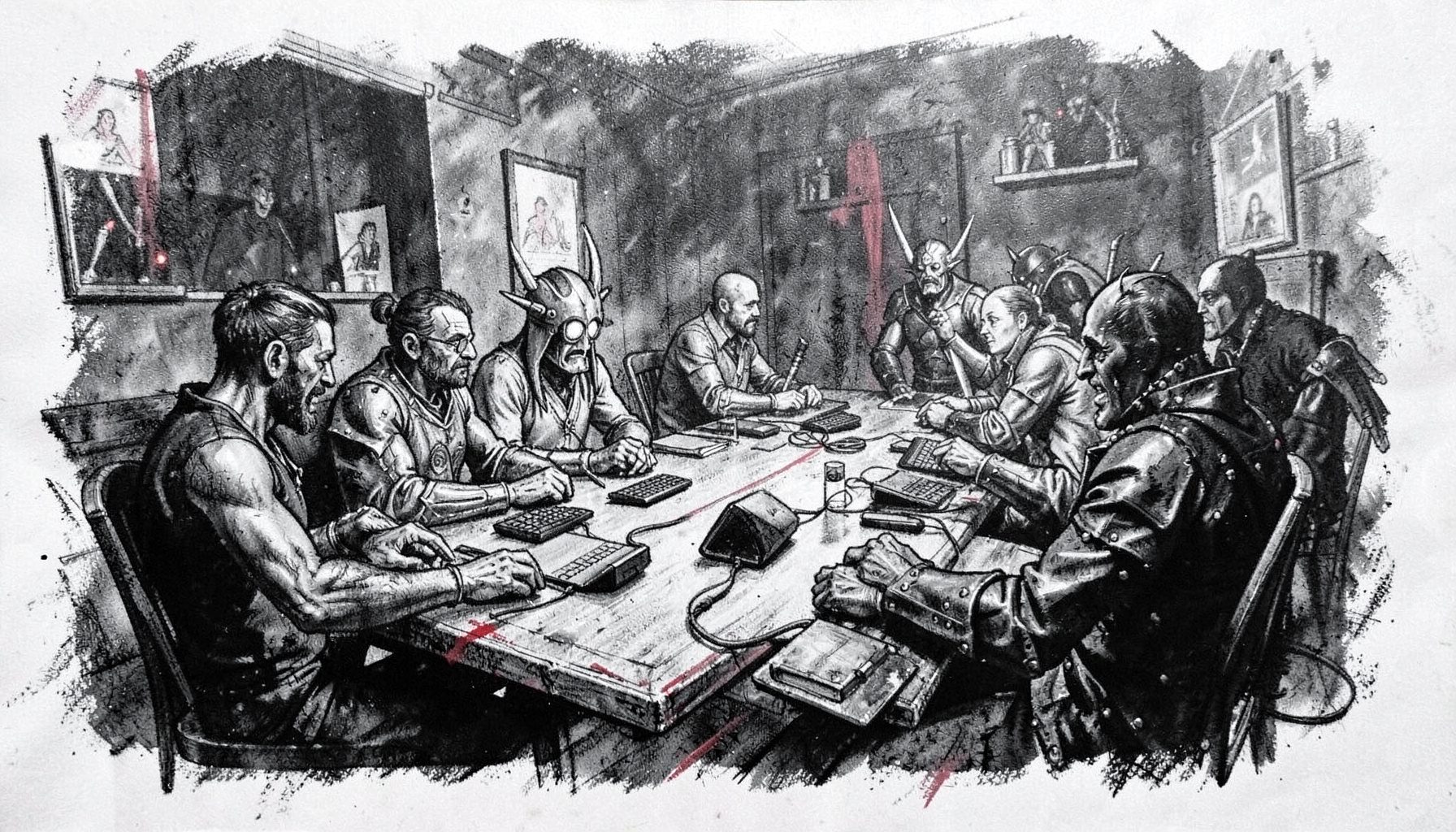
Give Your Character a Place in Collaborative Storytelling
A convention theme becomes meaningful when it changes what a character does at the table. Rather than treating the theme as artwork, branding, or a slogan on a programme, use it as a creative pressure. It can shape your character’s values, relationships, risks, and reasons for joining a shared story.
High Level Games Convention brought tabletop role-players, LARPers, designers, artists, publishers, and vendors together at the Showboat Hotel in Atlantic City in 2018. Its mix of workshops, panels, escape rooms, games, and immersive activities suggested a broad idea of play: everyone contributes to the fiction. Interpreting the HLGCon theme through your character means designing someone who makes that contribution visible.
Reading The Theme Through Character Choices
The most useful way to approach the theme is to translate it into behaviour. If the convention represents collaboration, inclusion, and adventurous storytelling, your character should have a reason to listen, offer help, share authority, or make room for an unexpected idea. These qualities should appear in decisions, not just in a paragraph of background.
A character who claims to value teamwork but constantly hides information may create conflict without supporting the table’s creative direction. That kind of tension can still work, provided it is intentional and playable. Give the character a pressure that gradually tests their assumptions: a former commander who must trust a novice, a solitary mage who needs a community, or a bounty hunter whose target knows how to save the town.
The HLGCon archive provides a useful sense of the event’s range, from tabletop games to LARP and creator-led activities. That variety matters when building a character. Your concept should be flexible enough to function in a tactical dungeon, a mystery scenario, a live-action scene, or a workshop-inspired improvisation.
Turning A Theme Into Personal Motivation
A theme becomes stronger when it is connected to a specific want. “I support the group” is a broad ideal; “I want to prove that people from my disgraced guild can be trusted” gives the ideal emotional weight. Personal motivation creates a reason for your character to engage with other players instead of waiting for the plot to provide direction.
Consider giving the character a goal that cannot be achieved alone. They might be looking for a lost sibling, rebuilding a travelling theatre, negotiating peace between rival magical schools, or collecting stories to preserve a threatened culture. Each objective creates openings for other characters to contribute, challenge the plan, or reinterpret its meaning.
Useful character prompts include:
- What does my character believe every person deserves?
- Which experience made cooperation difficult for them?
- What skill can they offer that another character needs?
- What kind of companion changes their usual approach?
- What would make them surrender control of a situation?
For an Australian player, local experience can add texture without turning the character into a stereotype. A ranger from a drought-stricken inland settlement, a dockworker from Fremantle, or a community organiser shaped by Melbourne’s neighbourhood culture can carry believable concerns about resources, belonging, and mutual aid. A Brisbane character might understand flood preparation as a communal responsibility, while an Adelaide-born trader could bring a practical knowledge of regional distances and supply lines.
Building Consent And Shared Spotlight
Inclusive play starts with character design that gives others room to respond. Avoid making your character the only person who understands the prophecy, owns the crucial artefact, or has a tragic history that eclipses the party. A compelling concept should open doors rather than close them.
Before play begins, decide which parts of the character are firm and which can be shaped by the group. You might know that your character fled a powerful institution, while leaving the institution’s name, enemies, and unresolved relationships open for collaboration. This creates useful material for a game master or fellow player without taking control of their ideas.
Shared spotlight can be built into the character’s abilities. A medic can stabilise another hero, a negotiator can invite a rival to speak, and a journalist can turn another player’s backstory into an important lead. These roles are active, not passive; they create scenes where another person gets to make a meaningful choice.
At an Australian convention or local game night, table customs vary between groups. Some players will be comfortable with intense drama, while others prefer a relaxed arvo of tactical play and jokes. Establish boundaries around horror, romance, violence, and character death before the session, then let those agreements guide how your concept behaves.
Making The Setting Respond
A character feels connected to a theme when the setting can push back against their values. If your hero believes every dispute can be solved through dialogue, place them in a situation where negotiation has a cost. If they champion freedom, ask what happens when an ally uses that freedom to cause harm. The character becomes interesting through the gap between principle and consequence.
Write three relationships into the concept: one person who benefits from the character’s beliefs, one person who distrusts them, and one person who needs them to change. These relationships can be brief prompts rather than complete non-player characters. Their purpose is to help the character enter play with immediate social momentum.
A live-action role-playing character needs especially clear external signals. Clothing, posture, props, repeated phrases, and visible loyalties can communicate a theme before the first conversation. A tabletop character can use the same principle through a recognisable ritual, such as recording everyone’s promises, offering a formal welcome to newcomers, or repairing a companion’s equipment after each battle.
For character concepts that move between media, build adaptable details. A silver badge might be a costume prop in LARP, a faction symbol on a tabletop sheet, and a clue in an escape-room scenario. This is especially useful in the Australian market, where players may move between dedicated RPG clubs, university societies, board-game cafés, and larger events such as PAX Aus.
Testing The Concept At The Table
A character idea is ready when it produces play within the first few minutes. Introduce a small decision that reveals a value: share the map, defend an unpopular witness, ask the quietest party member for advice, or refuse a reward that would compromise the group. Other players then have something concrete to accept, challenge, or transform.
Playtesting helps identify whether the concept creates opportunities or demands attention. The advice in this guide to finding playtest groups is relevant because a short trial can reveal whether your character’s motivation is clear, whether their abilities are useful, and whether their conflict is enjoyable for the whole table.
Use a compact test version before writing pages of history. Give the character a name, a role, one driving goal, one fear, two relationships, and a decision they are avoiding. Play that version for a single session. Afterward, keep the details that created interaction and discard anything that remained decorative.
A practical playtest checklist can include:
- Did the character offer another player a meaningful choice?
- Did their flaw create drama without blocking the scenario?
- Could the character contribute outside their specialist skill?
- Did the theme appear through action rather than explanation?
- Would the concept work with a different party or game system?
Carrying The Character Beyond The Convention
The strongest convention characters continue to evolve after the event. A shared story may begin in a scheduled session, develop through a LARP encounter, and gain new meaning when discussed with designers or fellow players. Treat each format as another lens on the same character rather than as a separate performance.
An immersive experience such as Pandaemonium shows how atmosphere and participation can shape a character’s interpretation. In that kind of environment, the character’s physical choices, reactions, and relationships matter as much as their written history. The lesson applies to ordinary tabletop play: a character’s theme is something the group experiences, not something the player explains once.
Keep a short record after each session. Note one belief that was tested, one relationship that changed, and one question the character now carries. This creates continuity while leaving room for collaborative storytelling. It also prevents the character from becoming fixed around the first draft.
Before your next game, write one sentence beginning with “My character makes the theme visible when…” and use that sentence to choose their first meaningful action.