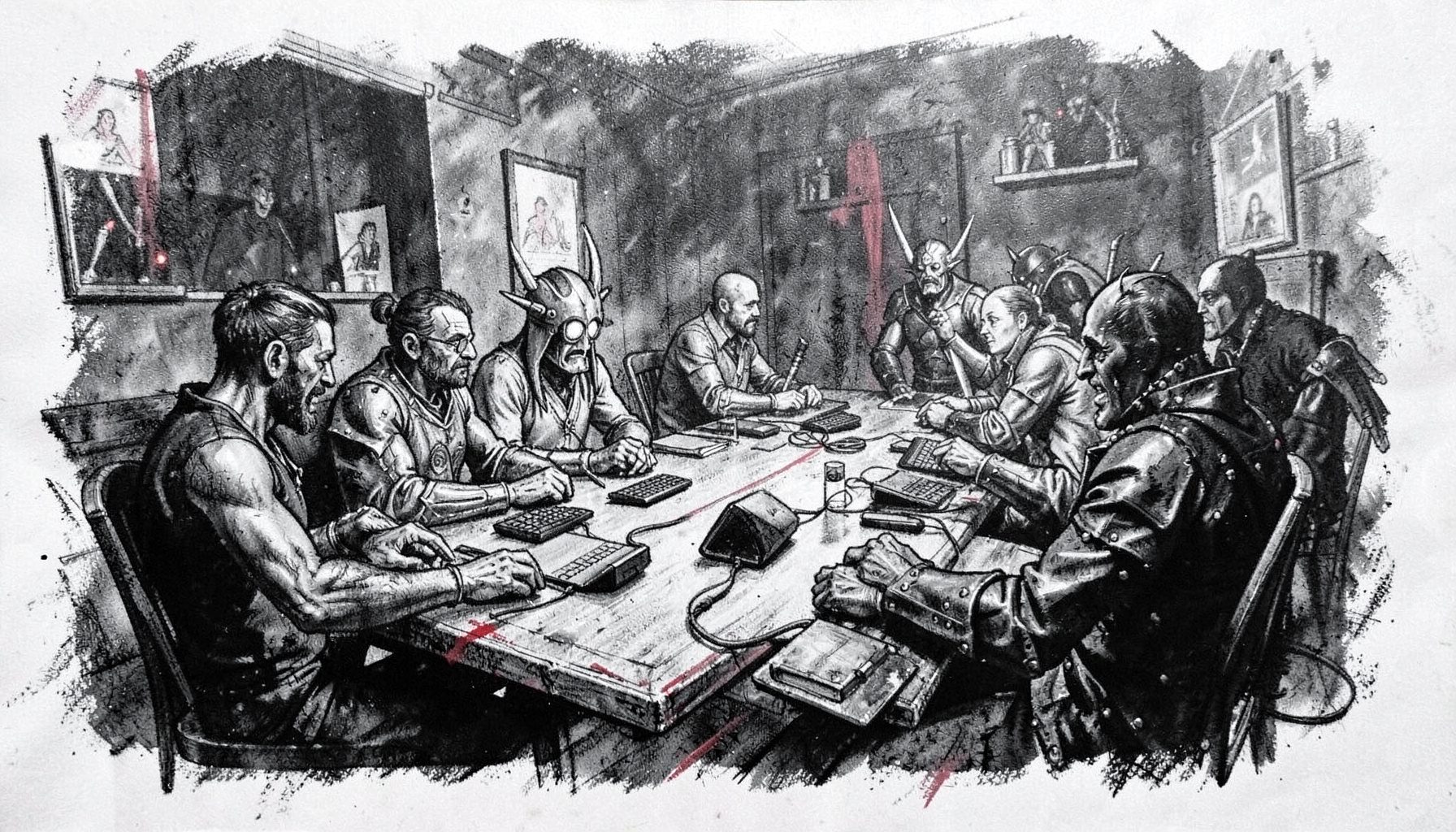
Handling player scheduling conflicts at a multi-day convention
Player scheduling conflicts at a multi-day convention rarely reflect a lack of commitment. They appear when a booked RPG session, work shift, flight, family obligation or appealing panel occupies the same hour as another activity. Resolving them does not require squeezing every possibility into the weekend. It requires deciding what is fixed, what can move, and what the group is willing to release.
The 2018 High Level Games Convention at the Showboat Hotel in Atlantic City, New Jersey, brought together tabletop role-players, live-action players, designers, artists, publishers and vendors. Its LARP experiences, gaming sessions, panels, workshops, exhibitor hall and escape rooms created plenty of reasons to rearrange plans. The convention’s emphasis on inclusive participation and collaborative storytelling made shared scheduling especially important: nobody should need to miss out simply to preserve a rigid timetable.
This matters for Australian groups attending an overseas event as well as those heading to a convention in Melbourne, Sydney or Brisbane. Australian Eastern Time and daylight-saving rules differ from Atlantic City’s Eastern Time, while flights across the date line can shift arrival by a day. A workable plan therefore starts with local realities, including shift rosters, public transport, school holidays and the familiar rhythm of meeting friends for a drink before a game.
Why convention schedules collide
Convention schedules collide because popular sessions, limited venues and facilitator availability create competing claims on the same people. A group can agree that every member attends the main campaign, then discover that one session requires six uninterrupted hours and another fits neatly into a break. The clash is structural, not a character flaw, so solving it through guilt or silent resentment only damages trust.
Start with a shared definition of a conflict. Two people wanting the same workshop is a preference clash; one person needing care, travel or paid work is a constraint. These require different responses. The first can be settled with rotation and first bookings. The second needs accommodation, even when it changes the group’s plan.
Map fixed and movable commitments
Before travel, list every plausible commitment and mark it firm, preferred or optional. Put the agreed choices into one calendar, then use a WhatsApp group for rapid decisions, Discord for campaign discussion and a written summary for anyone who wants a permanent record. Give people a clear deadline for confirming their top picks; otherwise important details remain buried in chat messages and no shared schedule emerges.
Book scarce or non-refundable activities first, and read the cancellation terms before paying. For purchases made in Australia, the Australian Consumer Law, contained in the Competition and Consumer Act 2010, regulates representations and contract terms, but it does not automatically produce a refund for every cancelled booking. NSW Fair Trading and Consumer Affairs Victoria provide state guidance when a local supplier’s policy is disputed.
Add realistic buffers for walking, queues, meals and public transport. Sydney’s Opal system, Melbourne’s Myki cards and Brisbane’s TransLink network each affect how tightly a session can sit beside a train or bus. Keep the phone charged, carry a power bank and pack any dice or accessories the venue does not supply. These small checks prevent ordinary travel friction from becoming a scheduling emergency.
Coordinate around genuine constraints
Talk with regular players before the convention rather than announcing a finished schedule. Share each person’s firm commitments, request two backup choices and establish what happens if a booking falls through. Someone may need to arrive late because of a delayed flight or leave early for work. Making that possibility explicit lets the facilitator adapt the session instead of treating every change as a broken promise.
Build continuity into games that can survive an absence. A facilitator can prepare a substitute character, divide a scenario into short scenes, keep an accessible recap, or let a newcomer observe a key exchange before joining. For an essential mystery, rotate the role that can be handled by a spare player. A robust plan still gives the regular group time together without making absent members feel excluded.
Respond when plans change
Keep one reliable copy of the programme on paper and use the convention’s official channels for changes. When schedules move, ask volunteers where updates appear and check whether rooms have shifted. Avoid relying on mobile reception alone: crowded halls and busy hotel networks can make a digital-only plan unusable at the exact moment it matters.
Give every fixed booking a nearby alternative. The convention’s escape-room challenge shows how a different format can preserve a shared team experience when an RPG session cannot proceed. Similar alternatives might be a panel, a workshop, a shorter game or a quiet meet-up, depending on the published programme.
Australian habits help here. A protected afternoon tea break, a short walk between events or a pub meeting can absorb delays without forcing another commitment. Australian conventions commonly mix EFTPOS, contactless cards and cash among their vendors, so carry Australian dollars and a card rather than assuming every stall accepts the same method.
Match formats to available time
Choose the format after checking its actual duration and participation requirements. A one-shot adventure can suit a free afternoon, a live-action event may demand a fixed block, and a continuing campaign may need the same players from beginning to end. Ask the facilitator about breaks, experience expectations and whether late arrivals can join safely rather than guessing from the session title.
Players who are moving into tabletop roleplaying can benefit from simple rules explanations and welcoming groups, but short formats still have limits. A new player may enjoy a beginner-friendly game yet find a six-hour political campaign unsuitable. Select sessions whose pace matches the available time, not merely the fantasy advertised in the listing.
Compare approaches before committing
The right approach depends on group size and how much continuity each campaign needs. Solo travellers often benefit from flexible daily plans, while regular parties protect shared continuity with an anchor session. Hybrid groups need both: one dependable meeting point plus enough open space for optional events.
Compare the options on time cost, fairness and resilience to change. Equal attendance at every session is not the goal; equal respect for genuine constraints is.
| Approach | Best for | Scheduling cost | Main limitation |
|---|---|---|---|
| Shared campaign | Regular groups seeking continuity | High: requires a protected block and coordinated attendance | Late arrivals may miss essential context |
| Rotating one-shots | Groups with different availability | Low: each session stands alone | Less narrative continuity and shared progression |
| Anchor plus free time | Mixed groups and solo travellers | Medium: one commitment with flexible options around it | The group must agree on a fixed anchor |
| Drop-in or observer role | New players and occasional attendees | Low: useful when a spare seat or role is available | Important plot details may be unavailable |
Use the comparison as a negotiation aid. If the party values continuity, protect the campaign and accept fewer extras. If its members have incompatible rosters, rotate shorter games and maintain a shared chat for recaps. Flexibility should be designed, not left as a last-minute emergency.
Build a plan that leaves room to change
Before leaving home, turn priorities into decisions and put them into each person’s calendar. Include travel buffers, set a cutoff for changes and keep confirmations available offline. Bring chargers, any required dice and enough money for incidental purchases.
- Agree on firm and flexible commitments as soon as the programme is available.
- Protect one shared anchor for regular groups, then add optional events around it.
- Prepare a second-choice activity for every booking that could move on site.
- Keep a paper schedule and booking details in case phones or venue Wi-Fi fail.
- Leave an open block for rest, arrivals, spontaneous games and meals.
A useful plan is measured by trust, not by how many sessions appear in a photograph. When everyone knows which commitment the group is protecting and understands that the others can change without blame, the weekend stays collaborative.
The lasting lesson is that scheduling works best when priorities are clear, changes are communicated honestly, and the convention remains an experience to share rather than a contest for scarce hours.