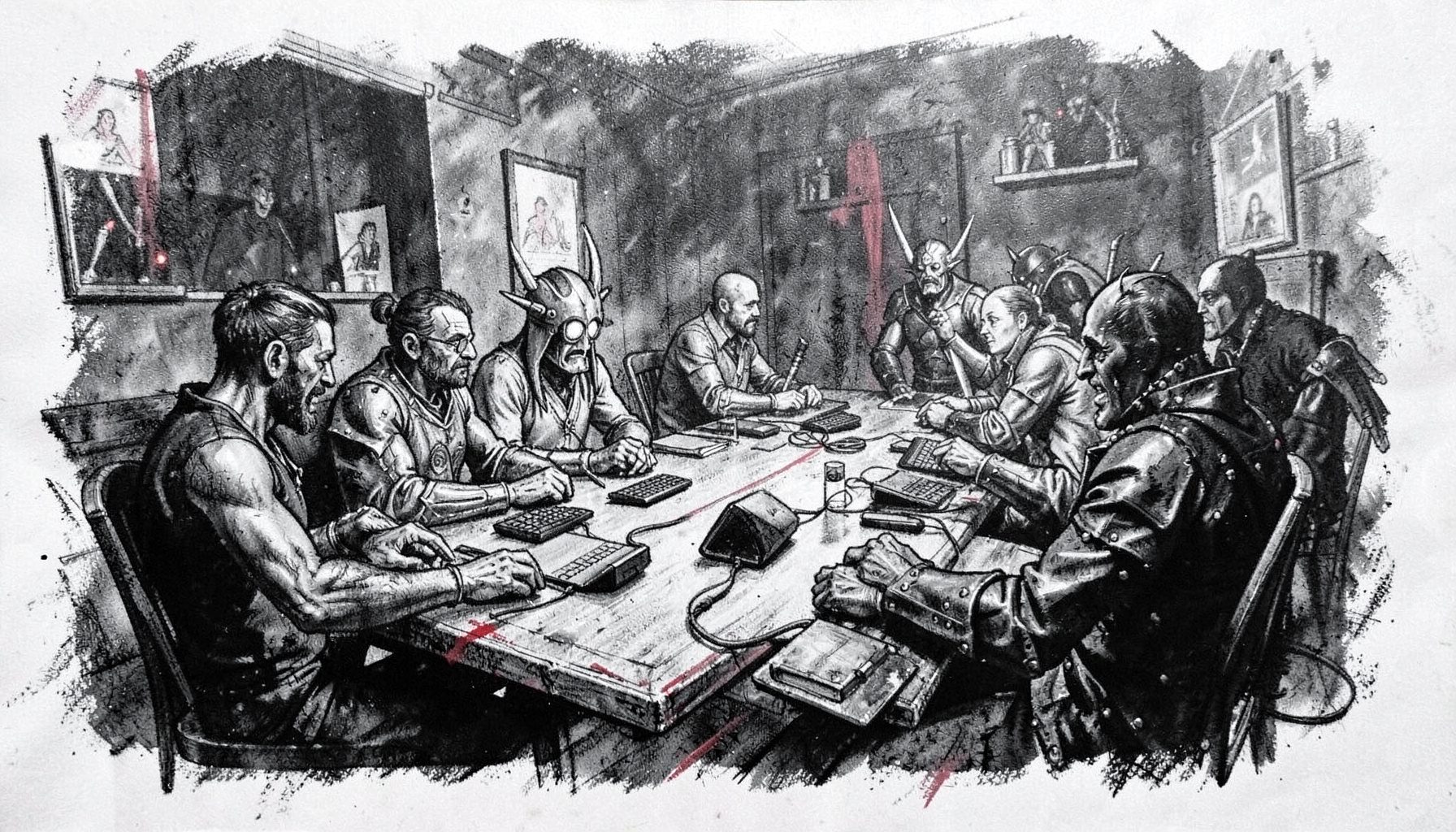
Choosing a TTRPG System for Your Con Game
Choosing the right TTRPG system for a con game is less about finding a mechanically flawless title than building a table where strangers can begin quickly, make meaningful choices, and leave with a shared story. The 2018 High Level Games Convention at the Showboat Hotel in Atlantic City, New Jersey, offered a useful model: LARP experiences, tabletop sessions, panels, workshops, an exhibitor hall and escape rooms all sat under one roof. The best system choice supports that spirit of accessible participation rather than demanding that every player already know the rules.
Conventions reward choices that work under real constraints: a fixed session slot, a mixed group of experience levels, a busy venue and a facilitator who may be running several tables in one day. Australian groups face familiar versions of those pressures, from flights between Melbourne, Sydney, Brisbane or Adelaide to community halls and licensed pubs booked around local liquor laws. A sensible process starts with the event format, compares it with player preferences and genre, then tests the strongest option with people who did not help design it.
Start with the table, not the rulebook
The varied programme documented by High Level Games Convention demonstrates why a con game cannot be judged only by its rules. A tabletop role-playing game may appeal to committed genre fans, casual players looking for a creative activity, or groups hoping to roleplay together without committing to a long campaign. Those audiences need different games, even when the preferred genre is the same.
Define the intended experience before comparing titles. A rules-light social game should create plenty of character interaction, while a tactical system can work when players enjoy resource decisions and competitive challenges. A campaign game needs time for recurring relationships, whereas a one-shot needs a self-contained arc with a satisfying endpoint. Choosing between these formats prevents a con organiser from advertising the wrong kind of session.
Then estimate the learning curve. A game with extensive character creation, layered combat and specialist roles may excel at a regular gaming table but frustrate strangers in a two-hour convention slot. Look for short setup procedures, clear references and optional depth. The facilitator should be able to explain the central choice quickly, pause for character creation and still leave enough time for the players to make decisions that affect the story.
Match the system to the con schedule
Most convention sessions have a predictable limit of two to four hours, including arrival, briefing, short breaks and final wrap-up. Build the advertised runtime around active play rather than the publisher’s suggested session length. A complex game might need a shorter scenario, fewer tactical encounters and pre-generated characters to make full use of the available time.
Onboarding matters just as much as duration. New players should understand their character’s capabilities, the central objective and the dice they may use without reading a full rulebook during the session. A recognisable genre can help, but familiar themes do not compensate for unclear procedures. Check whether the first ten minutes can be handled with a one-page quick-start guide, and appoint an experienced player to support novices at the table.
The convention’s immersive activities provide another useful parallel. As the escape room design lessons from the HLGCon immersive team explain, a strong event activity establishes its rules, creates momentum and makes each contribution feel meaningful. A TTRPG can borrow that clarity without becoming an escape room with dice. Give players a clear goal, establish the stakes early and make sure every mechanic supports the narrative.
Account for Australian players and venues
Australian convention communities stretch across capital-city events in Sydney and Melbourne, growing scenes in Brisbane and Adelaide, and regional gatherings connected by long travel distances. Organisers in Perth and other western markets may also contend with different time zones and fewer regular facilitators. These conditions favour games that can be prepared digitally, explained without specialist equipment and completed within a single booked block.
Table talk in Australian gaming spaces is often relaxed and good-humoured. A “no worries” acknowledgement can defuse minor friction, while “good on ya” after a clever play is a friendly form of recognition. Facilitators can welcome that banter without making conversation the main measure of participation. Quiet players need equally visible ways to contribute, and a rules-light system should not rely on one confident performer to direct the scene.
Venue choice also affects system selection. Australian conventions may use convention hotels, community halls, libraries or licensed pubs, with noise levels and quiet times governed by state and territory requirements. A loud, combat-heavy game may need a larger room, while an intimate mystery session may work better in a quiet corner. Check liquor licensing, accessibility, bathroom access and power availability before committing to a rules set that requires extensive props or constant movement.
The local market deserves similar attention. Australian prices are generally quoted in Australian dollars and include GST, while imported rulebooks can carry extra freight and distribution costs. Local hobby shops and online stores may stock a system months after overseas release, or offer a familiar title at a lower price. Compare the complete purchase cost for copies, dice, adventure books and player aids rather than relying on the cover price alone.
Compare systems with a con-ready checklist
The first pass should assess the experience rather than the manual. Each system needs to survive a short public demonstration and deliver a complete encounter without relying on a regular group’s shared history.
- Player fit: Choose a game whose challenge and tone suit the advertised audience, whether that is tactical roleplaying, narrative roleplay, comedy or horror.
- Onboarding: Confirm that a newcomer can create a character, understand the basic procedure and begin contributing within ten minutes of sitting down.
- Session shape: Match the scenario’s objectives, escalation and ending to the advertised slot, including enough time for breaks and a final resolution.
- Setting clarity: Give players a common starting point, such as a familiar genre, a concise location and a visible threat, without requiring extensive lore.
- Inclusive play: Include clear consent tools, readable rules, adaptable mechanics and ways for players with different physical, sensory or communication needs to participate.
The second pass should cover the practical demands of running the table. A strong choice on paper can still fail if the organiser cannot support it on the day.
- Facilitator readiness: Select a system the game master can teach quickly, adjudicate consistently and explain without relying on obscure rules or personal knowledge.
- Venue suitability: Test movement, noise, lighting, seating and sightlines, and ensure the chosen rules do not require more space than the venue provides.
- Materials and setup: Count books, dice, character sheets, reference cards, tokens and any props, then prepare a backup for missing or damaged equipment.
- Scheduling resilience: Build in time for late arrivals and overrun, and identify a simplified encounter if the group completes the scenario too quickly.
- Budget and access: Compare the total cost of admission, materials and rewards with the likely attendance, while checking that essential rules are available in digital or shared-reference formats.
A con-ready system should also offer graceful scaling. Check whether the scenario works with four players as well as six, whether specialists remain useful at a small table and whether newcomers can join without changing the central objective. These details reduce the risk of a technically playable game becoming awkward in practice.
Test the table before the convention
Run the leading candidate at a local games store, community hall or home session with players who did not choose the game. Ask them to read the quick-start instructions in the same way they would at a convention, while the facilitator follows the planned pitch. This exposes confusing terminology, slow character creation and rules that only make sense when the game master already knows them.
Use the full planned scenario rather than a polished demonstration. Include the actual session length, short breaks and a final wrap-up. Note where players hesitate, which questions require repeated explanations and whether the facilitator reaches for unpublished rules. A companion can watch the session and record moments when the game depends too heavily on one participant.
After the trial, retain the system only if players can explain the objective, their character’s role and the main choices they made. Remove any setup step that added delay without adding flavour, then revise the scenario around the strongest part of the game. Before the next planning meeting, create a one-page con game brief listing the chosen system, target group, runtime, safety tools, required props, venue and facilitator, and place it in the group’s shared convention folder.