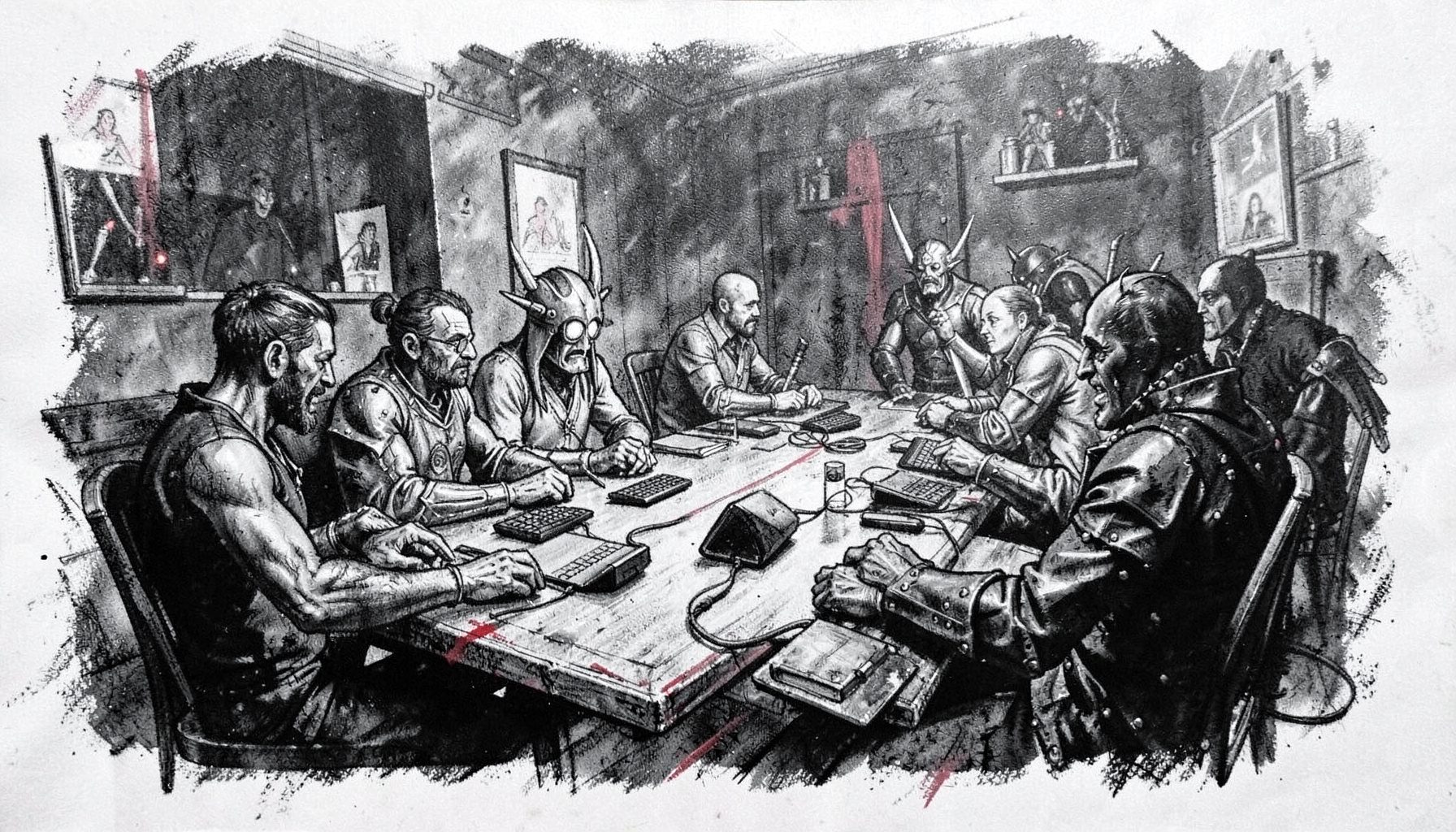
How to end a convention one-shot on a satisfying note
A convention one-shot has a peculiar burden: players arrive expecting a complete experience, yet the clock, venue programme and shared excitement pull everyone toward departure. A satisfying finale therefore cannot be an improvised “we stop here” announcement. It needs a deliberate emotional beat that honours the characters’ choices, gives the table or stage a clear sense of completion, and leaves participants feeling that their time produced something worth carrying home.
That matters across every format represented at a modern convention: a single dungeon crawl, a one-page LARP, a tactical skirmish or a timed escape room. The mechanics may differ, but the audience still needs a promise, a payoff and a boundary. Good closing design is not extra decoration; it is part of the game design, shaped with the same care as encounters, props, rules and character goals.
For Australian organisers and players, those principles must fit familiar surroundings. Conventions compete for weekends in Sydney, Melbourne, Brisbane and Adelaide, while many attendees rely on trains, trams, cars or shared rides rather than late-night walking. Vendors operate in a market shaped by independent game shops, community conventions and consumer prices that include GST. Clear signage, considerate volume levels, safe travel information and dependable schedules can make a finale feel generous as well as emotionally complete.
Give the ending a clear job
Before play begins, decide what the ending should accomplish. It may resolve the central threat, confirm a hard-won change, or deliberately open a future door while still closing the present story. Write that purpose as a single sentence known to the game master or facilitator. This becomes the standard for every late choice: an action belongs in the finale if it pays off the promised arc, reveals a consequence, or gives the group a moment of collective recognition.
The 2018 High Level Games Convention at the Showboat Hotel in Atlantic City offered a useful reference point. Its mix of LARP experiences, tabletop sessions, panels, workshops, an exhibitor hall and escape rooms showed how many kinds of stories can share one weekend. The High Level Games Convention archive can help organisers recall that breadth, but the practical lesson is narrower: whatever the format, the final beat should complete the promise made when players committed to it.
Give every character a final turn
Group finales often fail when one narrator compresses six character arcs into a generic victory speech. Give each player one bounded final contribution: answer a question, accept a consequence, surrender an object or make a promise. A minute per character is enough if the prompts are precise. These turns let participants feel authorship rather than spectatorship, and they prevent the loudest player from deciding what everyone’s story means.
Set a shared final image after the individual turns, not before. The image might be a station reopening at dawn, a message arriving after the credits, or a character walking away without looking back. If the ending depends on a clue planted hours earlier, repeat it once without explaining it to death. Shared recognition—rather than a lecture—creates the satisfaction players remember.
Make the last five minutes feel designed
Treat the final five minutes as a miniature performance. Lower the practical intensity, stage a sensory cue and use a short verbal ritual that everyone can understand. A fading playlist works; so does a changed light, a sealed envelope, a final score displayed on screen, or the facilitator asking the group to name one choice they will carry forward. Choose one or two signals so the finish feels deliberate rather than cluttered.
Immersive play makes this choreography especially valuable because players invest in cues that seem meaningful inside the fiction. The account of why LARP feels real explores the psychology behind that feeling, including how participation, context and believable responses deepen engagement. A clean final cue uses the same mechanism in reverse: it tells the group, through action and atmosphere, that the story is closing and that the shared effort mattered.
Build an exit that fits Australian convention life
A strong ending can be spoiled by a rushed handover to the next activity. Put a ten-minute buffer between the last roll and the next room change, then announce when doors will open, where players should leave props, and whether photos may be taken. In a city venue, include practical directions to the nearest tram or train platform, taxi rank or car park. Melbourne’s late service gaps and Sydney’s bus and rail timetables make precise information kinder than a vague “the event is now over.”
Assign one person to control the room, another to handle questions and another to watch the doorway. Independent game shops, local designers and volunteer-run groups often supply staff at Australian conventions, so a simple radio channel and a printed handover sheet can prevent confusion without expensive technology. Keep the last announcement audible but brief: thank the group, name the final action, give the exit time, and mention any last transport or venue notice.
Keep the closing safe, lawful and workable
Safety belongs in the closing sequence. Before the session, identify who will end role-play combat, remove theatrical weapons and check props for hazards. Under state and territory work health and safety laws, organisers may need a risk assessment for climbing equipment, laser effects, physical contact or strobe lighting. Tell participants before they pay how effects will work, offer a non-participatory option where possible, and appoint a first aider who has access to the emergency plan.
Consumer and age rules matter just as much. Australian Classification Board labels apply to many games and interactive products, but an LARP or escape-room performance may need its own age guidance rather than an automatic classification. Keep those distinctions clear. Ticket and cancellation terms should also comply with the Australian Consumer Law, including how refunds or transfers are handled. Publish the policy, keep records of consent for photography, and let the finale celebrate the story without creating a legal or physical mess.
Credit the story and the people behind it
An inclusive convention closes by making contribution visible. Credit player choices without turning them into a public popularity contest, acknowledge facilitators and volunteers, and thank local game shops, artists, publishers, vendors and first-aiders. Invite feedback through a short form that asks about clarity, pacing and emotional payoff rather than merely “Did you enjoy it?” Responses can reveal whether the ending landed or merely made noise.
That recognition supports the wider Australian market, where many creators sell through small publishers, conventions and specialist shops rather than one dominant retail channel. A strong finale can encourage repeat attendance, but it should do so by honouring the people who supplied the table, costume, artwork or equipment. A published photo after the session—with clear consent—and a list of community resources gives participants a useful bridge from one room to the next.
End on one concrete next step
Before players arrive, decide what physical object or action will mark the close. It could be a brass bell, a dimmed lamp, a sealed character card or a final line read aloud by the facilitator. Rehearse it, assign ownership and include it in the run sheet. After the final beat, allow a brief quiet breath before applause so the emotional landing is not swallowed by immediate noise.
Collect the room only after that beat has landed. Give players a final chance to record a private character note, return loaned props, take a group photo and hear the departure details. Then the convention can end with purpose rather than simply stop. The concrete next step is to place one instruction at the top of the run sheet: “At the agreed signal, deliver the final line, dim the lights, and release players to the foyer.”