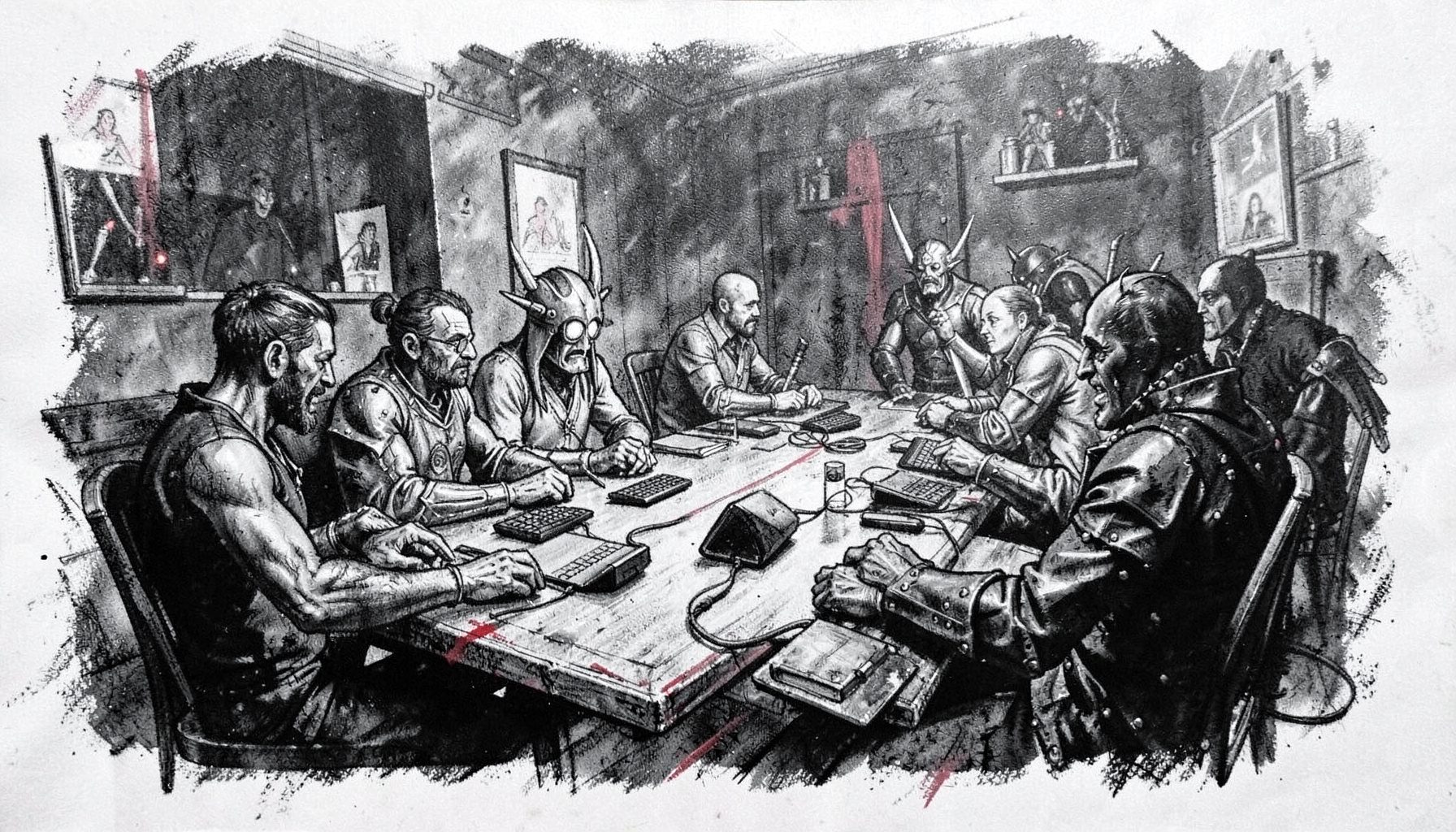
The psychology of immersion: why LARP feels so real
Live-action role-playing pulls players out of their everyday heads and into bodies that sweat, breathe, and react. The pull is strong enough that a person holding a foam sword can feel genuine fear when an opponent charges, even while knowing the fight is choreographed. Events like High Level Games Convention, held at the Showboat Hotel in Atlantic City in 2018, built entire weekends around that strange alchemy. Players arrived as accountants, teachers, and tradies from places like Sydney and Perth, and by Saturday afternoon they were speaking in character accents, sleeping in tent cities, and making decisions their normal selves would never consider.
The convention's mix of LARP, tabletop, escape rooms, and panels suggested something its organisers understood well: immersion is not a single switch but a layered experience. Sound, costume, social expectation, narrative stakes, and physical exertion all combine to make a fictional moment feel consequential. Researchers have been picking apart that combination for decades, and the answers reach into neuroscience, social psychology, and the simple mechanics of human attention.
For Australian players especially, LARP offers a particular kind of release. The country has a strong tradition of live role-playing through groups like the Alliance LARP community, the Lorian system, and countless smaller groups that run weekend events in state forests outside Melbourne or on farmland west of Brisbane. Many of these players travel hours to attend, swapping the routines of suburban life for something that feels, for a few days, more vivid than ordinary reality.
The brain on pretend
Neuroscientists who study imagination have found that the brain handles fictional scenarios using many of the same circuits it uses for real perception and real action. When a player visualises a wizard chanting a spell, the language and visual centres light up alongside motor-planning regions, as if the body were actually preparing to cast. This overlap is one reason LARP lands so hard: the brain does not fully separate imagined action from intended action, especially when the body is moving, speaking, and reacting in real time.
Dopamine plays a quiet role in this process. When players take a risk in character, complete a quest, or land a clever line of dialogue, the brain rewards them with the same neurochemical rush that comes from real achievement. LARP designers have learned to space these rewards throughout an event, much like a designer at a Good Games meetup might pace a campaign, so that players stay engaged without burning out before the climactic battle.
The body reinforces the mind. Heart rate increases during a tense scene, hands shake before a duel, and laughter bubbles up at unexpected moments. These physical signals feed back into the brain, telling it that what is happening matters. A player lying on the grass after a staged death genuinely feels the loss, because the body has provided the data the brain uses to judge significance.
Identity, costume, and the willing self
Putting on a costume is more than dressing up. It is a deliberate act of self-editing, a way of telling the brain, for the next four hours, that the rules have changed. Studies on enclothed cognition show that what people wear influences how they think and behave, and LARP players lean into this hard. A shy player wrapped in a wizard's robes becomes more willing to speak with strangers; a frustrated office worker wearing armour finds permission to be braver than usual.
Names matter too. Adopting a new name for the weekend creates a small psychological distance from everyday identity, which paradoxically makes it easier to be present. A player known as Jess in her accounting job in Adelaide can become Captain Veska for a weekend, and Captain Veska is allowed to make choices that Jess would second-guess. This is rehearsal, play, and a form of training for the social self, not deception.
Conventions support this by providing space for transformation. Dressing rooms, costume contests, and prop workshops at the High Level Games Convention were entry points, not just logistics. By the time a player stepped into a LARP scenario, the costume, the name, and the agreed-upon rules of the world had already done half the immersion work for them. The event's policies page acknowledged this by emphasising consent and character respect, recognising that immersion only works when players feel safe enough to let go.
Sensation, space, and shared reality
LARP designers borrow from theatre, film, and game design to construct what psychologists call a frame: a shared understanding that what is happening inside the frame is meaningful, and what is outside is not. Foam weapons, lighting, music, and carefully described settings all help draw that frame. A dimly lit basement in Hobart or a converted warehouse in Fremantle can become a dungeon, a throne room, or a starship bridge, because the players have agreed to treat it as one.
Sensory cues do the heavy lifting. The weight of a real weapon (foam or otherwise) in the hand, the smell of woodsmoke at a bush LARP outside Canberra, the sound of rain on a canvas tent, the taste of in-character rations shared around a campfire: each one anchors the mind in the fictional present. Designers who understand this build sensory variety into their events, alternating loud combat scenes with quiet role-playing moments so the nervous system can reset without losing the thread.
Some of the most effective sensory anchors used by experienced Australian designers include:
- Live sound effects or music that responds to scene changes and time of day
- Physical props that match the setting, such as real books, real coins, and convincing replica weapons
- Lighting shifts that signal mood, including torches, lanterns, and coloured gels
- Food and drink served in-character, because a clay pot of tea feels different from a paper cup
- Weather and temperature, where an outdoor game near Perth that actually faces a cold front becomes instantly more real
Shared reality is the other half of immersion. When ten strangers agree that the man in the green cloak is their enemy, that agreement becomes its own kind of truth. This is why LARP communities across the country often feel tight-knit: the shared frame, once established, becomes a bond. Newcomers sometimes struggle with the leap, and experienced players regularly share advice for first-timers about how to drop into character without overthinking the social risk.
The social brain on stage
Humans are wired to read faces, voices, and body language, and LARP turns that wiring up to maximum. Every glance, every hesitation, every nervous laugh is data the player uses to navigate the scene. This is part of why LARP can feel more real than a video game: the other actors are genuinely unpredictable, their emotions genuine, and their responses unscripted.
Mirror neurons and emotional contagion do the rest. When a fellow player looks terrified, the observer's brain begins to feel that fear. When a dramatic reveal lands, the room collectively holds its breath. LARP exploits this by creating moments that require genuine emotional response, such as a betrayal, a sacrifice, or a confession. The best designers know that the story does not live in their script; it lives in the players' reactions to it.
This is also why safety tools matter. A system of check-ins, "X cards," or out-of-character signals gives players a way to step outside the frame when needed. Without those tools, immersion can tip into harm. With them, players can take emotional risks knowing they have an exit. The social contract of the LARP community, formalised in conventions and game systems alike, is what allows the rest of the psychological machinery to run safely.
Carrying the magic home
Players often describe a post-event dip, a kind of melancholy when the weekend ends and ordinary life resumes. Psychologists call this re-entry, and it is common in any intense immersive experience, from theatre actors to returning soldiers. Giving the experience a soft landing, such as a debrief meal, shared photos, or a group playlist, helps the brain integrate the story into long-term memory.
For Australian players looking to extend the feeling between events, a few habits help keep the craft alive:
- Keep a character journal, with a few minutes each week writing in the character's voice
- Meet up for in-character dinners, since many groups in Melbourne, Brisbane, and Sydney run casual feasts where players stay in persona
- Photograph the costume, not just the character, because visual reminders anchor the memory
- Run a one-shot scenario between campaigns to keep the improvisational skills sharp
- Volunteer at local game stores like Mind Games or Mighty Ape to stay connected to the wider tabletop community
The deeper lesson of events like High Level Games Convention is that immersion is a craft rather than magic. It is built from attention, safety, sensory design, and the willingness of strangers to believe in the same story for a little while. When the craft is done well, players leave feeling more awake, more connected, and a little more in love with the strange capacity humans have to make-believe together. Anyone curious about future gatherings can find details on the High Level Games Convention website and start planning their own weekend of pretending, in the most serious sense of the word.