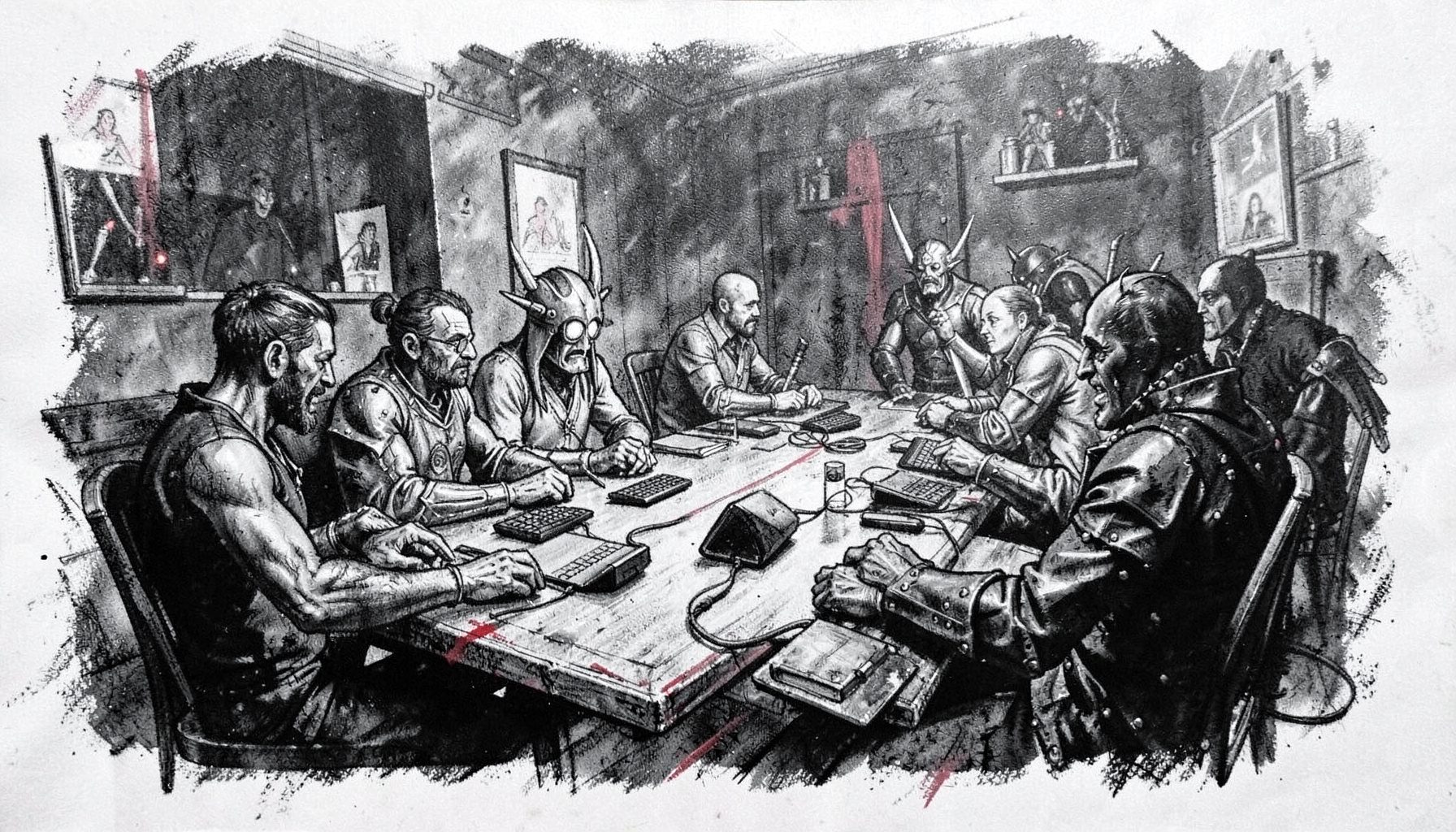
What game designers learned from watching attendees play
At High Level Games Convention 2018, the Showboat Hotel in Atlantic City gave game designers an unusually useful live test. Alongside tabletop RPG sessions, live-action role-play, panels, workshops, an exhibitor hall and escape rooms, attendees made assumptions designers had only theorised. The revealing material was ordinary play: the quick workaround, the whispered negotiation, the player who volunteered before anyone understood the stakes.
Watching attendees play showed that elegance on a designer’s screen can become confusion around a table. A rule that seemed optional became essential; a prop designed as scenery became a bargaining chip; a scenario gained momentum when participants argued with its intended antagonist. The convention’s emphasis on inclusive participation made these deviations valuable rather than disposable.
For designers working in Australia, the lessons travel well but should not be copied unchanged. Local venues, travel patterns, social habits and market conditions affect how people arrive, listen and commit. The practical response is to use conventions as observation sessions: watch behaviour, identify the mechanism behind it, then prototype a small change rather than redesigning the whole game.
Play exposed the gap between intention and use
The first design lesson was to compare the intended use of a mechanic with its actual use. A facilitator’s brief, a player’s shortcut and a character’s priorities often pointed in different directions. That mismatch exposed assumptions about who would lead, how much guidance groups wanted and when a challenge felt fair.
| Design intention | What watching attendees revealed | Design response |
|---|---|---|
| The scenario will explain its stakes | Players ask what success means before acting | Show one clear goal and three possible consequences |
| Rules will be consulted | Players ask the facilitator instead | Put the essential rule where action happens |
| Equal roles will emerge | Experienced players organise the group | Rotate setup, narration and note-taking |
| A fixed time limit will create tension | Discussion consumes the final round | Use visible decision checkpoints |
| Props will improve immersion | Players use them to bargain and remember | Give each prop a readable function |
This pattern made playtesting less about declaring a mechanic successful and more about tracing the sequence around it. If confident players carried the setup, new players waited; if the objective was buried, role-play began before anyone knew the goal; if choices were too narrow, negotiation happened outside the rules. Each sequence suggested a specific revision.
Rules needed room for improvisation
Players rarely treated a scenario as a script to obey. They asked for missing information, changed character motivations and negotiated what their characters would tolerate. That did not mean every rule should be vague. It meant designers needed a clear procedure for changing details without turning every disagreement into an appeal to authority.
At HLGCon, the no-spoilers style guide offered a useful model for protecting secrets while still allowing curiosity. Extending that idea, safety tools should distinguish spoiler boundaries, consent checks and ways to leave an intense scene. The facilitator needs language that lets someone opt out without explaining a private history to the group.
In Australian playtests, direct questions and dry humour were common, though preferences varied between individuals and groups. A player might challenge a ruling bluntly while another preferred a softer request. Good facilitation normalised both styles: state what is fixed, ask whether anyone objects, record a change, and never treat the fastest voice as the room’s agreement.
Story gained power when players could redirect it
Across the convention’s tabletop and live-action activities, attendees supplied motives that designers had not written. A courier protected a sibling instead of completing an objective; rival factions found a shared enemy; an investigator suspected another player because the story invited it. The plot remained playable because the rules allowed motives to alter methods, not erase consequences.
The experience of building a multi-faction LARP made the central lesson especially clear: a scenario gains depth when each faction knows some truth and misreads the rest. Information asymmetry created suspicion, bargaining and genuine choices. It also left facilitators responsible for tracking promises, injuries and alliances so improvisation did not become administrative fog.
Designers could support this without surrendering authorship by preparing branching consequences, character hooks and recovery points. A missing clue could alter the route rather than halt play. A broken promise could impose a cost while preserving the relationship. The scenario became a framework for negotiated storytelling, and the facilitator became a custodian of continuity rather than the sole author of outcomes.
Physical play carried rules that speech could not
The escape rooms and live-action elements at the Showboat showed how objects compress explanation. Attendees handled tokens, maps and costume pieces before reading much of the briefing. Those interactions revealed affordances: what could be carried, what could be seen by another group, and whether a clue required decoding or merely looking official.
A useful prop had a clear job in the fiction, a visible consequence in play and a simple action for a first-time player. A ceremonial dagger that could be picked up, handed over or hidden became dramatic without a new rule paragraph. Designers also learned to reserve physical detail for high-sensory spaces, provide seated roles and keep a quiet route through an active scene.
Australian contexts rewrote the playtest assumptions
Melbourne’s laneway board-game cafés and bars showed how much social mixing can happen before a game begins. Attendees might arrive solo, join a table after hearing one explanation and stay for several games. Designers testing in that setting could not assume that a silent player had disengaged; it might simply be a preference for observing the group’s social rhythm first.
Brisbane’s warmer climate made the physical environment impossible to ignore. Outdoor queues, humid changeovers and crowded breaks altered pacing and shortened attention. Air-conditioned early sessions, water, shaded waiting areas and short reset periods helped groups arrive ready to play rather than spend their energy recovering from the venue.
Sydney’s coastal spread and long rail or ferry journeys produced another pattern: players often arrived tired or late, yet still wanted a meaningful role. A delayed participant could be given a bounded task, a clue to interpret or a decision to influence without resetting the entire group. Flexible joining points protected inclusion better than rigid turn order.
The Australian market also rewards different launch habits. Many community clubs and conventions are volunteer-run, while small publishers rely on preorders, crowdfunding and local distributors to manage Australian-dollar pricing, GST and freight on imported editions. A prototype that assumes a large launch team or instant retail access may work brilliantly at the table but fail commercially.
A feedback loop designers could reuse
The lessons became durable when designers turned them into a repeatable observation practice. Instead of asking whether attendees had fun, they recorded specific moments: where a rule required explanation, where a player created a goal, where somebody withdrew, and where a tool changed the emotional temperature. Each observation pointed to a testable design choice.
- Map the first five minutes, noting who reads, asks, organises and speaks first.
- Test with unfamiliar groups, because confident facilitators can hide onboarding gaps.
- Separate fixed and flexible elements so improvisation has clear edges.
- Offer meaningful choices that alter tactics without removing group authorship.
- Build an opt-out path that protects consent without public debate.
- Debrief while memories are fresh, then change one variable before testing again.
The practical takeaway is a simple research cycle: observe the handoffs, protect the group’s attention, and change the one obstacle that repeatedly blocks participation. A rule becomes usable when people can understand it, negotiate it and still recognise the story it was meant to support.