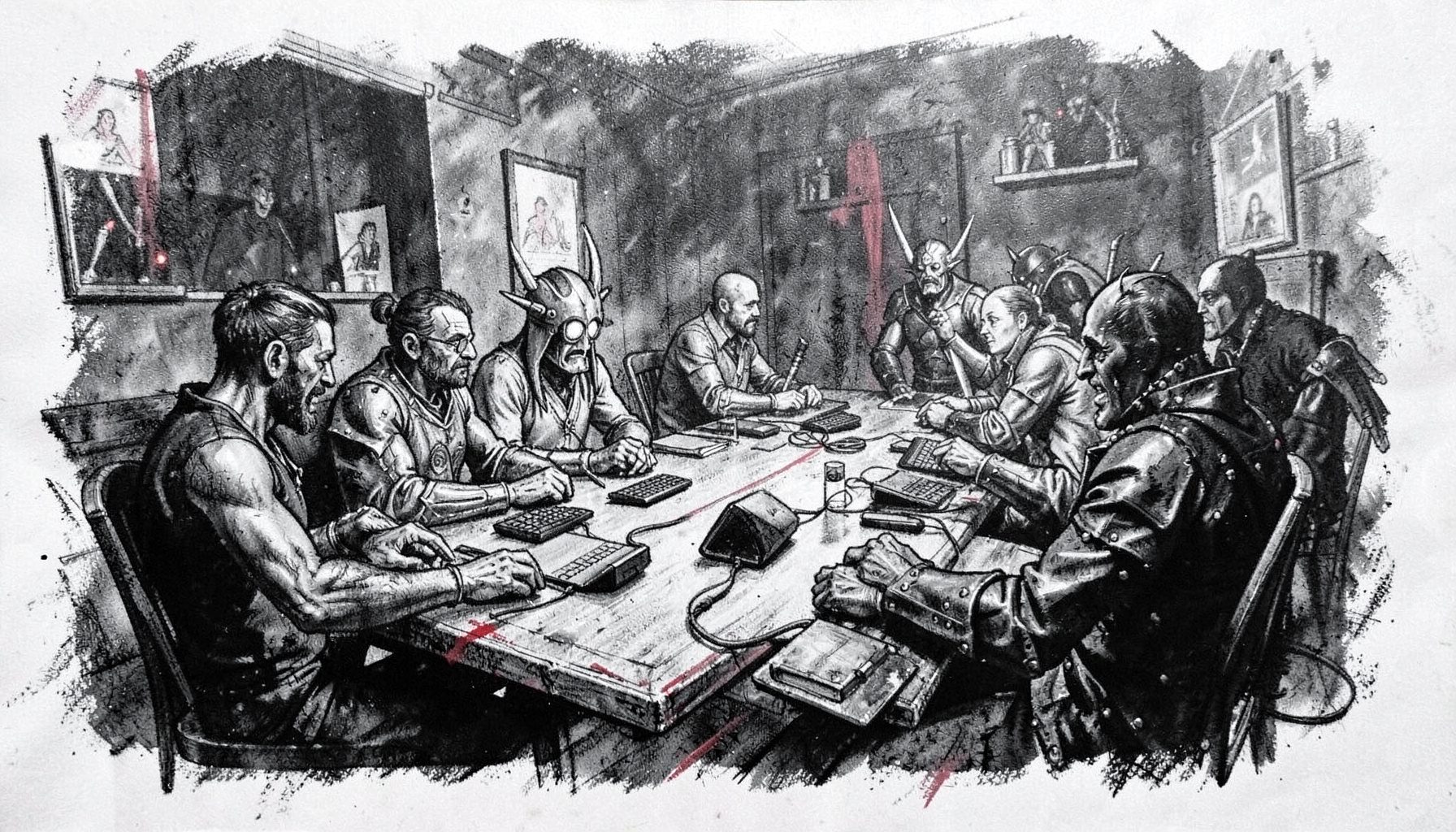
How to create an inclusive gaming environment at your table
The practical task of creating an inclusive gaming environment at your table is to give every player a meaningful way to take part, whether the session is a dungeon crawl, live-action scenario, miniature campaign, or quiet strategy game. Inclusion does not mean giving everyone the identical experience. It means removing avoidable barriers, sharing authority, and making it safe to contribute without concealing identity, surrendering personal boundaries, or fighting for attention.
High Level Games Convention, held in 2018 at the Showboat Hotel in Atlantic City, New Jersey, brought together tabletop role-players, live-action performers, game designers, artists, publishers, and vendors. Its LARP experiences, tabletop sessions, panels, workshops, exhibitor hall, and escape rooms demonstrated a useful principle: inclusion grows through many forms of participation, collaborative storytelling, and respect for different ways to engage.
Set agreements before the first roll
Before the first roll, ask players to agree on purpose, boundaries, and decision-making. A short social contract can cover themes that are off-limits, romantic or sexual content, violence, disputes over dice or puzzle calls, and what happens when someone needs a pause. Publish it before the session so nobody has to negotiate personal safety in front of the group. This is especially useful for convention games, where strangers may have played together for only an hour.
For role-playing games, give players several ways to signal discomfort. An X-card can indicate a topic to avoid, while a fade-to-black convention allows a scene to move elsewhere without explanation. Ask rather than assume: “Would you prefer this scene to continue, change, or stop?” Consent is ongoing and behavioural, and past participation does not create permission for later scenes. Nobody should have to disclose trauma, gender identity, sexuality, medication, or diagnosis to join a game.
Facilitators need matching authority. A game master can pause play, rewind a decision, or ask a player to leave a scenario, but that power should protect agreed boundaries rather than advance the plot at another person’s expense. Offer a private check-in route and a named support person when running live action. Distinguish a fictional character’s actions from a participant’s real conduct, and state that harassment ends participation.
Compare access needs across play formats
No single setup suits every group. Combat-heavy campaigns can create physical and sensory barriers; loud LARP can make conversation difficult; silent strategy sessions need different ways to negotiate consent. Compare the demands of the activity before choosing supports, then ask participants which adjustments improve their own participation without defining them for everyone. A useful comparison looks like this:
| Format | Frequent barrier | Inclusive design response | Check-in prompt |
|---|---|---|---|
| Traditional role-playing | Long sessions, intense themes, uneven character focus | Scheduled breaks, scene skips, rotating narration, adjustable challenge | Which parts need more agency or recovery time? |
| Live action | Noise, physical contact, limited visibility | Contact opt-in, quiet zones, visual cues, alternative roles | How can a player refuse contact without being singled out? |
| Board games | Small print, colour-dependent cues, fine motor demands | Large-print cards, tactile markers, accessible components, verbal summaries | Does every essential detail reach the whole group? |
| Online sessions | Time zones, bandwidth, screen-reader access | Captions, written channels, asynchronous updates, compatible software | Who can join fully and comfortably? |
These adjustments should be designed in from the start, not offered as a special favour. Test every essential rule with the actual group, using varied tools and viewpoints, and ask whether a change helps without removing challenge. A player may need support in one dimension and no support in another; individual choice is more reliable than assumptions based on age, gender, or visible ability. Keep the method private and let the player decide what to share.
Account for Australian venues and communities
Australian organisers need to plan around local travel and venue habits. In Sydney, Melbourne, and Brisbane, many players reach sessions by train, tram, bus, or car, so accessible parking, lift access, nearby transport, and clear arrival instructions matter. Board-game cafés, neighbourhood game shops, RSL clubs, and hired function rooms each have different rules about food, BYO drinks, minimum ages, noise, closing times, and equipment. Confirm those details instead of assuming a North American or online convention standard.
The Australian market supports community-led conventions, regular café sessions, online marketplaces for used games, and pub trivia nights that can become gateway events for new groups. Smaller events often depend on volunteers and careful room ratios, while larger convention programmes use ticketing, sponsors, and dedicated quiet spaces. At licensed venues, keep role-playing activities distinct from gaming machines and betting; a pokies player guide may help organisers recognise that machine play is a separate activity, and participation in the story should never depend on spending.
Legal duties follow federal, state, and local boundaries. The federal Disability Discrimination Act 1992, Age Discrimination Act 2004, and Sex Discrimination Act 1986 can shape access to goods, services, venues, and public accommodation; the Australian Human Rights Commission handles complaints under these laws. The Privacy Act 1988 and state or territory privacy rules may apply when registering dietary, medical, contact, or emergency information, so collect only what is needed and explain storage and access. Liquor licensing, gaming, quiet-hour, council, and work health and safety requirements vary by jurisdiction. Where Traditional Owner custodianship matters, seek local advice on Acknowledgement of Country and appropriate protocols, and engage Aboriginal and Torres Strait Islander contributors as paid collaborators rather than asking one person to represent an entire culture.
Practical measures for hosts and game masters
The strongest arrangements are easy to use before a problem occurs. Put the social contract, safety tools, break schedule, and feedback route where everyone can see them, then let the group practise them during setup. A well-run event treats access and respect as part of the rules of play, rather than as a topic reserved for a panel.
- Share a one-page agreement before play, explaining lines, veils, and consent overrides.
- Offer equivalent ways to contribute and remove pay-to-win advantages with loan character sheets, beginner kits, and multiple routes to useful decisions.
- Rotate spotlight and challenge, watch for exclusion through competitive rules or constant banter, and test settings and character assumptions for stereotyping.
- Build in movement, sensory, communication, and processing breaks, with quiet space available without requiring a medical label.
- Make materials genuinely usable through readable print, audio descriptions, captions, colour-independent markers, plain-language rules, and alternative controls.
- Set a clear intervention ladder: clarify, redirect, pause, separate, and remove as needed, using the least disruptive effective response first.
- Review the session with voluntary, anonymous feedback, recording which adjustments helped, failed, or created new barriers.
After the event, document both outcomes and process. A convention recap guide can help organisers publish useful details without turning participant experiences into promotional copy; name design choices that worked, explain any harm that was addressed, and distinguish feedback about the game from feedback about the hosting environment. Invite affected participants to review a draft, and do not publish identifying stories without permission.
Share ownership of the group agreement
Inclusion is sustained when the people at the session can change the system. Invite players to become facilitators, accessibility advisers, consent stewards, or feedback partners, and compensate community work where funding permits. Keep ownership visible: a rules change should include who requested it, what was tested, and who can review it later. Rotate responsibilities so inclusion does not rest on the same organiser every event.
The next practical step is a one-page group agreement, read aloud during setup and amended after the first session’s feedback.