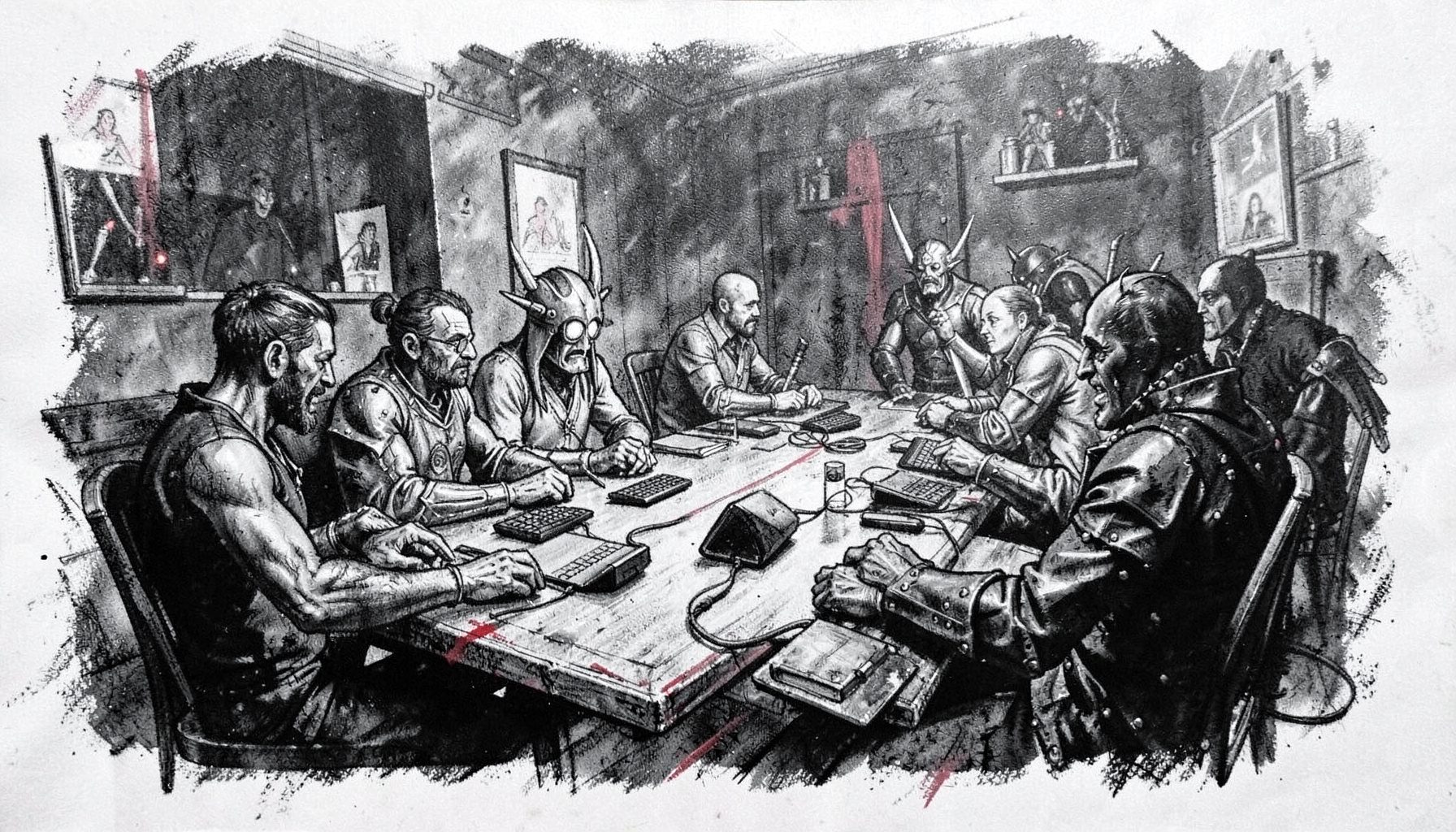
The importance of safety tools in public gaming spaces
The importance of safety tools in a public gaming space is clearest when strangers become collaborators. At High Level Games Convention, held at the Showboat Hotel in Atlantic City, New Jersey, in 2018, attendees moved among tabletop sessions, live-action role-play, panels, workshops, games, and immersive activities. Trust had to form quickly without stifling the shared storytelling that made the gathering worthwhile.
The convention brought together role-players, designers, artists, publishers, vendors, and players across formats, including escape-room experiences. Its public, inclusive character created opportunities, but rules about contact, noise, personal space, imagery, and leaving an activity had to be understood by people who had never met before.
A safety tool is any practical mechanism for setting boundaries, identifying risk, pausing action, or obtaining help. The strongest ones work before a crisis and remain usable when emotions run high. They do not replace judgement; they turn vague expectations into actions a facilitator, volunteer, venue, or player can perform under pressure.
That distinction matters in a busy hotel, where an LARP corridor may pass an exhibitor stall, family programme, or bar. It also supports participation: people are more willing to experiment and contribute when they know how to change a scene, decline a task, or report harm without embarrassment.
Why safety tools are shared infrastructure
The convention’s featured guests came from a community where imagination depends on cooperation. Because designers, performers, artists, and organisers shaped the event, a useful safety tool must be legible to a dungeon master, an actor, an exhibitor, and a first-time visitor.
| Tool | Main purpose | Best moment | Who acts |
|---|---|---|---|
| Code of conduct | Shared behaviour and reporting routes | Registration and orientation | Organisers |
| Consent framework | Boundaries and ongoing agreement | Before scenes and during check-ins | Participants and facilitators |
| X-card or pause signal | Discreetly reduce or stop content | Whenever discomfort arises | Participant or facilitator |
| Venue and escape map | Physical routes, hazards, and accessible areas | Arrival and venue walk-through | Venue lead |
| Incident plan | Coordinated response and follow-up | Training and emergencies | Named response team |
These tools work best when explained, demonstrated, and offered in more than one format. A card or quiet withdrawal may protect someone who cannot speak up publicly. Choice improves access without making the person disclosing a problem responsible for managing everyone else’s discomfort.
Used well, they create predictable responsibility. Everyone should know who can pause a game, where to report a concern, and what happens next. That clarity benefits the venue because gaming incidents rarely stay inside the session that produced them.
Consent, boundaries and real-time check-ins
Consent works best when it is specific and revisitable. Asking whether someone is comfortable with darkness is not enough if a scene includes simulated strangulation, surprise touch, or weapon-like props. Participants can agree to the theme, level of intensity, contact rules, and words or actions that would stop play.
An X-card, coloured token, or discreet pause signal allows someone to lower intensity without interrupting everyone else. The facilitator should acknowledge it without demanding an explanation. In a large convention hall, that small response protects privacy while giving the group a clear adjustment rather than forcing another participant to guess what went wrong.
Check-ins also work both ways. A facilitator can ask whether a mock battle has gone too far, while players can request a pause before they feel unsafe. Consent is not a form signed at entry and never revisited; it is an ongoing practice supported by clear authority to stop and time to return only when everyone is ready.
Planning the physical environment
Physical safety begins with a venue walk-through. Organisers should identify stage boundaries, audience routes, emergency exits, fire equipment, accessible toilets, first-aid points, and spaces where an LARP cannot accidentally enter a public walkway. Advice on session handouts and maps is useful, but the real map must reflect the actual venue and be shared with staff.
Lighting and noise controls deserve special attention when an adjoining foyer carries announcements from another programme. Marking backstage, active-play, and quiet zones reduces mistaken entry. Hosts should also check that cables, scenery, and prop weapons cannot obstruct a wheelchair user, a person with low vision, or an evacuation route.
First aid should match the activity. A storytelling session may need basic supplies, but live combat involving falls, blades, or climbing needs trained first aiders, suitable equipment, and an emergency plan. Staff should know who calls the national emergency number and how responders will reach the exact floor or room.
A practical toolkit for event hosts
Before attendees arrive, hosts should make expectations visible and operationally complete:
- Publish conduct rules, intensity labels, photography rules, and reporting channels before ticket purchase.
- Offer a consent framework with X-cards, script changes, and an option to leave.
- Brief staff on accessibility, cultural protocols, emergency contacts, and escalation duties.
- Mark exits, quiet areas, first-aid points, accessible routes, toilets, and prop limits.
- Test tabletop and live-action scenarios for contact, noise, minors, and crowding.
During play, the same standards should remain active:
- Confirm boundaries before high-contact scenes and changes to agreed content.
- Keep trained facilitators or marshals visible and empowered to pause.
- Use a stop signal, no-penalty exit, and nearby seating or quiet space.
- Record concerns with consent and protect confidentiality.
- Check in during longer sessions and debrief promptly, referring urgent matters appropriately.
After an event, preserve only the information needed for follow-up. A clear incident log, named response team, and debrief with affected participants turn an improvised safety measure into learning. Review attendance patterns, common concerns, and access barriers before the next session.
Live-action play without harm
Live-action play compresses risk into bodies, voices, and movement. Before combat begins, state whether touching is permitted, which strikes are allowed, how weapons are inspected, and what “stop” means. Intensity ratings help, but precise choreography and an empowered marshal matter more once adrenaline rises.
Public spaces add neighbours to the fiction. A scream in a corridor, a chase through a foyer, or a prop falling near an attendee can frighten bystanders without intent to cause harm. Marshal boundaries, use alternate routes, and notify nearby staff so the atmosphere remains exciting without making uninformed spectators participants.
After high-intensity play, offer decompression rather than assuming everyone wants to continue. Water, seating, quiet, and a short structured debrief can reveal injuries, fear, or role-play fatigue. Participants should know they may step out without forfeiting access to the event or being blamed for changing the scene.
Accessibility and inclusion shape safety
Accessibility is part of safety. Clear print at a readable size, accessible routes, seating, captioning, Auslan interpretation where needed, and low-sensory periods prevent avoidable barriers. A facilitator should explain whether a scene contains visual effects, loud sound, or restricted space before participation, not after somebody asks for information.
Alcohol and fatigue need controls in convention bars, licensed clubs, and hotel function rooms. Follow venue licence conditions and Australian responsible service practices, separate intoxicated guests from role-play, and provide non-alcoholic options. Anyone impaired should not join high-contact scenes or make important decisions.
Inclusive safety also means responding to harassment without exposing the target to repeated retelling. Clear conduct rules, trained listeners, and several reporting routes reduce isolation. They must apply equally to volunteers, industry guests, performers, and familiar community members, whose status can otherwise make them feel safe from consequences.
Australian venues and community practice
Australian hosts need local weather plans, not a generic checklist. Sydney summer heat can make outdoor queues unsafe; Melbourne weather changes disrupt loading; Brisbane humidity and storms affect play. Shade, water, indoor queuing, and a severe-weather plan are practical controls.
Mixed-use venues create specific obligations. Events in hotels, pubs, RSL clubs, and hired halls must align with state liquor licensing, capacity, responsible service, and work health and safety duties. Organisers should confirm insurance and appoint a responsible person rather than assume another state’s rules apply.
Australian game markets are community-driven, with independent shops, local clubs, small publishers, volunteer conventions, and contract designers sharing volunteers and audiences. Clear incident procedures and accessible registration help this network operate professionally while supporting local creators rather than treating them as interchangeable event labour.
Cultural care is equally local. When a game uses Aboriginal or Torres Strait Islander stories, designs, or language, hosts should involve the relevant community and follow its protocols rather than treating visual art as generic decoration. Permission, attribution, and limits on adaptation matter before publication, promotion, or play.
Carry these principles forward
Safety tools work when they are ordinary, proportionate, and visible. A code, card, map, check-in, or emergency route is valuable because it gives a real person a next action. Their purpose is not to make play timid, but to preserve trust while allowing bold, immersive storytelling.
The lesson to remember is simple: public gaming becomes safer when participants can set boundaries, organisers act consistently, and venues share responsibility for the environment. When tools are explained before play, respected during play, and reviewed afterwards, inclusion and excitement can grow on the same foundation.