Music as the hidden map of a LARP scene
At the High Level Games Convention, held at the Showboat Hotel in Atlantic City in 2018, tabletop players, live-action role-players, designers, artists and vendors shared spaces for shared stories. The event’s range of LARPs, panels, workshops and escape-room activities showed that atmosphere can be designed as carefully as rules. Music has a similarly important role, shaping what players expect before a character speaks or moves.
A soundtrack in live action is not simply background. It can turn a quiet negotiation into a tense standoff, soften a community gathering or reveal that the known world has changed. The useful question is not which track sounds impressive, but what emotional information the scene should carry and how players can hear that information without losing agency.
Australian groups often stage LARPs in community halls, neighbourhood libraries and suburban living rooms before taking them to larger conventions around Melbourne, Sydney, Adelaide or Brisbane. Some community meetups follow a bring-your-own-drinks custom, though each venue’s licence and house rules decide what is allowed. Indoor spaces may have hard walls, traffic noise and inconsistent volume, while outdoor games face summer heat, sudden rain and long daylight. That makes careful sound planning both an artistic skill and an Australian logistical necessity.
This guide treats music as scene design: a set of choices about character, place, pacing and care for the people taking part. It also assumes the event may include recorded tracks, live performers and original sound effects. Each source has different practical needs, especially when a game is open to adults and children in a public venue.
Why sound changes the emotional weather
Music creates expectations quickly. A low drone can make an ordinary doorway feel guarded; a bright folk melody can make a crowded market feel welcoming; a sudden percussion hit can push bodies into action before dialogue explains the danger. In LARP play, where performers are also players, that physical response can sharpen group attention and make a shared scene feel cohesive.
Separate in-world sound from score. Diegetic music comes from a radio, street performer, ritual drum or remembered song, so it tells players where they are and who might hear them. Non-diegetic music comments on the scene from outside the fiction. Confusion between the two creates false information, particularly when a cue is meant to signal an approaching threat rather than decorate the mood.
A cue should have a job and an exit. A rising loop can build suspense, but it must stop when the tension changes, or it becomes wallpaper. Silence is equally powerful: removing music after a revelation can leave an uncomfortable gap that players fill with interpretation. Strong scene audio therefore alternates intensity, space and quiet, giving the ear the same shape as a dramatic arc.
Building a soundtrack that belongs in the world
Begin with place rather than a playlist. A coastal town might carry gulls, generators and distant traffic; a ceremonial court might use voices, bells and footfalls; a broken future might use static, machinery and fragments of familiar songs. Local details make a soundscape believable, and credible details often matter more than a grand theme repeated for every scene.
Layer the world in three levels. A continuous ambience establishes geography, short effects punctuate interactions, and musical selections mark changes in intention. A performer cue can emerge from a nearby speaker, while a score cue can cover the whole play space. Keeping those levels distinct helps directors raise tension without erasing dialogue or puzzle clues.
Venue design shapes the result. Atlantic City’s broad promenade and casino lights gave this event an unusually strong sense of place, as noted in the Atlantic City boardwalk backdrop. A LARP in a Melbourne town hall cannot copy that visual drama, but it can create intimacy by placing a single source near the action and letting distance become part of the scene.
Giving characters and factions a sonic identity
Repeated themes can let players recognise a person or alliance before they see a costume. Give each important character a short motif, then alter its rhythm or instrumentation as that character changes. A nervous melody repeated in a minor key, for instance, can trace doubt across several encounters. The association must stay clear enough to support story without turning every character into a walking jingle.
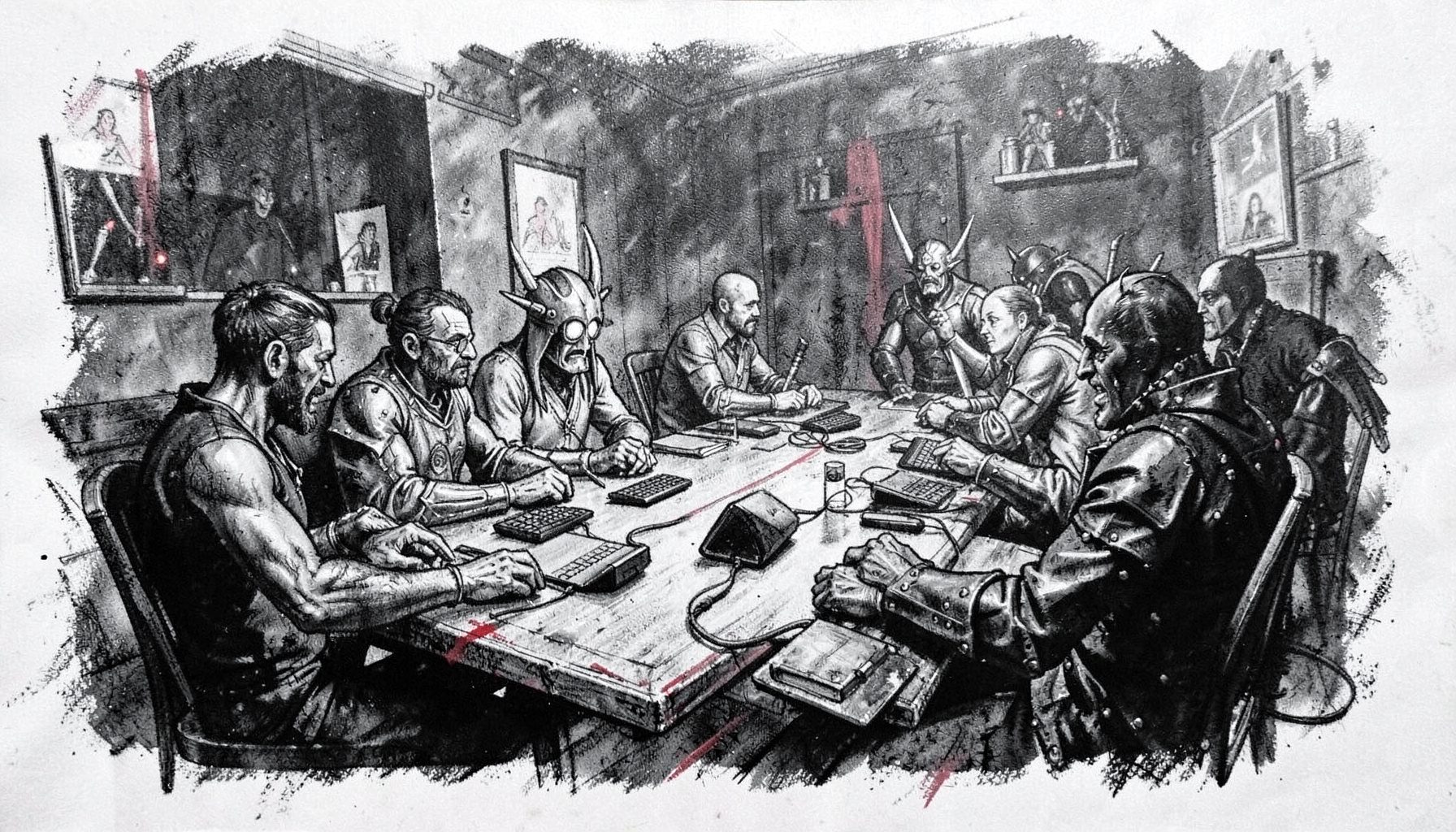
Audio art direction benefits from the same coherence as visual design. The artists behind the programme brought visual consistency to the event, showing how a shared style can turn individual images into one coherent identity. A LARP can achieve this with a palette of instruments, recurring textures and a consistent production standard, while leaving room for live players to improvise.
Choose recorded music for precision and live music for responsive energy. A live guitarist can follow the pace of a fight or ease a transition between scenes, but needs a set list, rehearsal, volume limits and a fallback if the performer is delayed. Australia’s strong independent music culture, including community acts heard through Triple J and local radio, provides many performers and recording artists, yet availability and cost differ sharply between capital cities and regional towns.
A practical cue-building checklist
The convention’s combination of play, teaching and social spaces, documented on the convention itself, offers a useful model: sound must work at close range, across large halls and during unscripted conversation. Before play, assign each cue a dramatic purpose, an owner and a stop condition. A cue sheet shared by directors, performers and technicians prevents one person from mistaking atmosphere for a required signal.
Use this working list for tabletop-to-live adaptations, one-shot games and full conventions:
- Give every track one emotional objective, such as unease, belonging or momentum.
- Record each cue’s source, duration, trigger point, target volume and exit on a cue sheet.
- Frame non-diegetic music as an intentional layer, keeping crucial information in speech or effects.
- Provide a quiet route through loud scenes so players can recover and regroup.
- Rehearse with the actual room, speaker placement, costumes and group movement.
- Prepare a no-music or low-volume alternative for accessibility and sudden changes in play.
After rehearsal, remove any cue that merely repeats what facial expressions already communicate. Keep the tracks that clarify space, reinforce a character or create useful pressure, and test the final balance with someone outside the creative team.
Keeping the sound design legal, safe and inclusive
Recorded and live music carry public-performance considerations in Australia. APRA AMCOS administers licences for musical works, while PPCA deals with public use of sound recordings and music videos; venues and event organisers should confirm their coverage instead of assuming a hall licence covers every use. A commissioned composer may also need clear terms for synchronisation, while performers need permission to record and reproduce their set.
Age ratings add another layer when a LARP uses published game material. The Australian Classification Board labels games MA15+ and M according to suitability, while R18+ games are prohibited from sale and distribution in Queensland. These ratings do not rate a live performance, but they can affect an organiser’s duty of care, marketing, insurance and rules for younger participants, especially where simulated combat or mature themes are central.
Sensory care belongs beside legal compliance. Provide advance information about loud passages, sudden changes, vibration or extended darkness, and offer headphones, a lower-volume zone or an equivalent non-musical cue. A phone playing a private playlist can help a participant check an important cue without exposing personal music. Build a clear stop signal into the production so anyone can pause a scene if the atmosphere becomes distressing.
Australian daylight and weather also alter the score. Outdoor summer evenings in northern Australia may stay bright late, while a sudden squall can swallow a carefully balanced track. Test the schedule with backup acoustic effects, battery-powered speakers and cues that can be changed by a human rather than a fixed device. The aim is continuity of intention, not identical sound in every condition.
Music gives a LARP scene an emotional map. Players may never analyse the motif attached to a faction or the silence following a betrayal, but they can feel those choices acting on the room. The strongest score remains subordinate to the story: it guides attention, deepens character and marks change without deciding what the characters should feel.
The part to remember is simple: every cue needs a dramatic job, the people hearing it need protection, and silence needs the same intention as sound. When that balance is right, music stops being an accessory and becomes one of the ways the fictional world communicates.