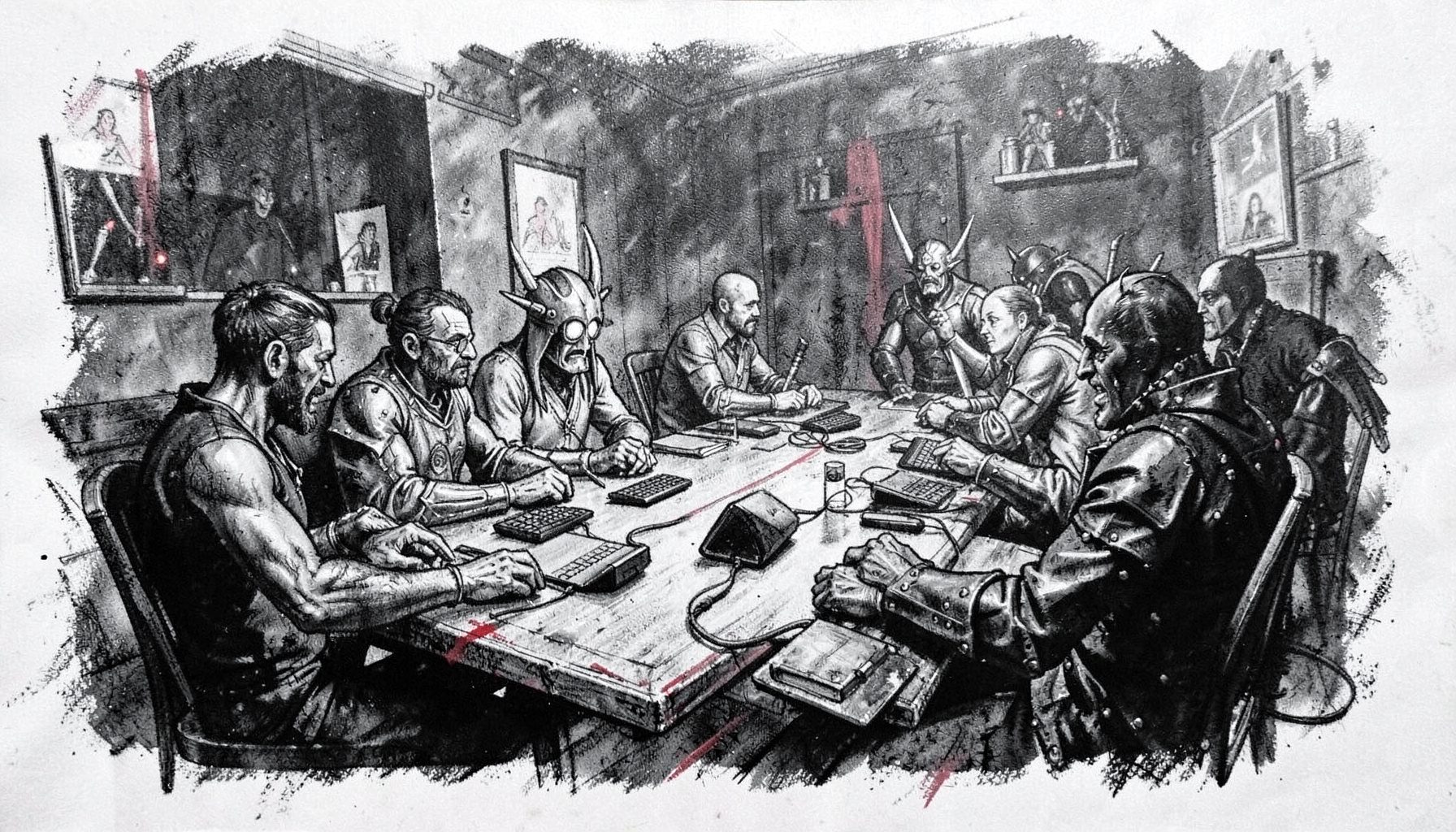
Why pre-generated characters are a convention GM’s best friend
Conventions reward preparation, but magnify every delay. At the 2018 High Level Games Convention, held at the Showboat Hotel in Atlantic City, New Jersey, game masters turned brief encounters into memorable stories. The event united tabletop and live-action role-players, designers, artists, publishers and vendors through LARP experiences, sessions, panels, workshops, an exhibitor hall and escape rooms, centred on inclusive participation and collaborative storytelling.
A pre-generated character is more than a name and stat line on a spare sheet. It is a prepared starting point: a readable backstory, clear motivation, useful relationships, a complication and hooks the GM can use without an awkward pause. The sheet may be one page or support a whole arc. Done well, it removes friction without dictating performance, stopping administrative delay from knocking a new player out of the game.
That advantage travels neatly to Australian tables. Use Australian English—organiser, colour, favour—while explaining American terms required by the rules, and let players laugh off a missed pronunciation with a casual “no worries”. The need appears in a packed Sydney hall, a warehouse near Melbourne’s laneways and regional game shops where the next gathering may be weeks away. In a market shaped by volunteer events, local stores and creator-funded print runs, dependable starting points are valuable.
Ready-made characters rescue the opening table
A convention GM rarely has the luxury of waiting while players invent childhoods and compare rules. A ready-made character can go into the player’s hands as they sit down, letting the story begin while the GM explains dice, checks and safety tools. This helps a first-time role-player, someone returning after years away or a visitor who learned the rules elsewhere. The character bridges rulebook and table rather than testing creative speed.
Pregeneration can be scaled to the session. A one-shot may need a goal, a secret and two relationships; a recurring campaign can carry history and faction ties. The same GM may run a crowded live-action encounter and a four-hour tabletop scenario. Ask what the player needs in the next ten minutes, not how complete the character must be. The best sheets answer that need and leave room for one personal choice.
New players get a fairer way in
Confidence is often the real barrier at a gaming table. A blank character can make a capable newcomer feel tested beside experienced players who know the social cues. A prepared character removes that artificial test. The player receives a person with opinions, connections and a reason to be present, while the GM receives a role that can guide play. Even with unfamiliar rules, the player has an immediate question: What do you want, and what stands in the way?
The character should remain negotiable. Let players rename it, change a relationship, alter a detail that feels wrong or replace an assumption with something authentic. These acts of authorship turn a starting point into ownership. Keep mechanics fixed where needed, but make the personal layer flexible. For groups spread across Australia, post the shared sheet online and state which fields may change, so a participant joining from Darwin or remote play does not hold up the table.
Representation can be deliberate and player-led
A prepared cast can make representation more thoughtful. Instead of waiting for a fictional character to appear by magic, a GM can build roles around different bodies, cultures, occupations, family structures and levels of experience. The aim is to involve the people at the table, not turn a sheet into a social lesson. Ask who wants to play, which perspectives would enrich the group and which stereotypes to avoid. If no one wants an identity, leave it out rather than use it as decoration.
Pre-generated histories can help players see themselves in the fiction without disclosing personal information. Offer pronoun fields, explain name pronunciations and describe physical or sensory details without making disability a plot device. Avoid inventing an accent as a shortcut for culture, and do not assign trauma merely to make an NPC mysterious. Keep the essential conflict, but prepare alternative motivations for players who need them. A useful character needs a goal, a group connection and a problem that generates action.
Improvisation needs a stable foundation
Improvisation is often called the GM’s greatest skill, but free-form invention works best with stable facts. A prepared character supplies them: the GM knows what the character values, who can be trusted, what secret is dangerous and where a scene can grow. When a player makes an unexpected decision, the GM can adapt rather than invent a motive after the dice land. The character responds to the table without being a blank slate.
Constraints give spontaneity somewhere to go. The convention’s escape room challenges showed the same principle: participants could respond freely within a prepared structure, with clues, constraints and shared objectives pushing the story towards decisions. A tabletop character works similarly. Establish what it seeks, then let obstacles test that aim. Players should be able to surprise the GM without surprising the premise out of existence.
Write hooks rather than dialogue trees. “You owe money to a local guild” can lead anywhere; a scripted speech cannot. Keep one fixed fact, two flexible loyalties and a current objective, leaving wording and emotion to the player. This makes the character useful for battle, investigation, negotiation and theatre. It also lets a GM hand the same NPC to another player without rebuilding the plot.
Pacing and safety become easier to manage
Convention schedules magnify pacing problems. A session may be capped at two hours, delayed by a panel or squeezed between exhibitor activities, so setup time has a cost. Pre-generated characters reduce the opening scramble and make relevant NPCs easy to introduce. If a player arrives late, the character can begin with a reason to be in the room. If a rule question interrupts, its motivation holds steady while the GM resolves it.
Timed set pieces make the value clear. A confined setting, urgent objective and defined roles give participants something to do while the clock runs. A tabletop character can supply that clarity without becoming a puzzle. Give each one an immediate task, a complication and a way to contribute, moving the group from arrival to purposeful action without manufactured delay.
Safety and logistics improve alongside pace. Put content notes beside the character brief, identify difficult themes and provide a visible alternative role for anyone who opts out. Keep a backup NPC ready in case a player withdraws, and avoid making one character’s trauma the only route to the main plot. Australian conventions and community game rooms work best when those boundaries are stated plainly, treated as normal and never used to force disclosure.
A practical character preparation checklist
The strongest pre-generated character is prepared, not over-engineered. Decide what the scenario absolutely requires, then add only details that help the player act, the GM adjudicate or the group understand the stakes. A one-page character sheet can beat a four-page biography if it communicates those functions clearly. The detention breakout scenario illustrates the same principle: clear roles and objectives can matter more than backstory length.
- Give each character one goal, one complication and two links to the scenario.
- Include pronunciation guidance, optional pronouns, physical details and content notes on a player card.
- Mark plot facts as fixed, show which players may change and leave blank fields for personal choices.
- Offer a simplified rules reference or low-complexity stat line for newcomers.
- Prepare two backup NPCs and one wildcard role to replace a missing player without blocking the climax.
- Print spare copies, keep a phone-friendly PDF and test both in a convention hall.
Test the sheet with someone outside the GM’s circle. Ask whether they can state their objective, identify one person to talk to and explain what their character might do next. If they cannot, the problem may be clutter rather than insufficient detail. Australian volunteer conventions and local game shops make photocopies, digital backups and feedback from players familiar with several systems especially sensible.
Keep the character, preserve the player
High Level Games Convention showed why this preparation belongs at the centre of community. Its mix of LARP, tabletop sessions, panels, workshops and vendor spaces put improvised stories beside formal rules, visual art and live performance. A prepared character is shared infrastructure: it helps a stranger become a participant, gives an experienced player something specific to portray and gives the GM more attention for other people’s choices.
The craft lies in knowing where preparation ends. A pre-generated character should supply a stable identity, not a finished performance. Give the player visible hooks, meaningful choices and permission to interpret; give the GM the motivations and facts needed to react. When that balance works, the sheet saves time and clarifies the path into collaborative storytelling. The thing to remember is simple: pre-generated characters are not a substitute for the people at the table; they are a launchpad that lets those people begin quickly, play confidently and make the story their own.