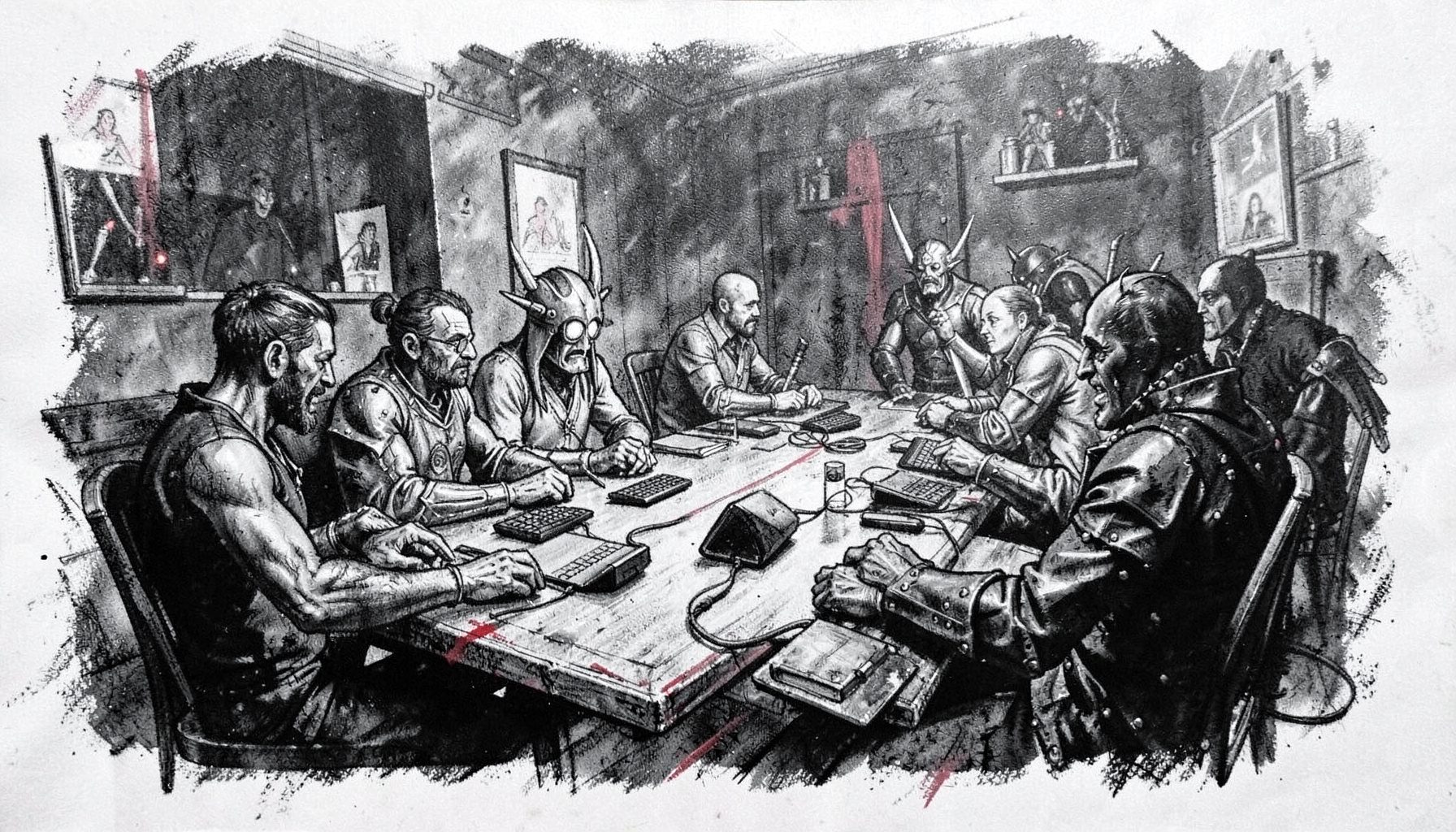
HLGCon mentorship program: connecting new and veteran gamers
The High Level Games Convention (HLGCon) 2018 brought tabletop role-players, live-action participants, designers, artists, publishers and vendors together at the Showboat Hotel in Atlantic City. The program of sessions, panels, workshops, an exhibitor hall and escape rooms made the hotel busy, but its greatest value was in the conversations happening between formal activities.
For newer players, that environment could feel enormous. Rules, genre expectations and table etiquette all arrive at once, while the distance between watching a game and taking a convincing role can seem impossible. A friendly welcome can turn an intimidating corridor into a familiar route into the community.
The HLGCon mentorship program addressed that gap by connecting newcomers with veteran gamers. Veterans could explain how a scenario worked, demonstrate character building and help newcomers read the social cues of a table. Newcomers brought fresh questions, different backgrounds and ideas that could reshape an established game.
That exchange matters because good role-playing is collaborative rather than a performance of expertise. The Showboat gathering emphasised inclusive participation, and mentoring offered a practical way to support that ideal. The convention’s post-event reflections also suggest looking beyond attendance figures to understand whether players felt prepared, welcomed and eager to return.
A practical bridge into the Showboat weekend
HLGCon’s mentoring worked best when it operated as part of the convention rather than as a separate classroom. The event schedule shows the range of activities surrounding the mentoring: tabletop sessions, live-action role-playing, panels, workshops and immersive escape-room challenges. A newcomer could learn in one format, then test the same idea in another without leaving the shared setting.
Arriving at a scheduled session already gives a newcomer a reason to talk with someone. An experienced player can make that first exchange low-risk by explaining the rules, checking whether everyone understands the current scene and inviting the newcomer to contribute a detail rather than demanding a complete character. These small moves preserve initiative while building trust.
How experienced players made room for newcomers
Mentorship is not simply teaching rules. A veteran tabletop role-player may be comfortable with rules-heavy combat, while a live-action participant might excel in physical storytelling. Pairing across those strengths allows both people to learn. One explains how the rules shape a conflict; the other shows how dialogue, movement and stakes can make that conflict compelling.
Experience also cut in useful directions. Veteran gamers knew how to read a group, when to slow down and how to invite quiet players without putting them on the spot. Newcomers often noticed awkward assumptions, since they were not immersed in the community’s habits. That perspective could prompt a facilitator to clarify an invitation that had seemed obvious to everyone else.
The benefit extended beyond the people at the table. Designers could test a premise with a mixed group, artists could find visual references for a character, and vendors could learn which beginner products genuinely helped. Mentorship made the convention’s different departments feel like one community, with knowledge moving through people rather than sitting only in formal presentations.
Tools for newcomers and experienced players
Preparation should support the person, not overfill the schedule. A good first session has a clear purpose, a manageable learning load and someone willing to check that newcomers are included. The following checklists turn those aims into simple behaviours for a game, workshop or live-action encounter.
A practical checklist for newcomers
- Read the session pitch and ask which prior knowledge is genuinely required.
- Arrive early enough to hear the premise without rushing into play.
- Explain your experience honestly, without assuming you need to perform confidence.
- Ask the facilitator how to signal uncertainty or request a clarification.
- Share one useful detail about your character with the group.
A matching checklist for experienced players
- Offer guidance in plain language and avoid unexplained shorthand or jargon.
- Check privately whether a newcomer understands the current objective.
- Share choices as options rather than treating one solution as correct.
- Leave room for silence so quieter players can contribute comfortably.
- Ask what the newcomer enjoyed before recommending a different genre.
Used together, the lists create a reciprocal arrangement rather than a top-down lesson. Newcomers learn how a group works, while experienced players discover how to make their expertise more accessible. Neither side has to become the teacher all the time.
Listening after the tables cleared
Feedback is essential if a mentorship program is to improve beyond good intentions. After HLGCon, participants could be asked which introductions worked, which sessions felt inaccessible and what information they wanted before arriving. The post-event survey records what attendees learned from the 2018 gathering, making it a useful source for examining the balance between planned activity and informal support.
Survey responses should still be treated as a snapshot rather than a complete picture. A participant who felt lost at one table may have found a welcoming group elsewhere, while another may have had a great session without recognising the mentoring that helped. Useful follow-up includes short questions about belonging, clarity and willingness to return, along with conversations with facilitators and volunteers.
Carrying the model into Australian communities
Australian communities already have many places where shared play can develop. In Melbourne, board-game cafés, community centres and gaming stores give groups an easy way to meet beyond home; in Sydney and Brisbane, conventions, library activities and local clubs provide similar opportunities. An Australian audience may recognise the familiar rhythm of an after-work session, a long weekend convention, or a Sunday afternoon at a community hall.
The local market is well suited to small, skill-sharing events. Australian independent designers, artists, publishers and hobby retailers can use a convention table or a community session to test a game with first-time players, just as designers did among HLGCon’s exhibitors. For organisers, the event registration page illustrates how clearly a programme can present participation options, session choices and the support available to each ticket category.
Australian legal and market realities deserve attention too. Digital game releases use the classification framework administered by the Australian Classification Board, so overseas ratings should not simply be copied onto local advertising. Under the Australian Consumer Law, event advertising must not mislead about what a ticket includes, and cancellation or transfer terms should be stated plainly when mentoring sessions are bundled with convention admission.
That last point protects trust on both sides of the mentoring relationship. Veterans should know what support they are expected to provide; newcomers should know which sessions they may attend. Clear labelling, accessible pricing and a stated code of conduct can make a mixed-experience gathering safer for women, culturally diverse players, LGBTQIA+ participants and people with disabilities.
What players should carry forward
HLGCon showed that connecting new and veteran gamers is less about handing over a rulebook than creating a reliable path into play. Mentorship brings experienced knowledge into everyday conversation, helps newcomers understand group culture and gives designers better feedback from the people who will actually use their games.
The strongest examples were probably ordinary: an explanation before a session, a character question answered without judgement, a table invitation extended to someone standing nearby, or a veteran who admitted learning from the newcomer. Those moments built the inclusive, collaborative atmosphere that the Showboat weekend was meant to support.
The lesson to remember is simple: mentorship succeeds when guidance is mutual, visible and woven into the gathering itself, so every participant can move from curiosity to confident participation.