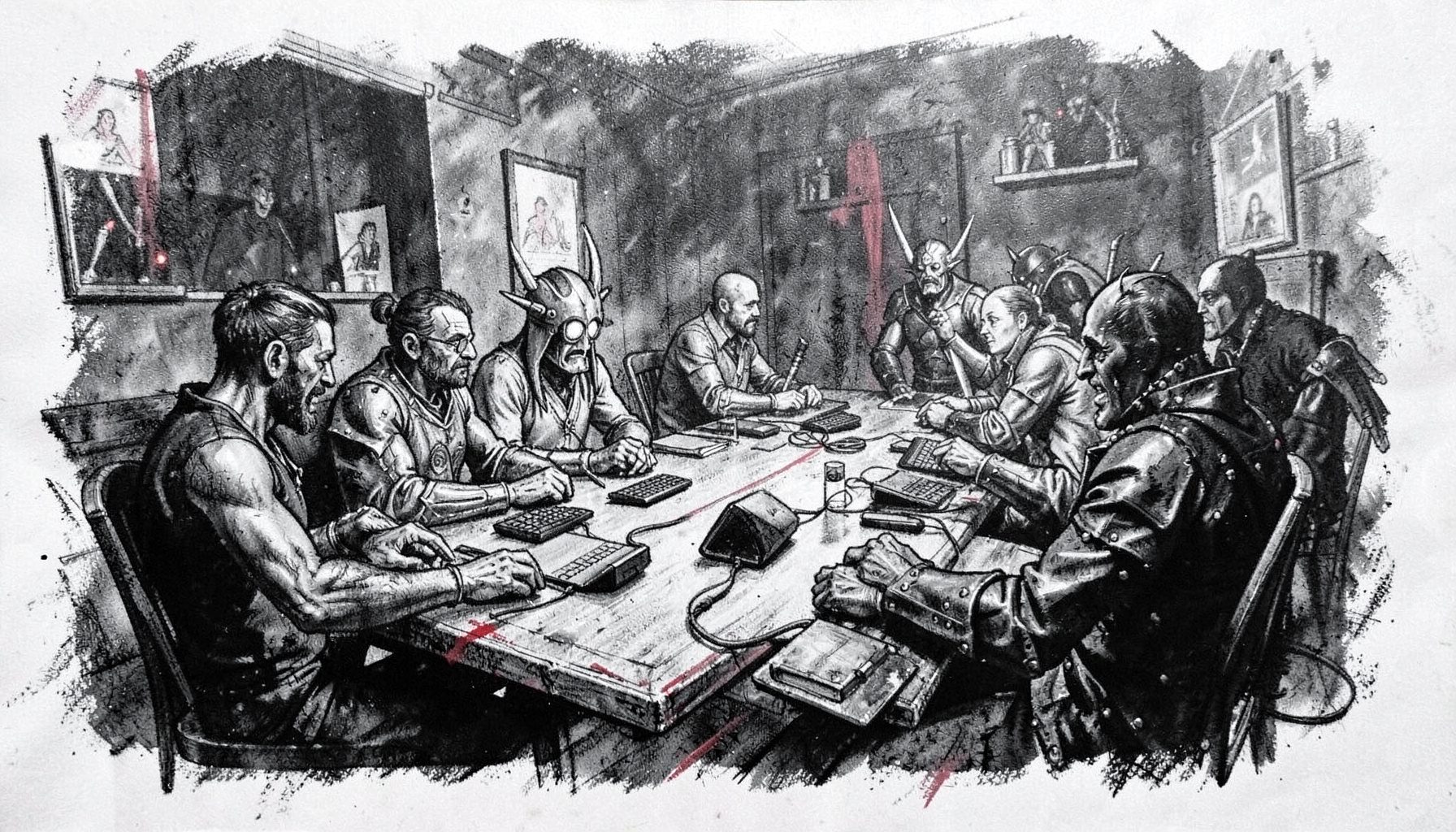
A guide to the open gaming tables: how to join a pickup game
An open gaming table is a scheduled seat where a game master welcomes new players, often with a pre-generated character and a scenario that fits one session. A pickup game is the broader habit of turning up without a fixed party, finding a chair and joining a game already under way. At High Level Games Convention, held in 2018 at the Showboat Hotel in Atlantic City, those formats sat alongside live-action role-playing, escape rooms, panels, workshops and an exhibitor hall, offering several routes into collaborative storytelling.
Neither format requires a completed campaign, prepared character or friend who already plays. That makes an open table one of the least intimidating ways to meet role-playing game players and try a new system. Good convention hosts explain the rules, offer safety tools and make room for different experience levels without leaving newcomers to fend for themselves.
For Australian players, the same approach works at independent game stores, board-game cafés, society nights and convention programmes in Melbourne, Sydney, Brisbane, Perth and Adelaide. Venues differ: some charge a table fee, others expect a café purchase, and clubs may ask for seasonal dues. Preparation helps, especially at a busy event where every popular game has a waiting list.
Finding an open table at a convention
Start with the event schedule or host information. Look for labels such as “open gaming,” “drop-in adventure,” “new-player welcome” or “learn to play,” then check whether games begin on the hour or follow repeating sessions. Game masters may change characters and scenarios between slots, while some tables keep one adventure running for several hours. Check the convention app, noticeboard or volunteer desk on arrival, since published details can change.
If an advertised game looks full, avoid interrupting a scene. Wait until the game master confirms a break, or ask the information desk whether another table uses the same rules. Popular adventures may keep a sign-up sheet for the next round. Smaller society nights may simply reshuffle and restart, while conventions often run fixed rounds; arriving 15 minutes early can mean the difference between a seat and a waitlist.
Live-action games need different social cues, especially around photography and physical contact. The convention’s guide to capturing a LARP helps if you plan to try that side of the event too. Its lesson carries over to open tables: observe quietly, ask before making a dramatic entrance and respect boundaries that keep immersive play comfortable.
Reading the signals around a game
Identify the host before joining. The person may be a game master, dungeon master, facilitator, organiser or the player with the rulebook. Ask whether players use pre-generated characters or build their own, and whether a tutorial is included. In Dungeons & Dragons, a newcomer may join a group carrying a larger character, but should not receive responsibility for rules nobody has explained.
Read the table’s signals. A sign listing safety tools, content warnings, lines or veils shows that player comfort is part of the design. Ask what “open” means: some tables welcome any newcomer, while others need a character at a particular level. A blank character sheet, reference cards and visible dice suggest teaching is expected. A table full of notes may simply be an experienced campaign, so judge the invitation rather than the clutter.
Costumes can make identity easier to enter, but should never be a barrier for people who prefer ordinary clothes. The 2018 costume gallery shows the creativity at HLGCon and the range of interpretations possible at a convention. For tabletop play, tell the host about clothing constraints, sensory needs or physical accessibility requirements, then choose an outfit that lets you move, see and hear comfortably.
Joining games in Australian communities
Australian gaming communities often gather through independent game stores, hobby shops, board-game cafés and volunteer-run clubs rather than one dominant venue type. Melbourne’s dense café culture, Sydney’s large convention circuit, Brisbane’s subtropical event calendar, Perth’s long travel distances and Adelaide’s compact community scene can shape how pickup games are organised. Conventions such as Supanova and specialist game festivals often include open tables beside demos, tournaments and artist markets. Fees are usually quoted in Australian dollars, while rules and campaign continuity vary between venues.
At a community night, everyday Australian habits simplify logistics. Many stores and cafés accept card or contactless payments, although some clubs still ask for cash or prefer electronic transfers for membership fees. Public transport makes central venues easy to reach, while suburban sessions may involve a car, bicycle or ride-share. Food rules also vary: a licensed café may sell meals, but a hall-based club might allow or expect you to bring your own. Ask before packing lunch or sharing a drink at the table.
Organisers also work within Australian consumer and privacy rules when selling tickets or collecting player details. The Australian Consumer Law applies to advertised ticket terms, including refund promises, while the Privacy Act 1988 can apply to personal information on membership forms or event registrations. If the venue has a bar, state and territory liquor licensing conditions may affect serving hours, glassware and access for younger attendees. This need not dominate the game; it explains why responsible hosts publish clear policies.
Comparing your joining options
Your best route depends on how much structure, novelty and social time you want. A convention offers a one-off story and many facilitators; a regular club provides continuity; a game-store pickup is flexible; an online community session can fill a gap in the local calendar. Compare commitment, expenses and preferred teaching rather than prestige or complexity.
| Joining route | Typical commitment | Likely cost | Best fit |
|---|---|---|---|
| Convention open table | One block of a few hours | Entry fee plus food or drink | A low-commitment story at a busy event |
| Game-store pickup | A drop-in session | Table fee or café purchase | Trying a system without joining a club |
| Regular club game | Weekly or seasonal attendance | Membership or modest session fee | An ongoing campaign and familiar group |
| Online community game | Fixed appointment and preparation | Often free, sometimes a venue fee | Remote play when local events do not fit |
Whichever route you choose, look for a clear start time, rules system and cancellation policy. Australian hosts often use email threads, Facebook groups, Discord servers or Meetup events to fill seats, and a published session can fill quickly. Ask what the charge covers, whether dice and rules are supplied, and whether early arrival is required. These details remove surprises and leave more energy for collaborative play.
A practical checklist for your first session
This checklist lowers common barriers and shows respect for the host’s preparation. Treat it as a practical aid, not a rigid ritual.
- Check the listing: Confirm the venue, start time, rules system, fees and age guidance before travelling.
- Ask about access: Message the organiser about step-free access, seating, hearing, vision or other requirements.
- Read the basics: Learn character creation and turn order, but do not try to master every rule beforehand.
- Bring simple gear: A pen, notebook, dice if allowed and a water bottle usually cover the essentials.
- Arrive early: Aim for 15 minutes before the advertised start to be seated and briefed.
- Tell the host you are new: Ask for a simple role and patient explanation rather than hiding uncertainty.
- Respect boundaries: Follow safety guidance, avoid disruptive behaviour and never pressure another player to reveal personal information.
At the session, watch for the opening instructions and wait for a natural pause before asking a question. A useful introduction is, “I’m new to this system, but I’m keen to learn and will follow the table’s safety guidelines.” Hosts generally appreciate directness. If the pace becomes too fast, ask for a recap; if the theme feels unsuitable, check the advertised content warnings or speak privately with the facilitator.
Once the session ends, thank the game master, return shared materials and consider telling the organiser what worked. That small habit helps community organisers balance sessions and welcome new arrivals. Your concrete next step is to open the organiser’s listing, note the start time and send this message: “I’m a new player and would like an open seat; please let me know what to bring.”