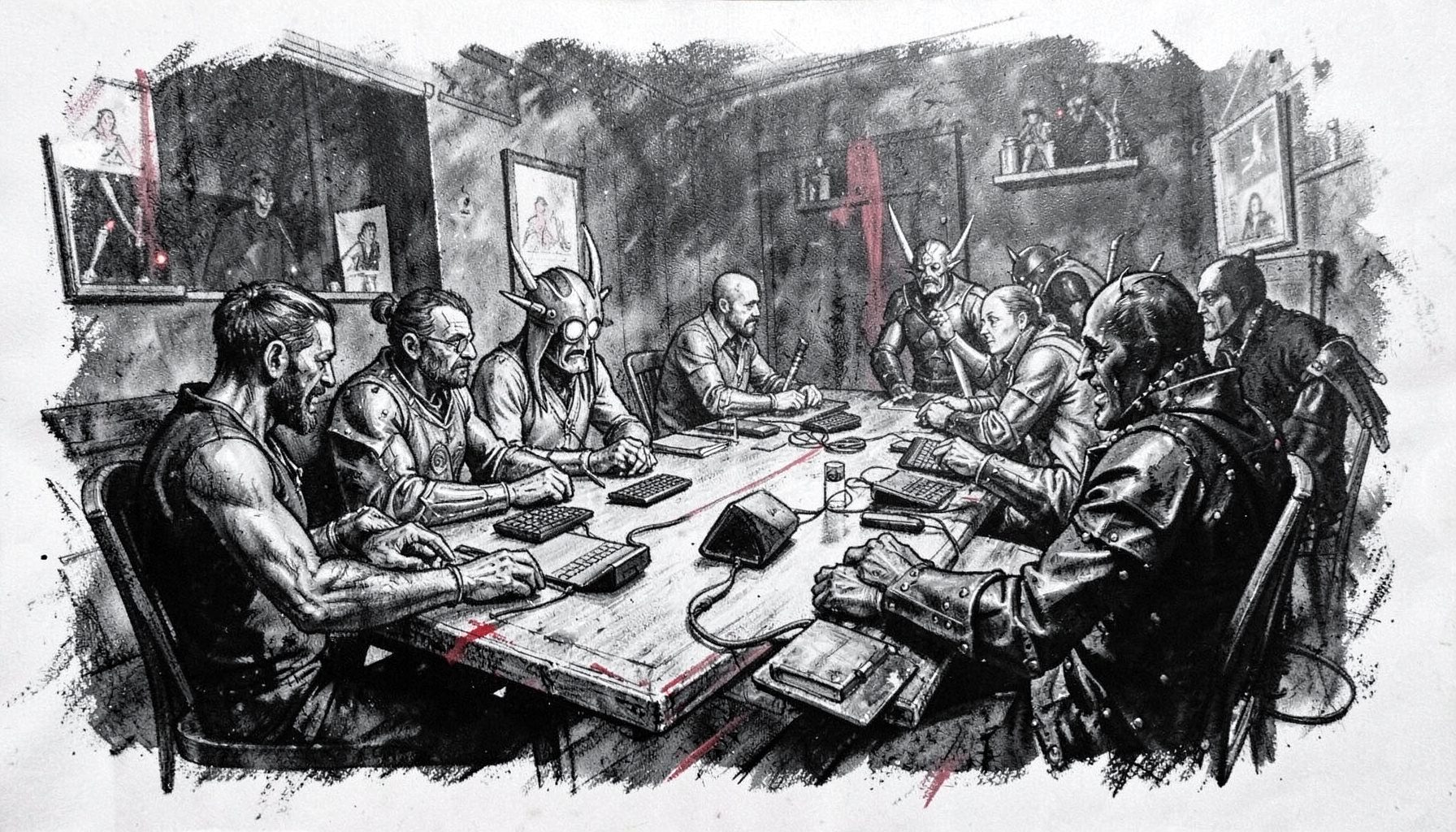
Photographing LARP Without Breaking Immersion
There's a particular magic to live-action role-play that cameras tend to ruin, and it's the immersion itself. When someone in full garb is mid-speech, holding a hand-forged blade aloft, the click of a shutter can shatter an entire scene. The challenge for anyone with a camera in hand at a LARP event isn't technical skill alone, it's learning to disappear into the world you're trying to capture. Learn more about Pandaemonium.
Across Australian LARP circles, from the bush-clad fields of New South Wales to the laneways of Melbourne's tabletop communities, photographers are increasingly treated as part of the storytelling team rather than outside observers. The aim is to document moments that feel like memory rather than interruption, and a few considered habits make that possible. Learn more about 287176 Dice Towers Dice Trays And Dice Bags Accessories Every Gamer Needs.
Why immersion matters more than the perfect frame
Immersion in LARP isn't a nice extra, it's the whole point. Players spend weeks sewing costumes, painting shields, and memorising backstories so that the world feels real for a weekend. A photographer barging through a duel to grab a hero shot undoes all of that work in an instant. The first rule of shooting a LARP is therefore less about aperture and more about humility: you are a guest in someone else's story. Learn more about 283531 What To Do If You Miss Registration For A Popular Larp Event.
This principle shows up in every well-run scene, including the kind of high-production runs you'll find at conventions like the one documented on the pandaemonium event page. The best shots from those weekends rarely come from photographers who pushed to the front, but from those who sat at the perimeter, watched the long lines of movement, and let scenes breathe before lifting the lens.
Australian LARP groups such as Realmz in Brisbane and Realms LARP in regional Victoria often codify this in pre-game briefings. Players are warned that some moments are flagged as "off-camera" for emotional safety, and photographers are expected to honour those flags. If a scene is marked private, you put the camera down, full stop.
Silent gear and low-profile bodies
The single biggest technical mistake new LARP photographers make is using a loud shutter. Mirror and mirror slap mechanisms, mechanical winders, and fast burst modes all betray the camera's presence. Within minutes, players start looking at the lens instead of each other.
A mirrorless body with a fully electronic shutter is the standard kit for serious event shooters. Pair it with a short prime lens, often a 35mm or 50mm equivalent, and you can sit in the back row of a tavern scene with no one noticing you. Many Australian photographers also use a small grip strap rather than a neck strap, so the camera hugs the body and doesn't swing into frame.
The accessories matter too. A padded sling, a microfibre cloth for sweat, and a small bag of useful extras are all part of the everyday kit. Some reviews, like the round-up of dice towers and trays, treat gaming accessories as purely functional, but the same care applies to camera kit: nothing jingles, nothing clinks, nothing flashes red. Quiet gear means quiet hands.
Talking to the GMs before the game begins
Most LARP organisers are welcoming toward photographers, especially when approached politely before the event. The pre-game discussion, or briefing, the array of participants, and the printed lists of scenes that will run across the weekend are all things GMs are happy to share with a shooter who is working hard to fit in. Showing up ten minutes before the welcome talk and asking, "Where would you like me positioned?" goes a long way.
It's also worth asking about trigger warnings, contested scenes, and any character deaths that are scripted to happen off-camera. Australian conventions, particularly the larger ones timed around Melbourne International Games Week, often have a content warning officer who will quietly flag scenes involving strobing, violence, or emotional intensity. A photographer who knows which scenes are off-limits can plan their route accordingly, and avoid the cardinal sin of capturing a vulnerable moment without consent.
Some games also have a clear registration system for media passes. If you've left it too late and missed the official window, there are useful guides on what to do if you miss registration for a popular LARP event that are worth a read before you simply turn up unannounced.
Positioning yourself like a stealth quest token
Where you stand matters as much as what lens you mount. The instinct to push closer is the wrong one, because LARP scenes are designed to be watched from specific angles and rarely from in front of the action. Standing beside the GM's narrative tent or near a designated observer tree is generally fine. Standing between two duellists is generally not.
A useful habit is to plan three fallback positions for every scene. One close, one mid, and one far, each with a different focal length ready on the camera. If a player asks you to step back, you step back. If the GM asks you to relocate for lighting, you relocate. The job is to be as easy to ignore as she is to see.
In outdoor Australian games, this gets harder. Sun glare in Queensland can be brutal, and bushfire smoke in summer can flatten the light into a flat orange wash. Building a small mental map of shade, wind, and angle before the first session starts saves a lot of fumbling later.
Catching the in-character moments that matter
The shots players share on group chats afterwards are rarely the staged ones. They're the unscripted ones: a rogue quietly slipping a coin to a child PC, a knight sharing a water bottle with the player she's meant to be duelling, the GM smiling behind her mask because a new player just nailed their first improvised speech. These are the moments that define a LARP weekend, and they're almost impossible to plan for.
The trick is to stay patient, keep the camera awake but not raised, and learn to read the rhythm of a scene. When voices soften, something tender is unfolding. When the chatter dies, the GM is about to drop a plot twist. When players break eye contact, they're stepping out of character for a moment and you should give them space.
Caring for the photos after the event
Once the weekend is over, the photographer's job isn't done. Photos get shared on Discord servers, printed into zines, and sometimes used in promotional material for the next event. Before any of that happens, faces need to be checked, particularly of players who were visibly shaken, in costume, or in a vulnerable scene. A quick message in the OOC channel, something along the lines of "Here's your photo from the chapel scene, let me know if you'd prefer it not shared," respects the work that went into the moment.
It's also worth keeping an archive. Australian LARP groups rotate venues every few years, and a well-organised photo library becomes a piece of community history. Tagging images by event, year, and character helps future GMs research earlier storylines and helps players find that one perfect shot of their first kill.
Two checklists worth keeping in your camera bag
Silent LARP kit, what to bring to the field:
- A mirrorless camera with electronic shutter and silent focus confirmation
- A 35mm and 50mm prime lens, kept pre-focused for low light
- A spare battery and at least two empty SD cards
- A small microfibre cloth for sweat, mist, or fake blood splashes
- A wrist strap rather than a soft one that bounces against the body
Pre-event conversations worth having:
- Ask the GM which scenes are flagged as off-camera or content-warning
- Confirm where media passes are collected if you missed registration
- Agree on a quiet hand signal with the GM for stepping back during scenes
- Identify the OOC zone so you know where players expect privacy
- Ask whether any characters' faces should be blurred in shared photos
The image that lives longest in a LARP player's memory is rarely the polished one. It's the quiet one, shot from a respectful distance, of a moment they didn't know anyone was watching. Holding a lens without becoming a partner of the story is the standard, and the photos that meet it are the ones that get pinned to corkboards and screenshotted for years.