How to get feedback on your game without being overwhelmed
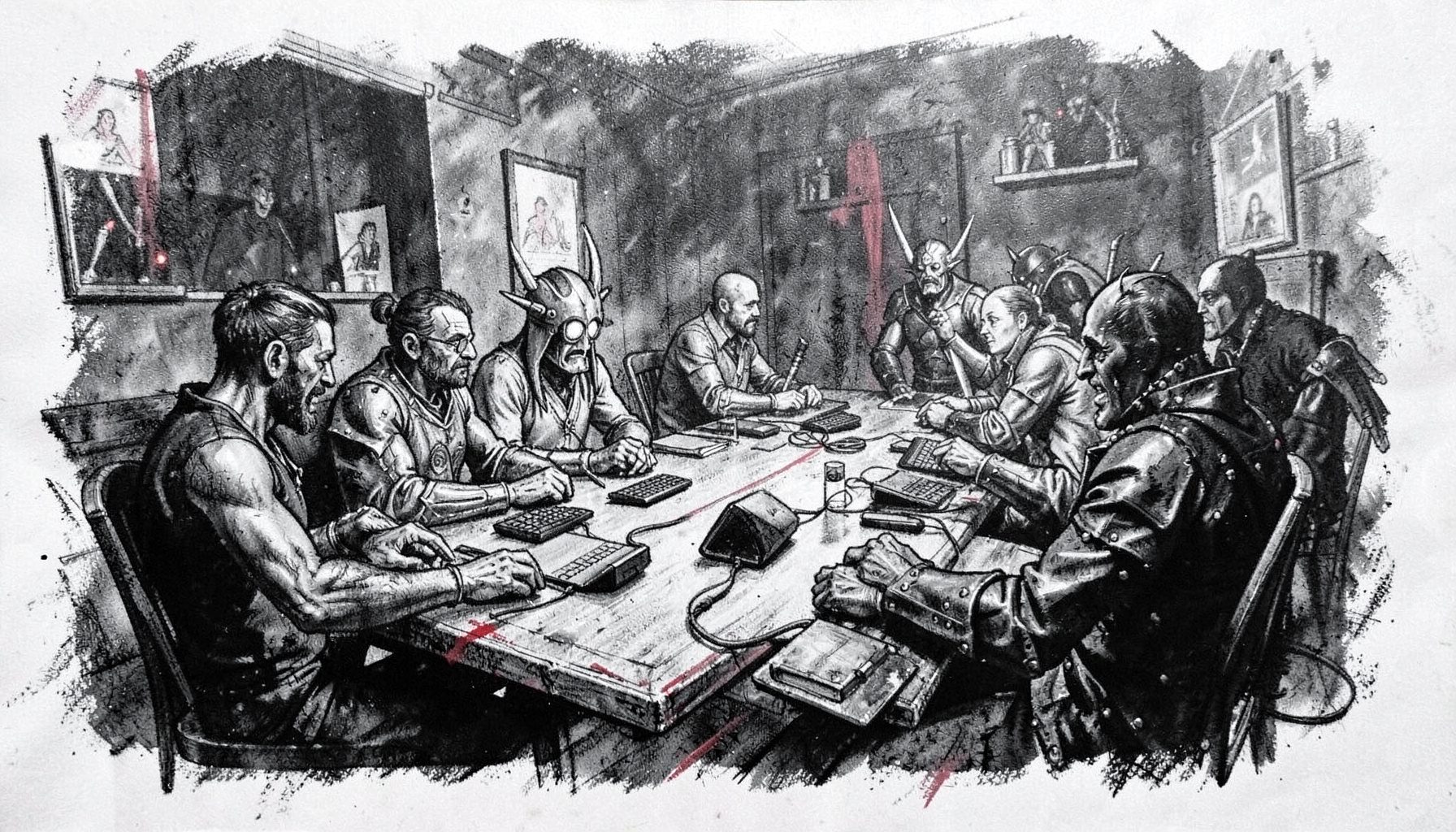
A game can attract more feedback than any designer can use. At High Level Games Convention, held at the Showboat Hotel in Atlantic City in 2018, tabletop sessions, live-action role-play, panels, workshops and an exhibitor hall placed designers beside players, artists, publishers and vendors. That mix supported the convention’s emphasis on inclusive participation and collaborative storytelling, while also revealing a practical problem: criticism arrives in different forms, from rules questions to reactions to a costume, and one enthusiastic report cannot settle every design choice.
The solution is not to silence feedback, but to give it a boundary. A focused session produces clearer comments than an open invitation to “tell me everything”, because testers know which part of the experience needs attention. You can still hear useful surprises, record observations and spot patterns without turning every conversation into an exhausting debate.
This matters for Australian game makers, whose testers may be scattered across Melbourne, Sydney, Brisbane, Perth and regional towns. A manageable routine also protects community goodwill: people who enjoy helping a designer are less likely to keep volunteering if every request creates extra planning, vague instructions or an endless stream of follow-up questions.
Start with the decision you need
Begin with a decision, not a request for opinions. Decide whether you need to learn why players misunderstand a rule, whether an opening choice feels meaningful, or whether a live-action scene gives people enough direction. Each question requires different evidence, so combining them makes feedback harder to interpret.
A short test brief can keep the session honest. Explain the scenario, the time limit, what the tester should try and which decisions you are leaving alone. Then separate observations from requests: “You searched through three menus for the spell list” is evidence, while “add more spells” is a suggestion that may reflect one player’s preferences.
A focused test brief can name:
- The design decision you want to make, written as a question.
- The exact scenario, encounter or rule to test.
- The player’s starting point, including any experience needed.
- The time allowed for play and for answering questions.
- One primary follow-up question for every tester.
Keep that brief visible to the facilitator, but do not read it as a script for the player. If the tester takes a different route, follow them and note what happens. The most valuable information may be the behaviour you had not planned for, including the workaround that prevents confusion from becoming a blocker.
Ask one question at a time
Good facilitation protects attention. Give the tester a clear task, stay quiet while they act, and ask questions only after the main attempt. Use neutral language such as “What were you expecting?” or “What did you think this button did?” Leading prompts like “Didn’t that feel confusing?” can manufacture agreement and waste a reliable testing opportunity.
Live-action games need an additional boundary around information. Players should understand which facts their characters know and which belong to facilitators, without requiring the full plot in advance. The No Secrets style guide from High Level Games Convention offers a useful reference for creating fair expectations when scenario details are being withheld.
For remote tests, use a short spoken introduction followed by the same task and one follow-up question. A live video call can work well across Australian time zones, yet it still benefits from a firm ending: thank the tester, explain what happens to their notes and close the meeting. A session with a clear stop is easier to recover from than one that expands into general design discussion.
Match feedback to the right setting
Not every tester can answer every question. Experienced tabletop role-players may expose edge cases in a rules system, while newcomers reveal unclear setup instructions. Live-action facilitators are better placed to assess scene flow, physical movement and role boundaries. Treat these groups as lenses rather than judges of the whole game.
Common test goals have natural audiences:
- New players for tutorials, first-session setup and unfamiliar terminology.
- Experienced tabletop players for rule interactions and difficult choices.
- Live-action facilitators for scene pacing, safety and physical staging.
- People outside the hobby for confusing instructions and assumptions.
- Members of the intended audience for relevance, tone and expectations.
Local habits can shape who joins a test. Tabletop cafés, gaming shops and convention meetings in Melbourne or Sydney provide convenient social settings, but organisers often need to budget for travel and meals. Brisbane’s warmer weather can make a long evening session less appealing, while distance can make an in-person gathering difficult for a tester based outside Perth or in rural Australia. Offering a short evening slot or a remote option widens participation without adding a larger research programme.
Turn comments into usable action
Sort notes into observation, confusion, preference, rule concern and feature request. These categories separate what happened from what someone imagines you should build. A pattern matters when several people meet the same obstacle; a single request can still be worth noting, but it should not automatically become a redesign.
Prototype the smallest response that tests the pattern. A paper map, token or rules change may answer a question more cheaply than a polished feature. For lightweight physical cues and low-cost materials, the simple DIY prop builds from the convention’s crafting session show how simple objects can support a live-action scene without hiding the play behind expensive production.
Public release adds another layer of responsibility in Australia. The Australian Classification Board assesses commercial game releases, so check whether a classification is required and display any relevant rating accurately. If participants pay for a playtest, Australian Consumer Law applies, so describe the price and service accurately, provide the agreed deliverables and handle refunds under the stated terms.
Keep original wording for key comments, but remove names and other identifying details from shared summaries. If you use a spreadsheet, restrict access to the notes that are genuinely needed. This simple step protects trust and makes the feedback easier to discuss without turning a tester into the subject of the conversation.
Keep a small feedback loop
Close the loop rather than collecting more material. After a few sessions, summarise the strongest pattern, choose one change and test it with a comparable group. Keep the remaining ideas in a parked list, where they can wait for evidence or a clearer goal. Iteration becomes manageable when each round answers one defined question.
A sustainable rhythm can be modest: one short session each week, a rotating facilitator, and a shared note template. Australian community groups already rely heavily on group chats and convention social media, so a pinned message can explain the test, timing and deadline without demanding a personal reply from every volunteer. Thank participants with a brief result summary, not another request for more opinions.
Your next step is to schedule one ten-minute test with three players using the same scenario.